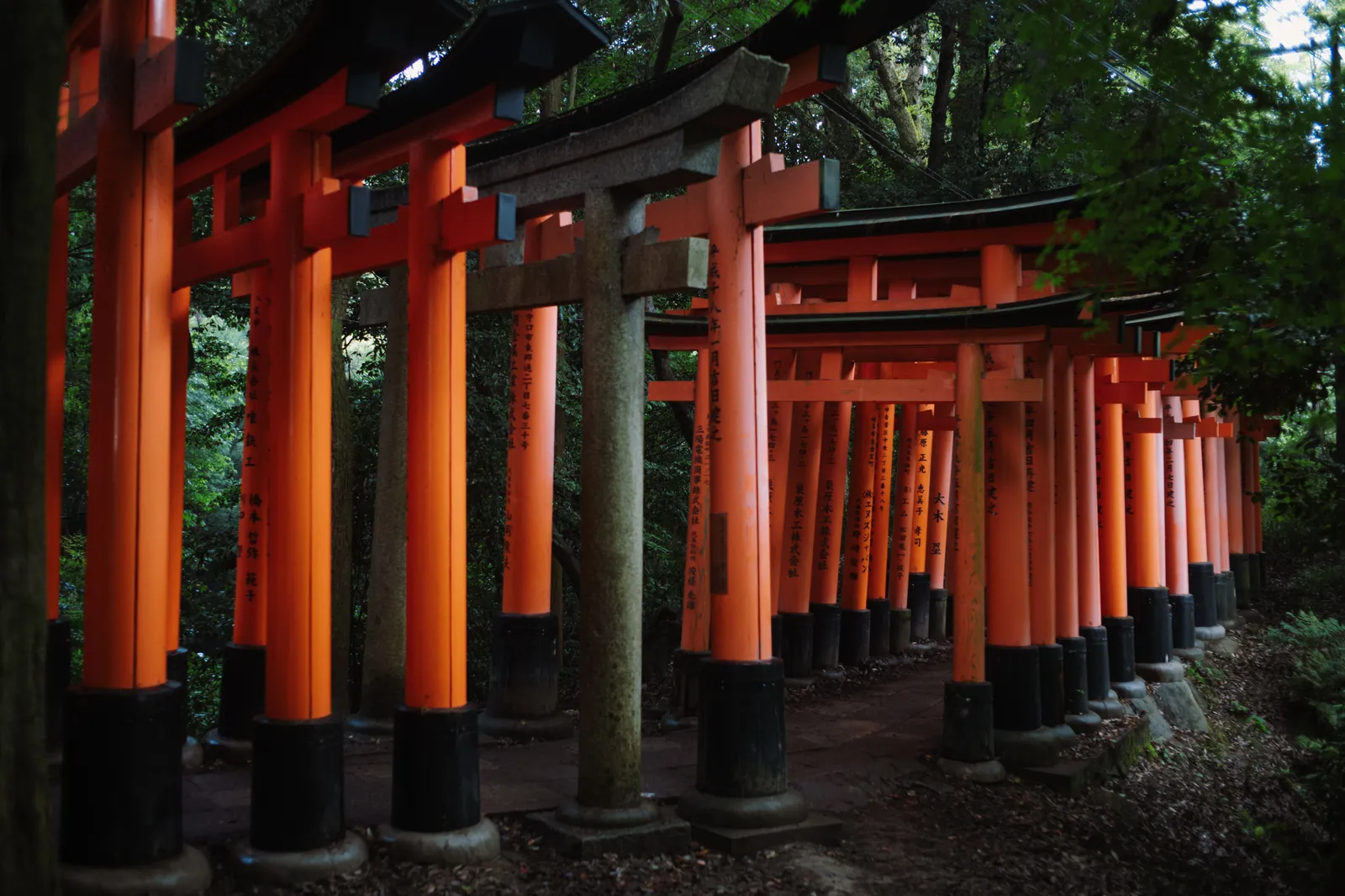
Kansai rewards travellers who slow down. In five days you can stand under a thousand vermilion torii at dawn, watch mochi pounders in Nara move faster than seems humanly possible, and eat your way down a neon canal in Osaka. This module works whether you base yourself in Kyoto or Osaka, and it stacks neatly with another region if you have flown long haul. For the wider picture, start with our Kyoto guide and the practical getting around Japan primer.
Itinerary at a glance
| Day | Area | Signature experience |
|---|---|---|
| 1 | Eastern Kyoto | Walking down Sannenzaka before the coaches arrive |
| 2 | Fushimi and southern Kyoto | Climbing Fushimi Inari until the crowds vanish |
| 3 | Arashiyama and western Kyoto | The Sagano scenic railway along the gorge |
| 4 | Nara | The mochi pounders of Nakatanidou |
| 5 | Osaka | Eating your way down Dotonbori |
Day 1: Eastern Kyoto, temples and lanes
Start early at Kiyomizudera, ideally before opening crowds build. The wooden stage over the hillside is the classic view, and the walk down through the Higashiyama lanes is the real prize. Come down Sannenzaka and Ninenzaka while they are still quiet: this is the wow moment of the day, the sloping stone streets almost empty, before the tour coaches arrive mid-morning. Entry to the temple runs a few hundred yen; confirm hours locally as they shift with the seasons.
For a warm lunch, yudofu (simmered tofu) near the temples is a gentle vegetarian-friendly choice. For a splurge dinner, Kikunoi Honten is one of the city’s great kaiseki houses and needs booking well ahead. Break in the afternoon at Kagizen Yoshifusa in Gion for kuzukiri and matcha sweets, or grab a coffee at Arabica Kyoto Higashiyama with its riverside view.
Late afternoon, drift into Gion and Yasaka shrine as the lanterns come on. Optional guided tour: an evening Gion walking tour with a local guide explains the geiko and maiko districts and keeps you on the right side of local etiquette.
Day 2: Fushimi and southern Kyoto
Go to Fushimi Inari at dawn. The lower torii tunnels fill up fast, but if you keep climbing the mountain loop, the crowds thin out completely and you get long stretches to yourself. It is a proper walk uphill on uneven steps, so wear real shoes and carry water in warm months. Entry is free. See our Fushimi Inari and Kyoto temples guide for the full route.
The stalls at the base of Inari sell grilled sparrow, inari sushi and taiyaki, a fun grazing breakfast. Afterwards, visit Tofukuji, famous for its garden and one of Kyoto’s finest maple settings in autumn; see autumn leaves in Japan for timing.
Head back into the centre for lunch at Nishiki Market, the covered arcade of pickles, tofu skin and skewers. Note that many stalls sell raw or seafood items, so vegetarians should ask before ordering. Nearby, Ippodo Tea is the place for a proper matcha, and Chao Chao Gyoza Shijo is a lively, cheap dinner option. The wow moment today is simple: that first quiet stretch high on Inari where the crimson gates frame nothing but forest.
Day 3: Arashiyama and western Kyoto
Arashiyama is best early too. Walk the bamboo grove before the paths fill, then step into Tenryuji, whose garden borrows the mountains behind it and is a Zen masterpiece. Above the river, the Iwatayama monkey park is a short but steep hillside climb rewarded with a city view; keep your distance from the wild macaques and do not feed them or hold food in the open.
For lunch, riverside spots serve yudofu and yuba (tofu skin), light and vegetarian-friendly. Rest at eX cafe Arashiyama for warabi mochi and matcha, or Kumo no Cha for a modern tea sitting.
The hands-on experience is the Sagano scenic railway, an open-sided vintage train that trundles along the Hozugawa gorge; buy tickets ahead in peak season as it sells out. Optional guided tour: a Hozugawa river boat ride pairs naturally with the railway, drifting back down the gorge with a licensed boatman.
Day 4: Nara, deer, lanterns and the great Buddha
Nara is an easy hop south; see our Nara day trip guide. Todaiji houses a colossal bronze Buddha in one of the world’s largest wooden halls; entry is a few hundred yen. The famous deer roam Nara Park freely, and you can buy crackers to feed them, though they can be pushy, so keep bags zipped. Walk on to Kasuga Taisha with its rows of bronze and stone lanterns, and slip into Isuien garden for calm.
The wow moment is on Nara’s main street: the mochi pounders of Nakatanidou. When they start, two men pound sticky mochi in a stone mortar at astonishing speed, a rhythmic show that draws a crowd every single time. Buy the warm yomogi mochi straight after. For lunch, kakinoha sushi (mackerel or salmon pressed and wrapped in persimmon leaf, note it is raw fish) is the local speciality, and there is a street mochi shop worth the queue. Sit-down options include Izakaya Kura Naramachi and Tonkatsu Ganko Nara, with Rokumei Coffee for a good flat white. Optional guided tour: a morning Nara Park walking tour ties the temples, shrine and deer together with the history behind them. End with a nightcap at Lamp Bar if you linger into the evening.
Day 5: Osaka, castle and canal
Finish loud in Osaka; our Osaka guide has the neighbourhoods. Start at Osaka Castle, whose reconstructed keep sits in a broad moated park, then head down to Shinsekai under the retro Tsutenkaku tower.
By evening, the main event is Dotonbori, and the experience is simply eating your way down it. Takoyaki (octopus balls) and okonomiyaki (savoury pancake, usually with pork and bonito) are the essentials; kushikatsu comes with a firm no-double-dipping rule on the shared sauce. Anchor a meal at Ichiran Dotonbori for tonkotsu ramen in a solo booth, or Kani Doraku Dotonbori under its giant moving crab. Daytime graze at Kuromon Ichiba Market, and caffeinate at Lilo Coffee Roasters. The wow moment: standing at the Ebisubashi bridge as the Glico running man sign blazes over the water.
Practical tips
- Base and transport: Both Kyoto and Osaka work as a base; trains between them and to Nara are frequent. First-timers should read first time in Japan.
- Stacking this with Tokyo: if you have flown long haul and want the classic first-timer run rather than one region, our ten days in Japan plan opens in Tokyo, breaks in Hakone, and then covers these same Kansai days by shinkansen.
- Costs: Temple entries run roughly a few hundred yen each; a casual meal is modest, kaiseki dinners run into the tens of thousands of yen. Confirm current prices at the source.
- Dietary needs: Kyoto is strong on vegetarian tofu cuisine; Osaka street food leans heavily on seafood, pork and dashi, so ask before ordering. Our Japan food guide helps.
- Timing: Cherry blossom and autumn colour transform every site listed here but bring the biggest crowds; check best time to visit.
- Safety: The Iwatayama and Fushimi Inari climbs are real walks on uneven ground, and the Sagano railway and Hozugawa boat are seasonal, so confirm operation before you go.