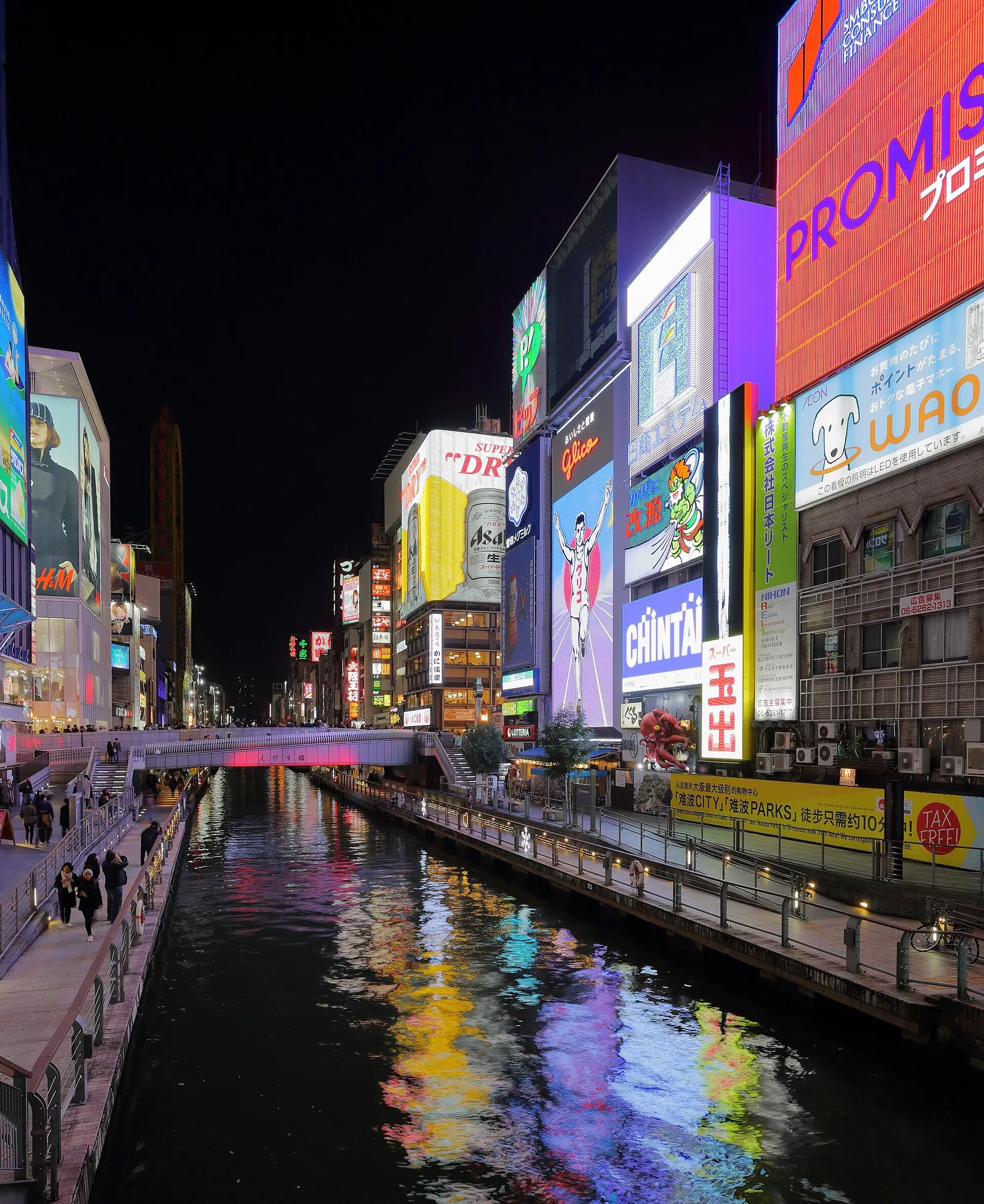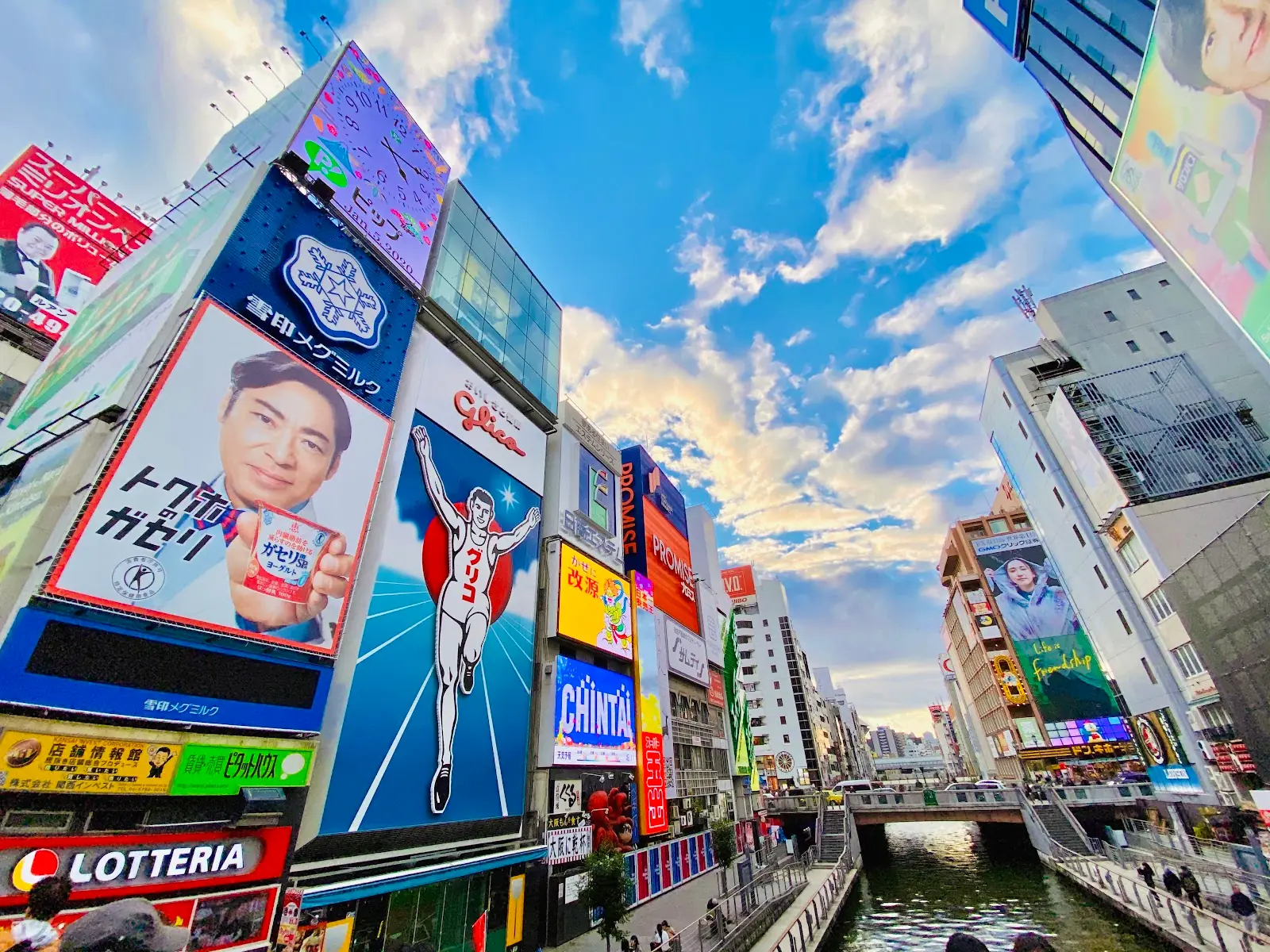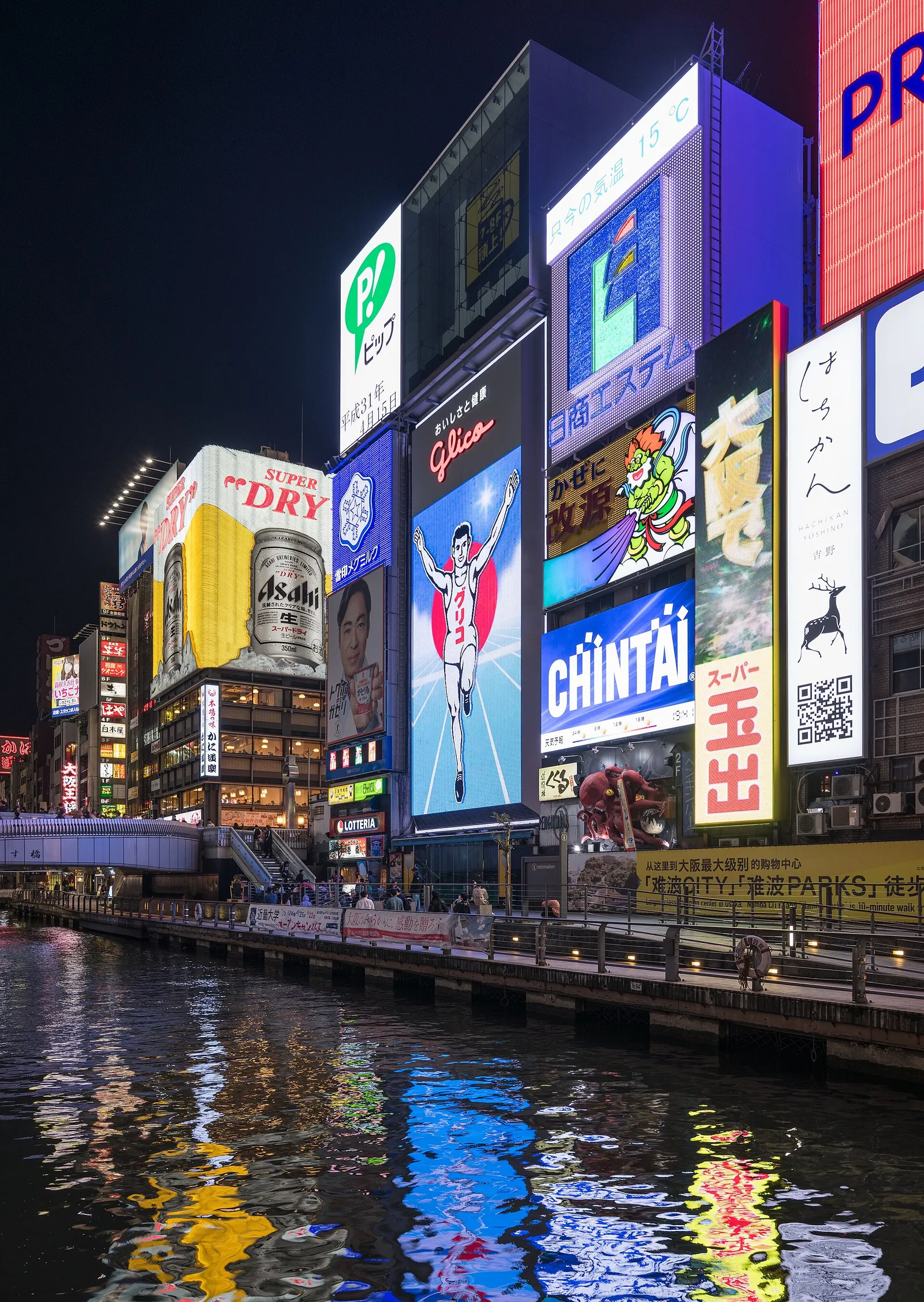
Osaka has a word for its own relationship with food: kuidaore, which means to ruin yourself by eating. Dotonbori is where that happens. It is a few hundred metres of canal side with enormous animated signs above it, a crab with moving legs, a blowfish, a running man who has been running since 1935, and underneath all of it a dense strip of griddles, fryers and hotplates that runs until very late.
The canonical order
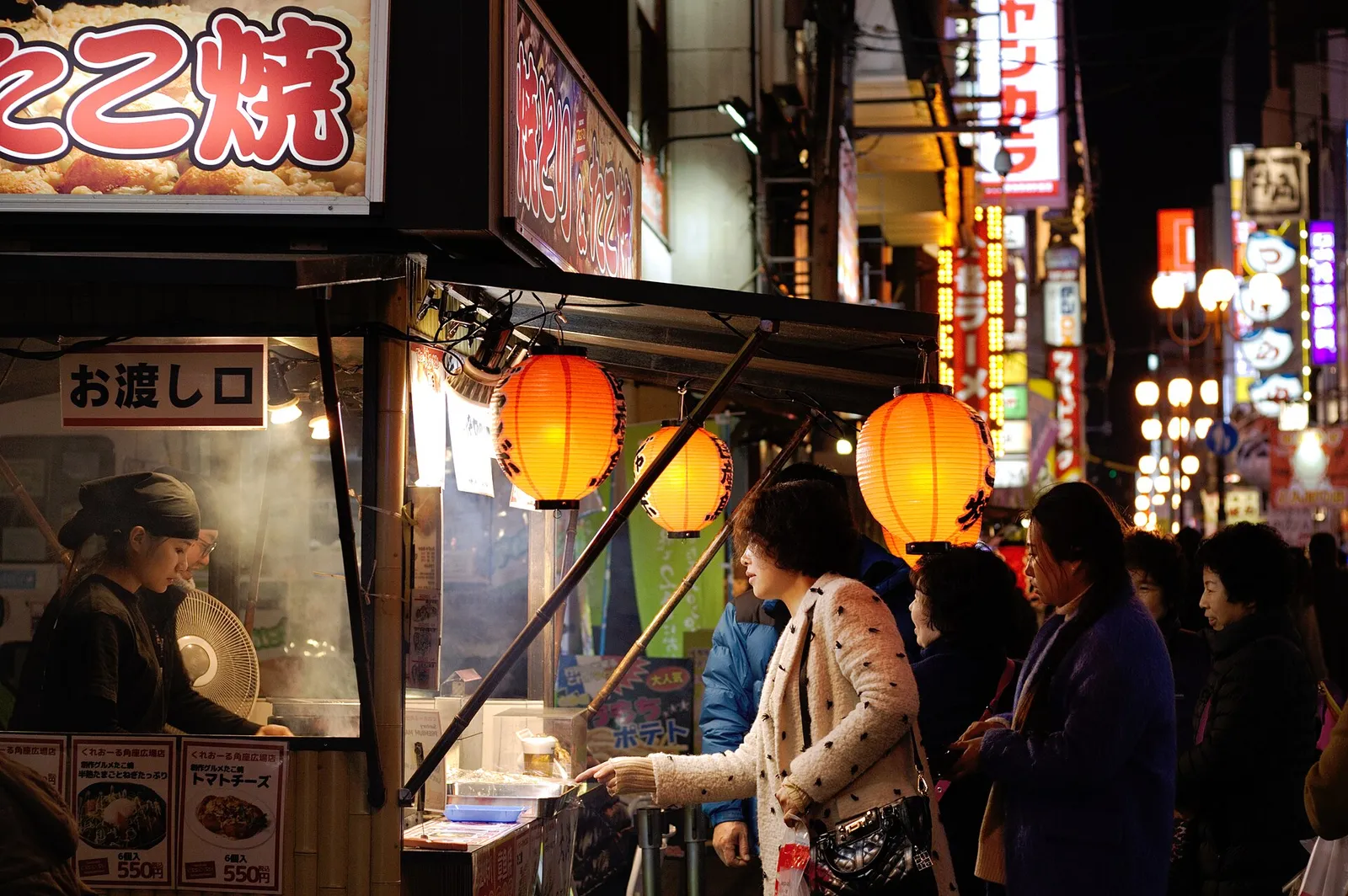
Takoyaki, batter and octopus cooked in a dimpled iron griddle, turned with a pick, served in a paper boat with sauce, mayonnaise and dancing bonito flakes.
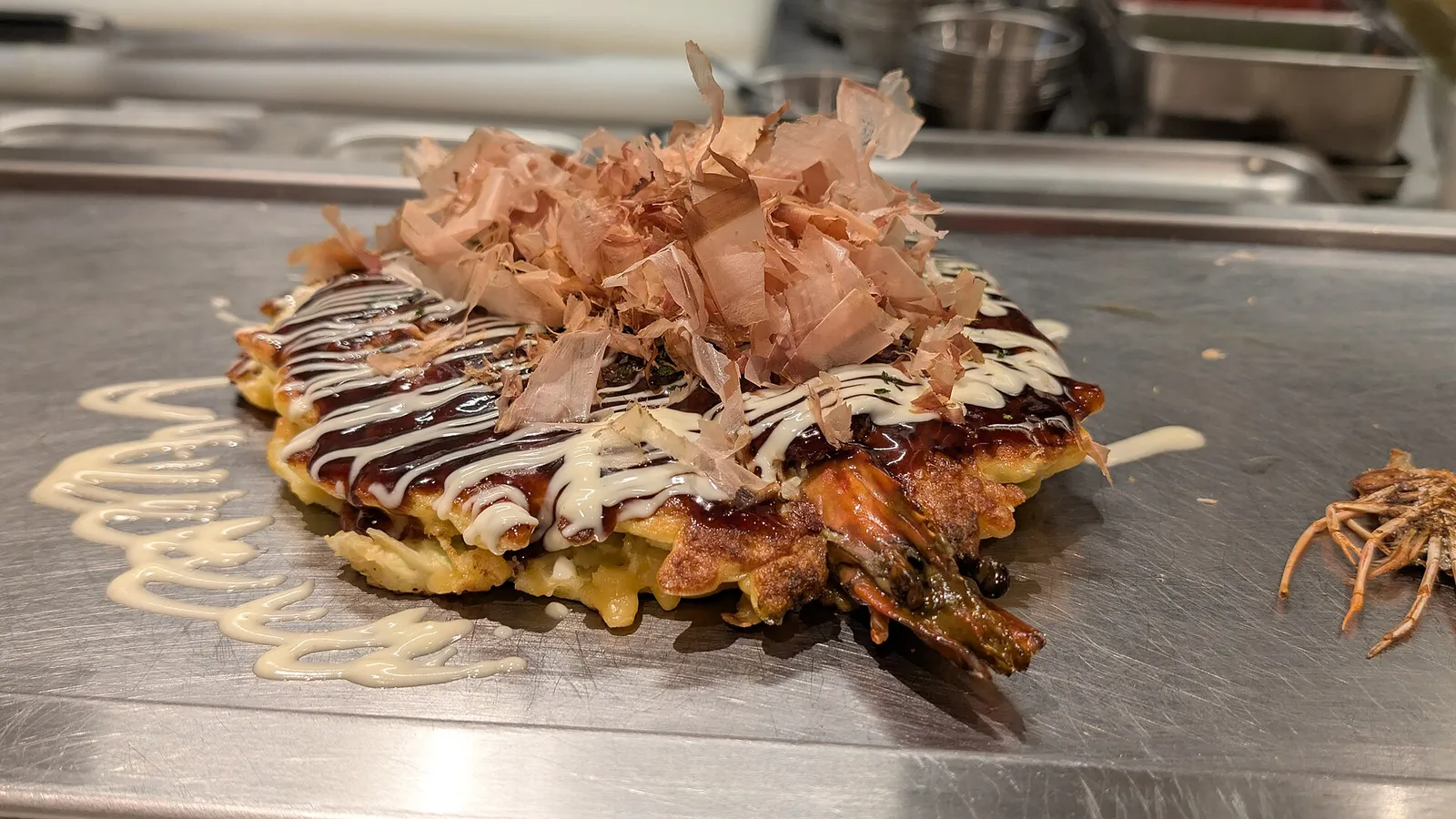
Okonomiyaki, a thick cabbage pancake cooked on a hotplate, often at your own table, with the Osaka style mixing everything together rather than layering it.
Kushikatsu, skewered meat and vegetables in breadcrumbs, deep fried, dipped once in the communal sauce.
Negiyaki, a thinner spring onion version of okonomiyaki, which locals rate above it.
Ikayaki, grilled squid pressed flat, from the smaller stands.
A beer, standing up, which is how most of this is eaten.
Where to eat it
The Dotonbori strip itself, busy and touristed and still good, with the queues indicating roughly what is worth queueing for.
Hozenji Yokocho, a lantern lit stone alley one street south, older, quieter and considerably more atmospheric.
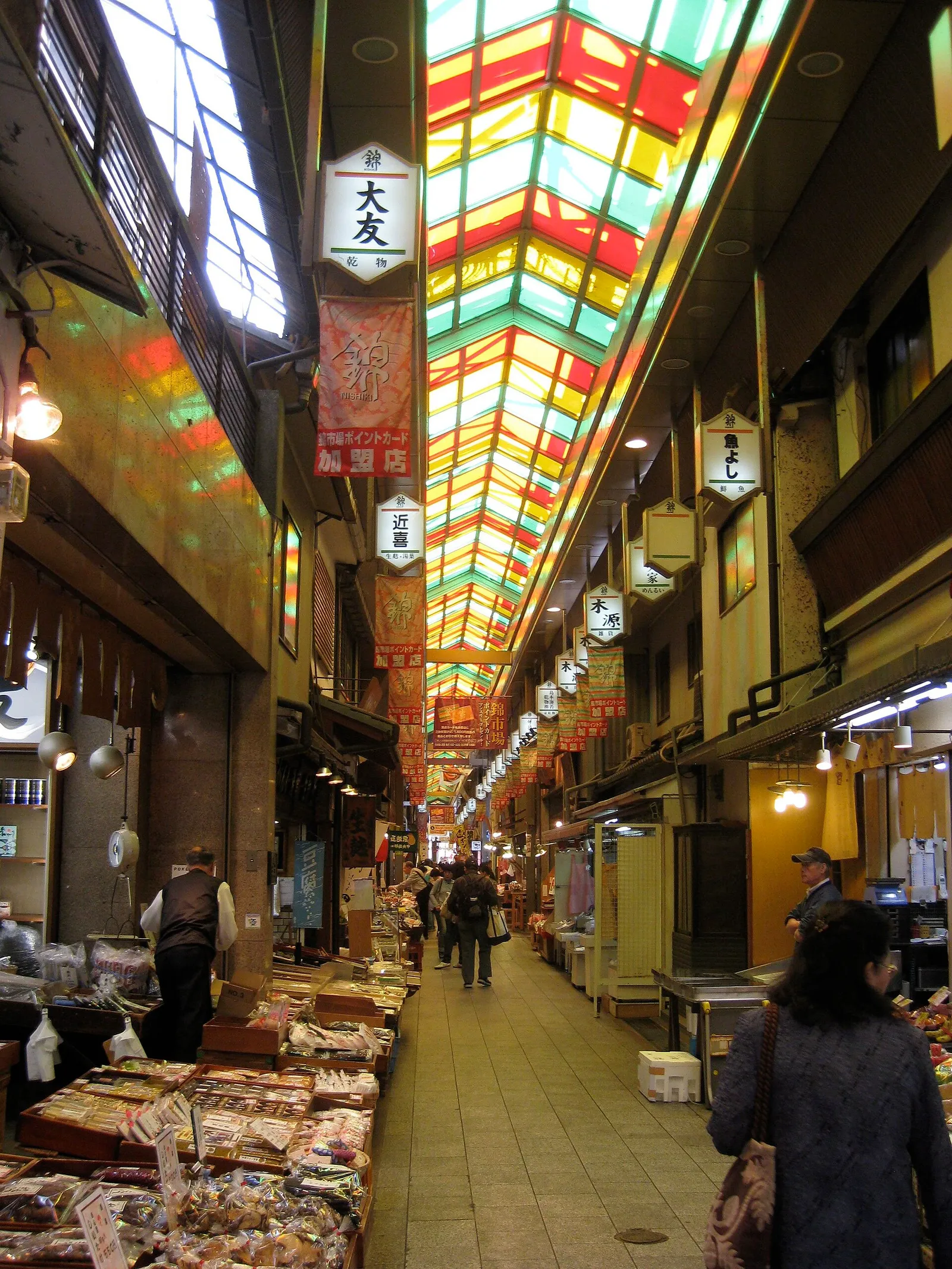
The covered arcades running north from the canal, which hold hundreds of restaurants at every price.
Shinsekai, twenty minutes away, for kushikatsu in its natural home.
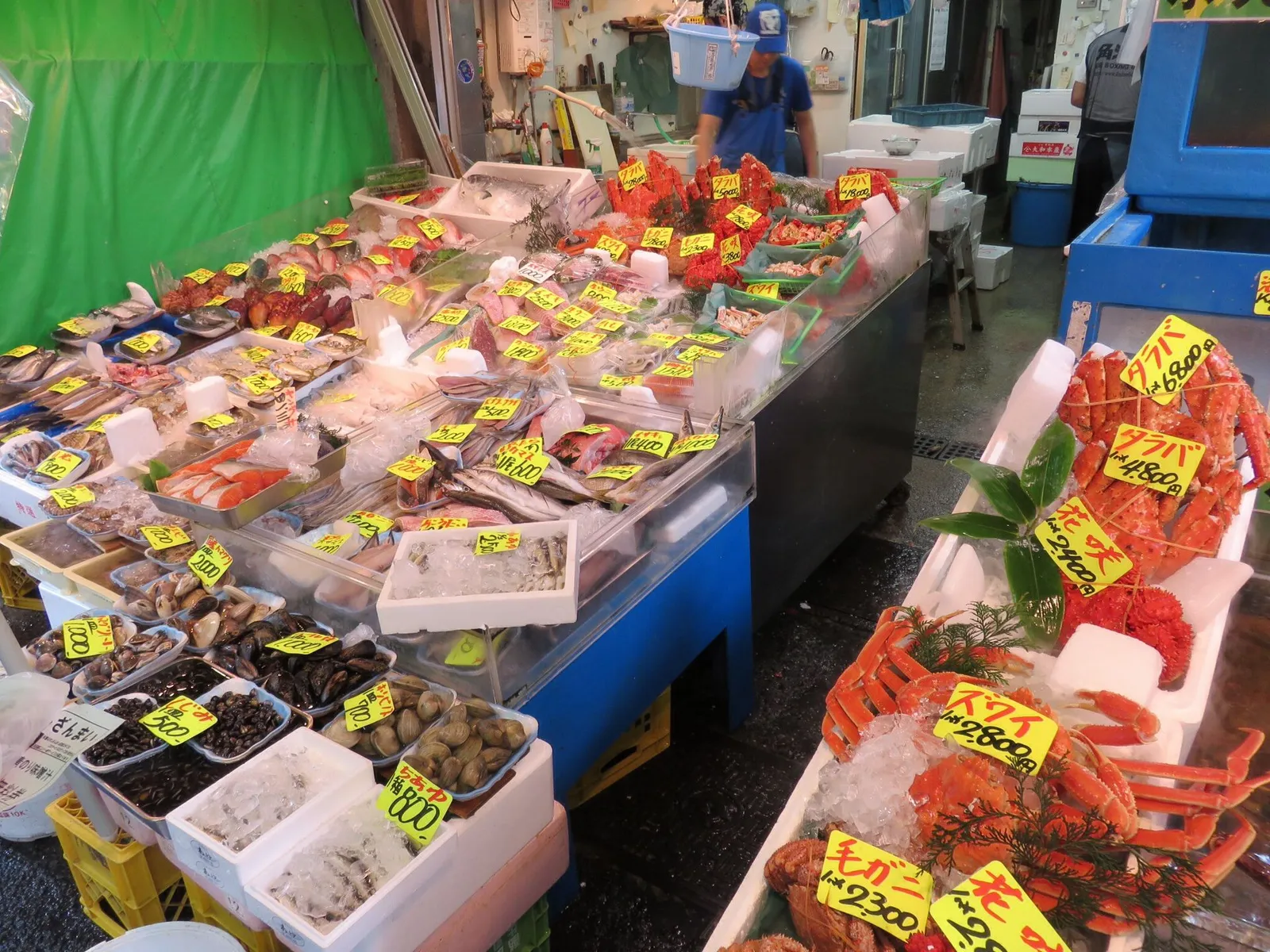
Kuromon market, in the morning, for seafood, fruit and a completely different crowd.
Ordering without Japanese
Point at the picture. Plastic food models and photograph menus are standard here and are not a tourist concession.
Ticket machines at the door of some places: choose, pay, hand the ticket over.
Sit at the counter if the room is small, since that is where the single seats are.
Itadakimasu before, gochisousama after, which is polite and appreciated and takes ten seconds to learn.
No tipping, anywhere, ever. It causes confusion rather than pleasure.
Practical notes
Cash at the smallest stands, cards almost everywhere else.
Standing and eating while walking is mildly frowned on in Japan generally and is normal on this strip specifically.
Bins are scarce. Stalls take your rubbish back if you hand it over.
Smoking is restricted to designated areas in central Osaka, including outdoors.
Allergies are hard to communicate; a translation card written in advance is worth the effort.
Where this fits in a Japan trip
This is an evening, and it is the evening people describe when they get home.
For the wider picture of what Japanese food actually is beyond sushi and ramen, our Japan food guide covers the ground.
For the rest of the city around this strip and how many nights it deserves, our Osaka guide covers the whole place.
And for what happens on the same streets after the food, our guide to Osaka nightlife covers where the drinking goes.
The short version
Eat at six and photograph at nine, because the two things this street offers happen at different hours. Order takoyaki, okonomiyaki and kushikatsu, in that order, and dip each skewer once. Walk one street south into Hozenji Yokocho for the version of the same food in a better room. Carry cash for the small stands, hand your rubbish back to the stall, and do not tip.
Osaka is the loudest stop on a route that keeps going. Our five days eating through Kansai links it to Kyoto and Kobe, and explains what each of the three is actually best at.