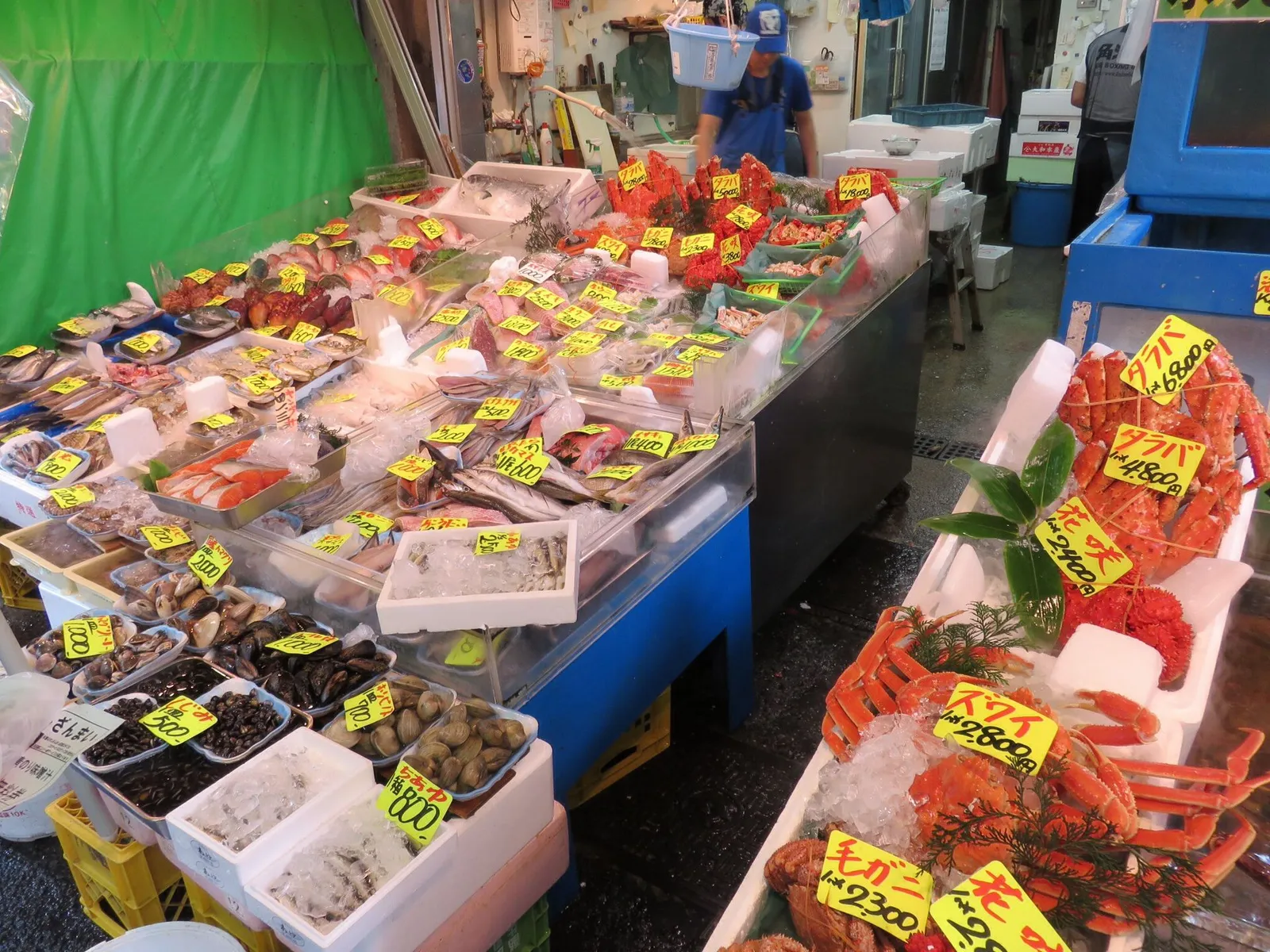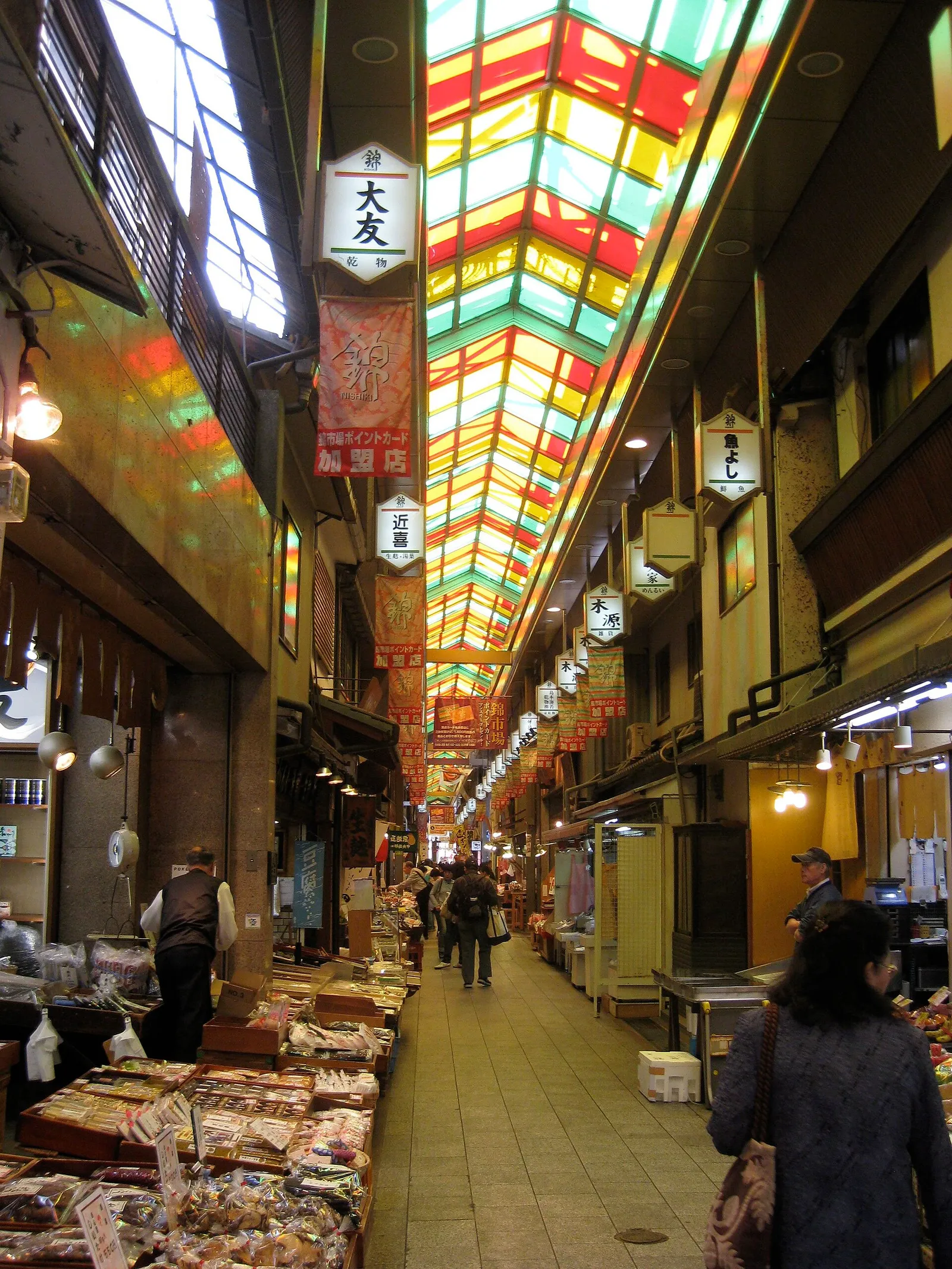
Nishiki is one lane. It runs about four hundred metres, a block north of Shijo, under an arcade roof of red, yellow and green panels that colours the light along the whole length of it, and a food market has stood on this line for something like four centuries. Kyoto calls it the city’s kitchen. Over a hundred shopfronts open onto it, most selling one thing a family has made for a very long time, and a good number now selling a hot snack on a stick to visitors instead. Both are true at once, and the skill is telling which one you are standing in front of.
Where it is and how to walk it
The lane runs parallel to Shijo, Kyoto’s main shopping street, one block to the north.
Two stations sit at the western end: Shijo on the Karasuma subway line and Karasuma on the Hankyu line, both a couple of minutes on foot.
Go west to east. It finishes at Nishiki Tenmangu, a small shrine wedged among the shopfronts, which makes a clear full stop.
Entry is free and there is nothing to book.
Side streets branch off all along it, and that is where the cafes and sit down restaurants are. The lane itself has almost nowhere to sit.
Gion is roughly ten minutes further east, which makes the obvious pairing: eat in the morning, walk the old streets afterwards.
What to eat
Tamagoyaki, sweet rolled omelette served warm, often on a stick, at roughly 150 to 300 yen.
Fresh tofu and soy milk, made that morning, silky rather than firm, around 200 to 400 yen.
Dango and mochi, pounded rice on a skewer, some glazed with soy and sugar, roughly 100 to 250 yen.
Matcha, whisked to drink or churned into ice cream, usually around 400 to 600 yen.
Tako tamago, a small whole octopus with a quail egg set inside the head, sweet and genuinely strange, about 400 to 500 yen.
Grilled rice skewers, toasted crisp at the edges and eaten hot, roughly 150 to 300 yen.
Treat those as approximate; prices and portions differ from counter to counter.
What surprises people is how quiet the flavours are. This is not the loud, sauce heavy eating of Osaka. Tamagoyaki is warm and sweet, with the dashi arriving only at the end of the mouthful. Fresh tofu tastes of almost nothing for a second and then opens into something milky. Pickles are sharp and salty, built as a counterpoint to rice rather than as a snack. Good matcha is properly bitter and leaves a long grassy sweetness behind. Eat six things in a row and they blur into one taste, so space them out. For the wider picture, our guide to Japanese food sets out the dishes and the ordering conventions.
The single best tactic: walk the whole lane once without buying anything, note what draws you, then turn round and buy. Almost everyone fills up in the first fifty metres and misses the rest.
Eating and walking: the one thing to get right
Eating on the move is discouraged at Nishiki, and this is where visitors most often cause offence without realising it. Requests not to eat and walk are posted widely along the lane, and many stalls ask you to eat standing at their counter and to leave the packaging with them rather than carrying it off. The reasoning is practical as much as cultural: the lane is narrow and the crowds are heavy.
The wording differs from shop to shop and has tightened as visitor numbers have grown, so read the sign where you actually buy and follow that rather than any rule you read in advance, this article included. A few habits smooth the rest:
Buy, eat where you bought it, bin it there. That one habit covers most of the etiquette.
Do not photograph the goods without buying. It is a working market, not a set.
Take the tastes that are offered. Pickle and tea counters often hand over a sliver, and it is the best way to choose.
Carry your rubbish out. Public bins are scarce across Japan.
None of it comes from hostility. Follow the requests and the welcome is notably warm.
The shops Kyoto actually buys from
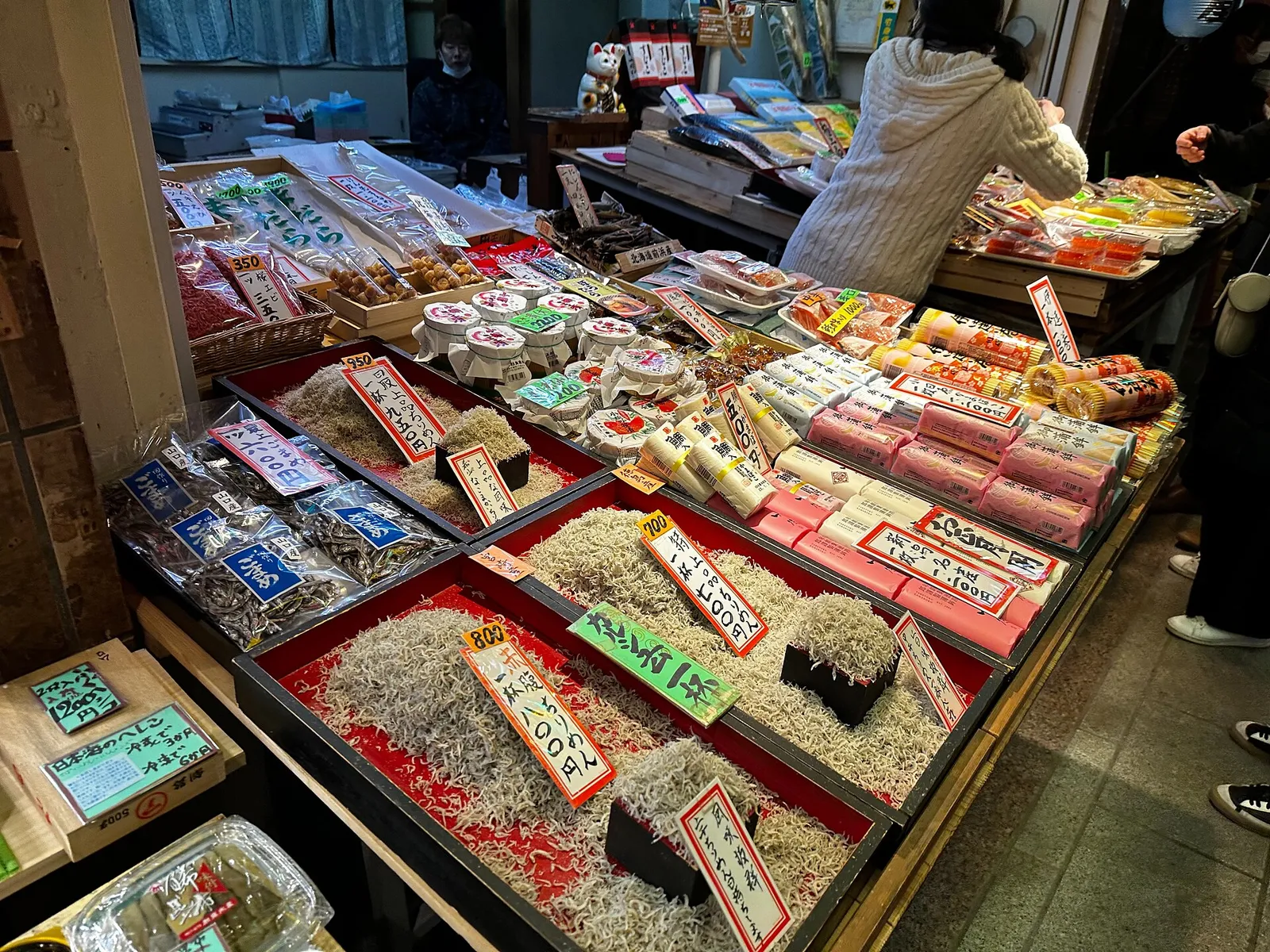
This is the half most visitors walk straight past. Between the snack counters are older, plainer shopfronts that look less inviting precisely because they are not selling to you: pickle merchants with open tubs selling by weight, tea sellers who weigh out leaves and explain the grades, dried fish and kelp stalls supplying the stock that underpins the whole cuisine, and knife shops that are an outing in themselves.
They also answer the souvenir problem: a bag of tea or a small knife beats anything with a temple printed on it. Expect less English here, and expect that to be worth the effort.
Money, closing days and arriving to find it shut
Bring cash. Card and IC card payment has spread but has not reached every counter, and small denominations keep a queue moving. A few thousand yen per person covers a proper graze.
Shops open through the morning in a staggered way rather than all together and shut in the early evening, but each keeps its own hours, and many older ones close one fixed day a week, each choosing a different day. There is no single tidy list of this. If one shop is the reason you are going, check its own official page before you set out, and treat any hours you find elsewhere, here included, as a pattern rather than a promise.
A half shut lane usually means you arrived before the staggered opening, after the early packing up, or on a local holiday. It is not a wasted trip: a quiet Nishiki is the only version in which you can talk to someone who has time to answer.
Where this fits in a Kyoto trip
Nishiki works far better as the opening of a day than as a stop in the middle of one. Start early, eat your way east, and come out at the shrine end ready to walk.
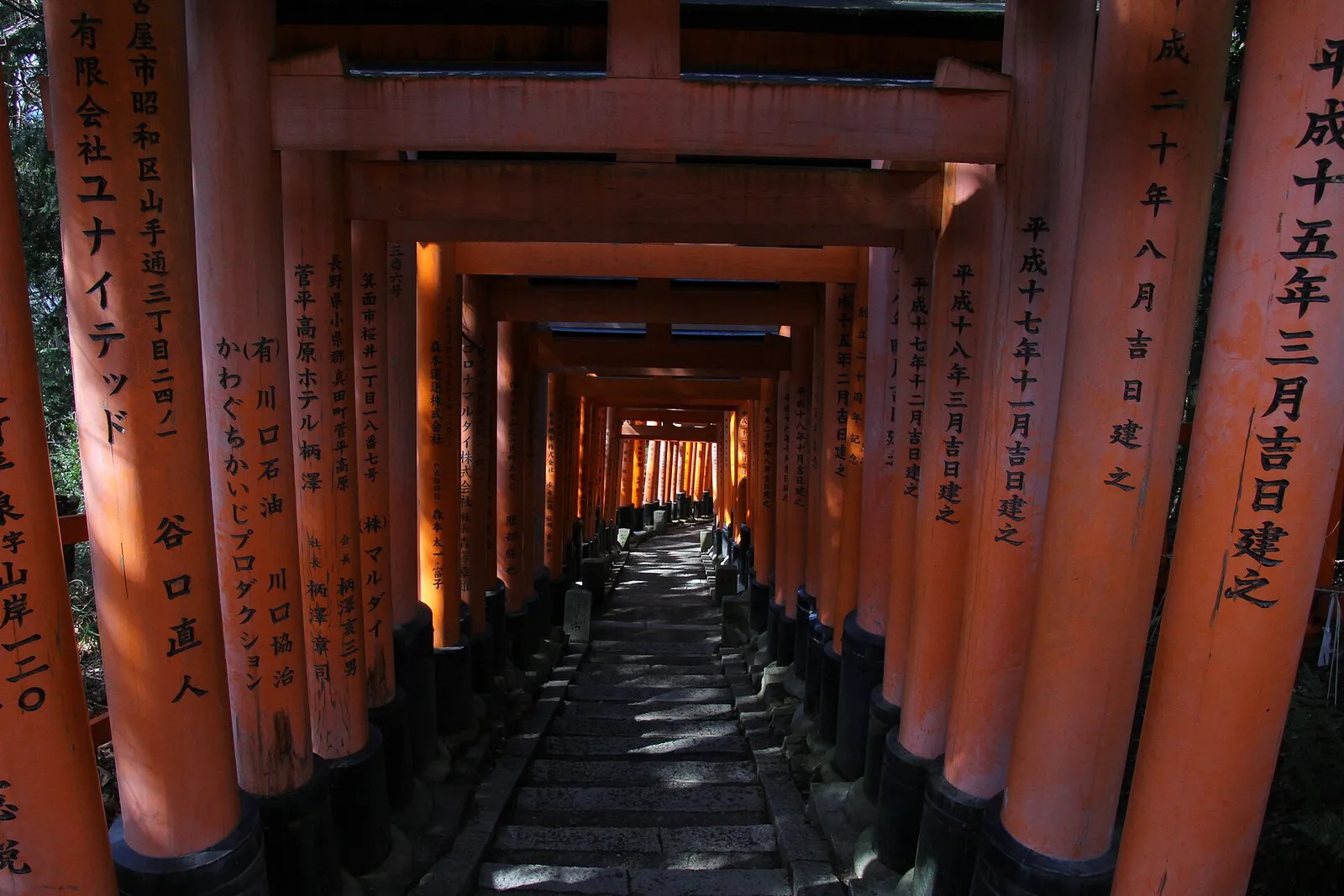
From there the natural continuation is the eastern side of the city, and our guide to Kyoto’s temples and Fushimi Inari covers what to prioritise once the eating is done. It also sets up a good contrast: a morning of small tastes then a quiet afternoon beats two crowded sights back to back.
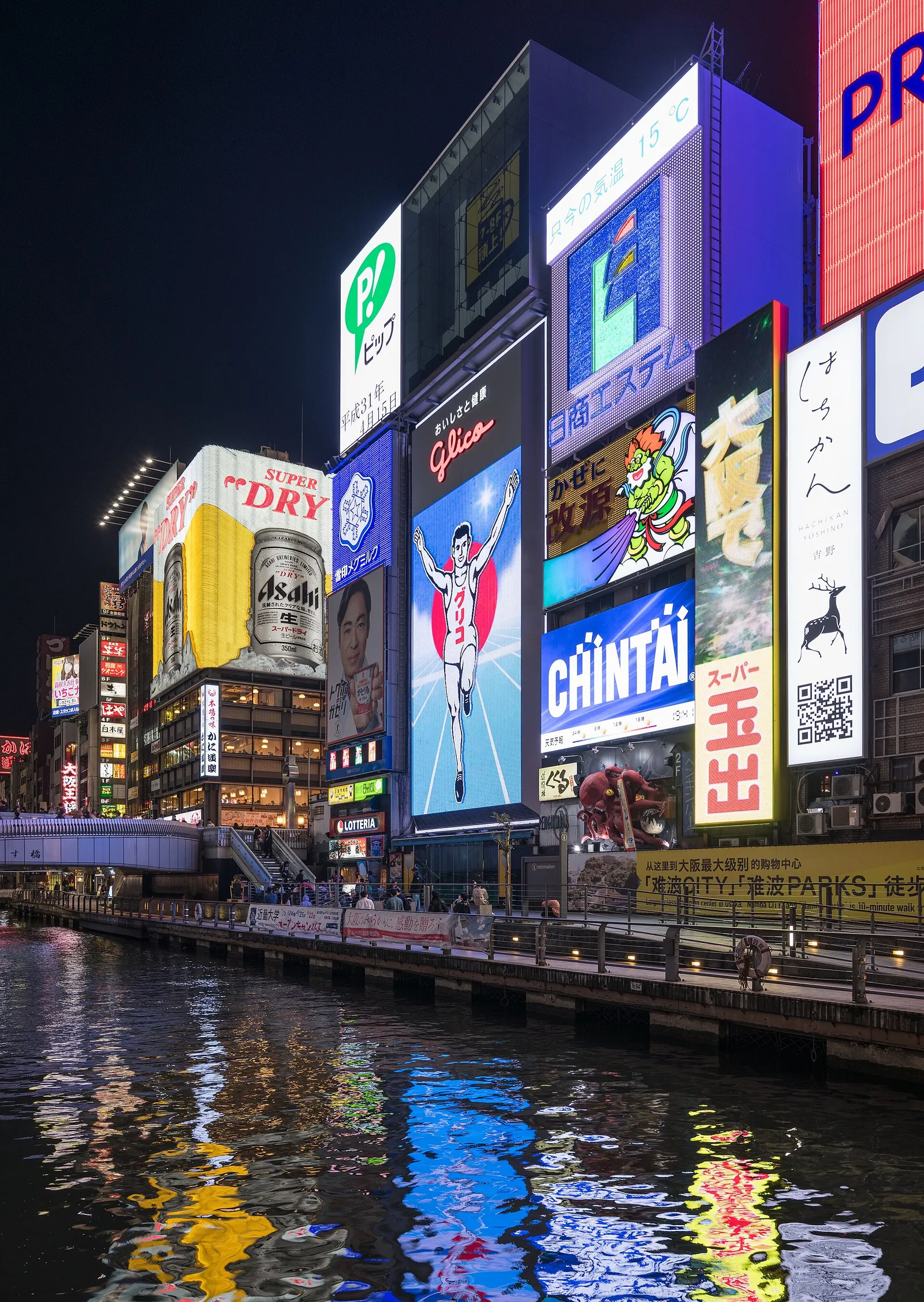
If Osaka is also on the itinerary, treat the two as opposites rather than rivals. Nishiki is covered, compact and restrained, built on pickles, tofu, tea and dried fish, and it closes in the evening. Our guide to Dotonbori street food covers the loud, late, sauce covered version an hour away by train.
Go early, bring cash, walk the whole lane once before you spend anything, and eat where you buy. That is the entire method, and it turns a crowded curiosity into the best hour of food in Kyoto.