Wagyu is one of the few foods people plan a trip around, and one of the most misunderstood. The word is used loosely on menus worldwide, the grades get quoted like horsepower figures, and Kobe has been borrowed so often abroad that it has nearly stopped meaning anything. In Japan it still means something precise, and knowing what separates one name from another is the difference between a meal you remember for years and a bill you remember instead. It is one of the genuine peaks of Japanese food.
Wagyu and Kobe are not the same thing
Wagyu translates as Japanese cattle. It is a category, not a product, and it covers several native breeds raised across the country, of which the Japanese Black is by far the most common. Anything sold as wagyu in Japan sits somewhere inside that very wide tent.
Kobe is narrower: a regional brand, drawn from a particular bloodline raised in one prefecture and required to meet a strict standard before it can carry the name. The designation is protected, and restaurants serving it generally display certification tracing the meat back to its source. That is what to look for, rather than the word on a sign.
All Kobe beef is wagyu, but only a small fraction of wagyu is ever Kobe, and the fame of the name is partly a marketing accident. Other regional brands are rated just as highly by people who eat this for a living, and are often easier to book and gentler on the bill.
The regional brands worth knowing
Japan divides its beef by region much as France divides its wine, with defined areas and their own certification rules. Almost none of these names travel abroad, because Kobe absorbed all the attention.
Kobe, from Hyogo prefecture, the internationally famous one, with the strictest reputation and the highest prices.
Matsusaka, from Mie prefecture, held by many Japanese diners in higher regard than Kobe, and known for exceptionally rich fat.
Omi, from Shiga prefecture, one of the oldest brands in the country and usually described as the more delicate of the famous three.
Miyazaki, from southern Kyushu, which built its name by winning national competitions rather than by history.
Yonezawa, from Yamagata in the north, a favourite locally and rarely seen on tourist itineraries.
Hida, from Gifu prefecture, easy to fold into a trip through the mountains and the old post towns.
The advice follows from the map: if you are already travelling through a region, eat its brand rather than hunting for Kobe. The beef will be local, the restaurant prouder of it, and you will taste something you cannot order at home.
What the grade actually tells you
Japanese beef carries two marks compressed into one famous label. The letter, from A down to C, is a yield grade describing how much usable meat the carcass produced, and it says nothing about flavour. The number, from 1 to 5, is the quality score, and that one matters: it reflects the density and fineness of the marbling above all, along with the colour and firmness of the meat and the quality of the fat.
A5 is the top of both scales, which is why it appears on every board. It is worth understanding what that buys: extraordinary richness, closer in behaviour to butter than any steak you have eaten before. Many experienced diners deliberately order A4 because it is leaner and tastes more of beef. The grade describes the raw material only, and a superb cut cooked carelessly is worse than a modest cut cooked well.
The five ways it reaches your table
Yakiniku, where you grill thin slices yourself over a small burner set into the table. Sociable, forgiving and the easiest first encounter.
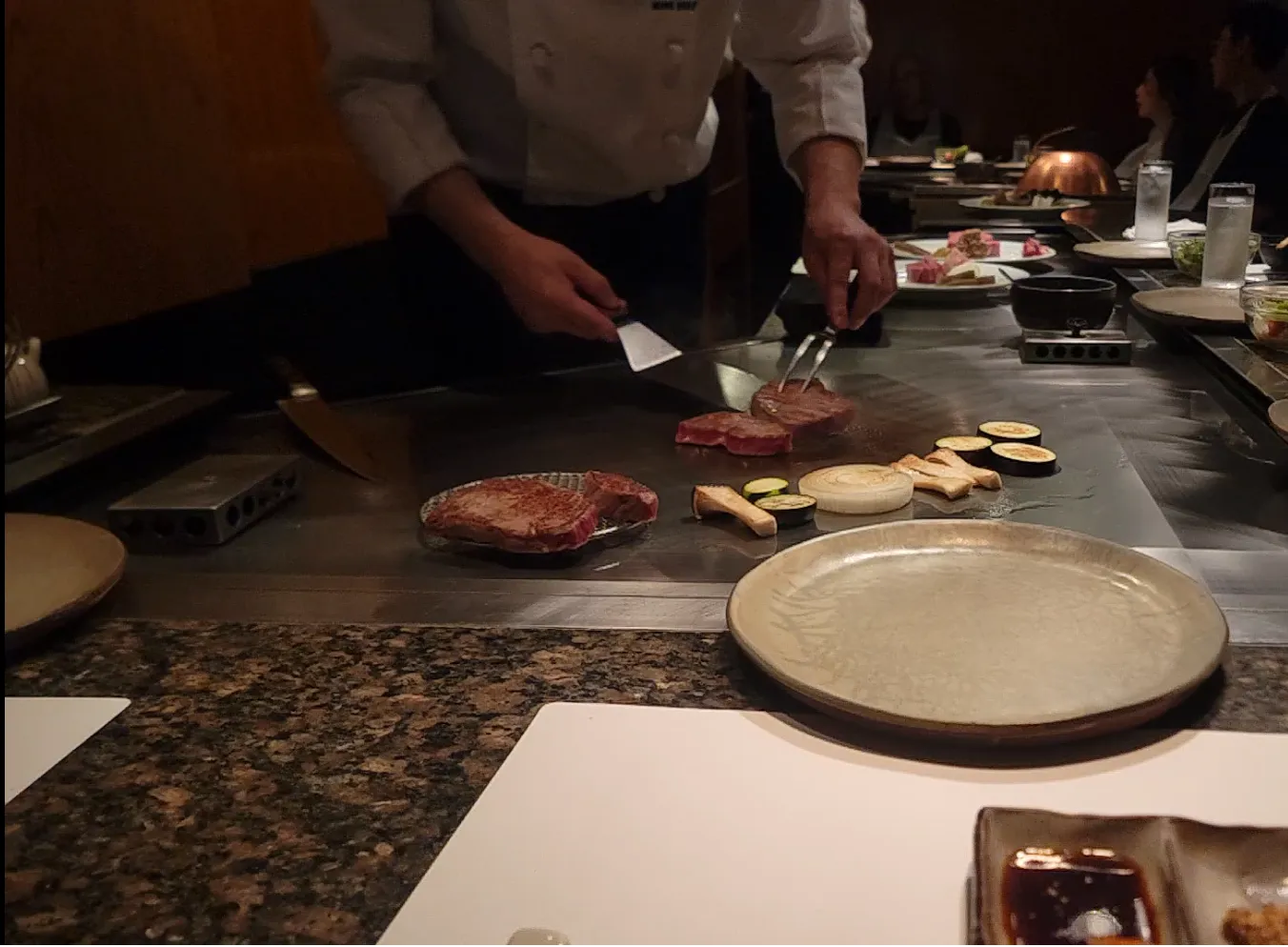
Teppanyaki, where a chef cooks a whole cut on a steel griddle directly in front of you and slices it as you watch. Theatrical, and usually the most expensive room in the building.
Shabu shabu, where a paper thin slice is swirled through simmering broth for a few seconds until it just turns colour.
Sukiyaki, where the beef simmers in a sweet and savoury soy based sauce and is then dipped in beaten raw egg. Richer, warmer and more of a winter dish.
Wagyu don, a bowl of rice under a few slices of beef, sold everywhere and the cheapest way to find out whether you like it.
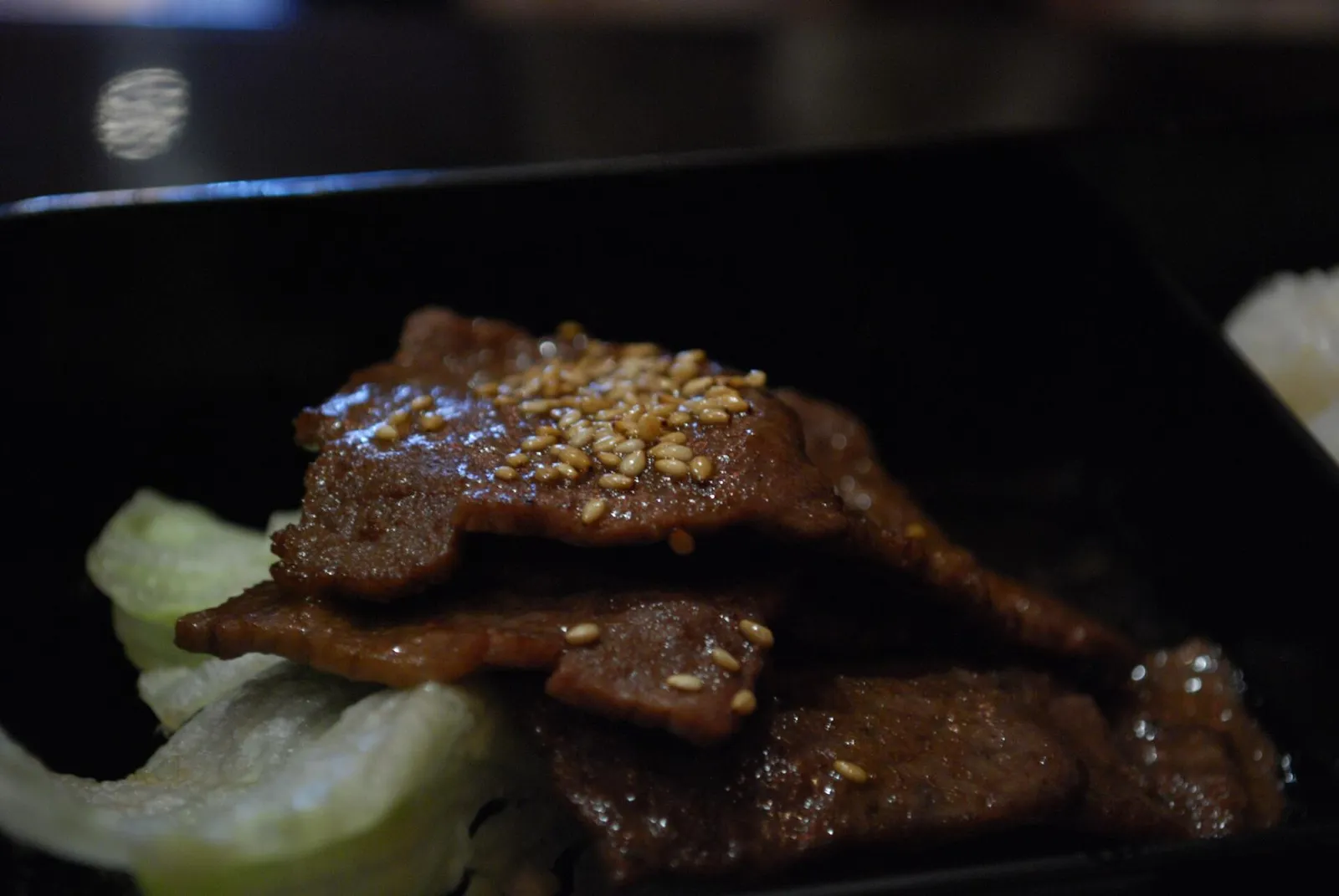
The one rule across all five is restraint with the heat. The marbling melts low and fast, and that melting is the entire point, so anything cooked past the rare side of medium rare has already lost what you paid for. Serious beef restaurants are frequently tiny, with a counter and a handful of seats, and run on reservations made well in advance. The etiquette is close to a good sushi counter: arrive on time, eat each piece as it is handed to you, and let the kitchen set the pace.
Eating it well without the dinner bill
This is the section worth the most money. A great many beef restaurants, including serious teppanyaki rooms that are a substantial expense after dark, serve a shortened lunch menu from the same kitchen and the same chef. The cut is smaller and the sides are simpler, and the gap between the midday and evening price at one address can be enormous. Lunch often runs in a narrow window with limited covers, so check the restaurant’s own listing before building a day around it.
Two other routes work. A beef rice bowl is the cheapest honest introduction, sold in ordinary shops in every city. And the food halls in the basements of the big department stores sell prepared beef dishes, croquettes and bento boxes with wagyu slices at a fraction of restaurant prices, which you can carry to the nearest park. All prices move with cut, brand and season, so treat any figure as a rough order of magnitude, and see our guide to costs in Japan for how a meal like this sits alongside everything else.
The short version
Wagyu is the whole category, Kobe is one protected regional brand inside it, and the other famous names are not a consolation prize. The letter on the grade is about yield and the number is about marbling, so A5 signals richness rather than a guaranteed great meal, and A4 is often the more enjoyable plate. Eat the brand of the region you are in, book ahead at anywhere small, and go at lunch if the dinner price makes you hesitate. Cook it barely, salt it lightly, and order less than instinct suggests. If a menu claims a protected name, ask to see the certification, and if the answer is vague, eat somewhere proud to show you the paperwork.