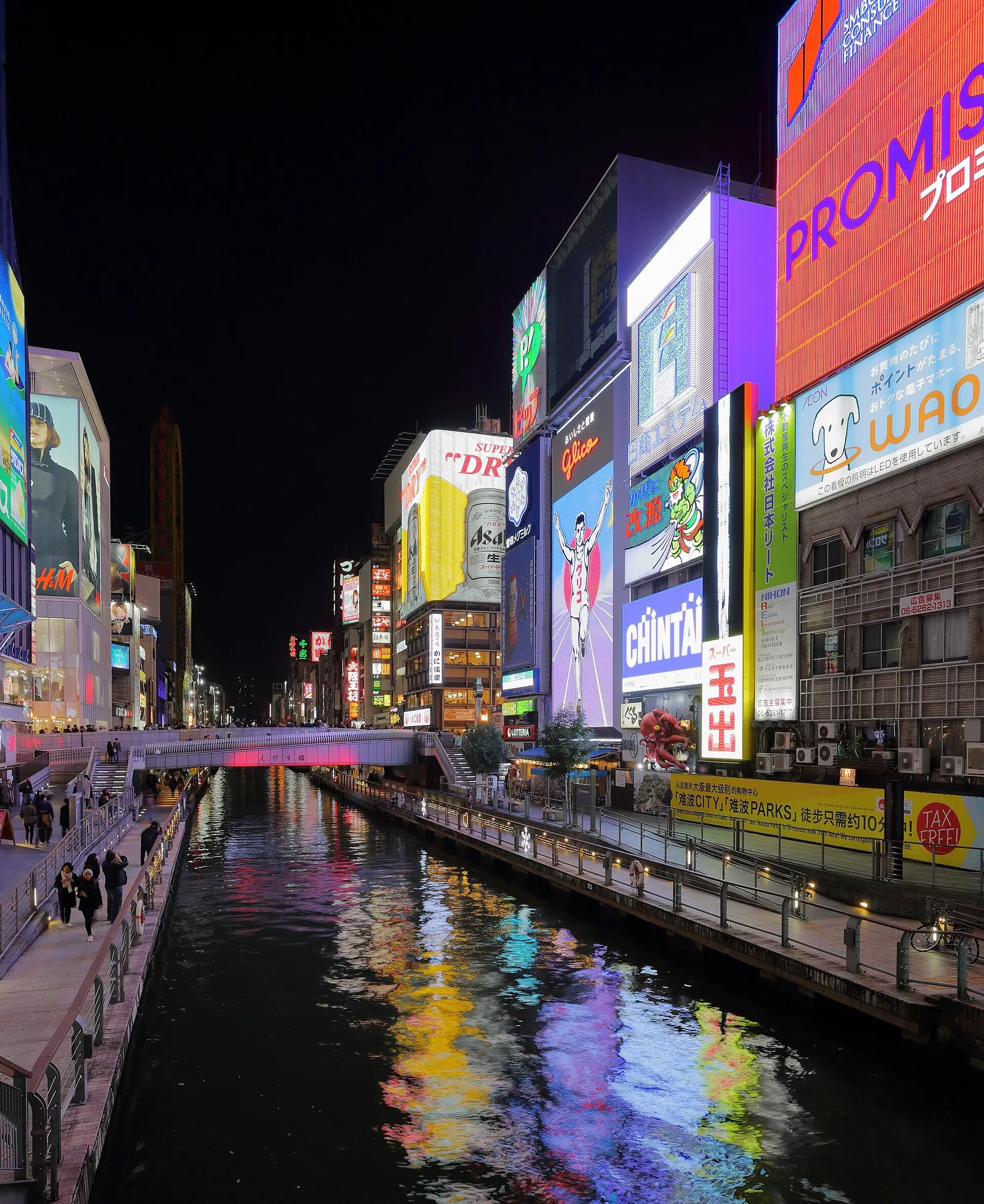
Osaka is the city where Japan relaxes. It is loud, a little scruffy at the edges, built around eating, and populated by people who will talk to a stranger on a train, which after a week in Tokyo comes as a genuine surprise. It does not have many sights and it is not trying to. What it has is the best food in the country at every price level, and a nightlife district that looks like a film set.
What there actually is to see
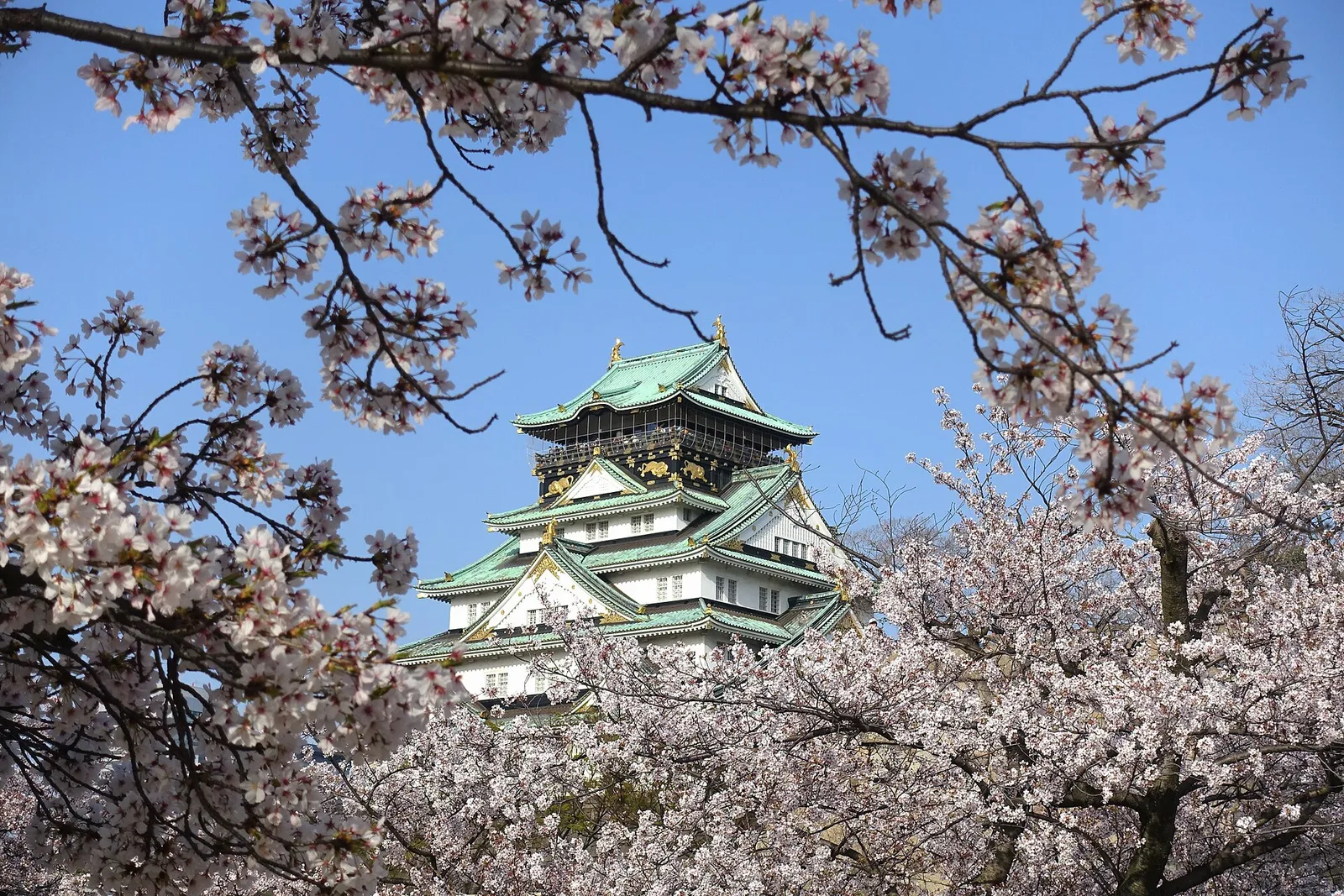
Osaka Castle, rebuilt in concrete and none the worse for it, standing in a large park that is superb in cherry blossom season.
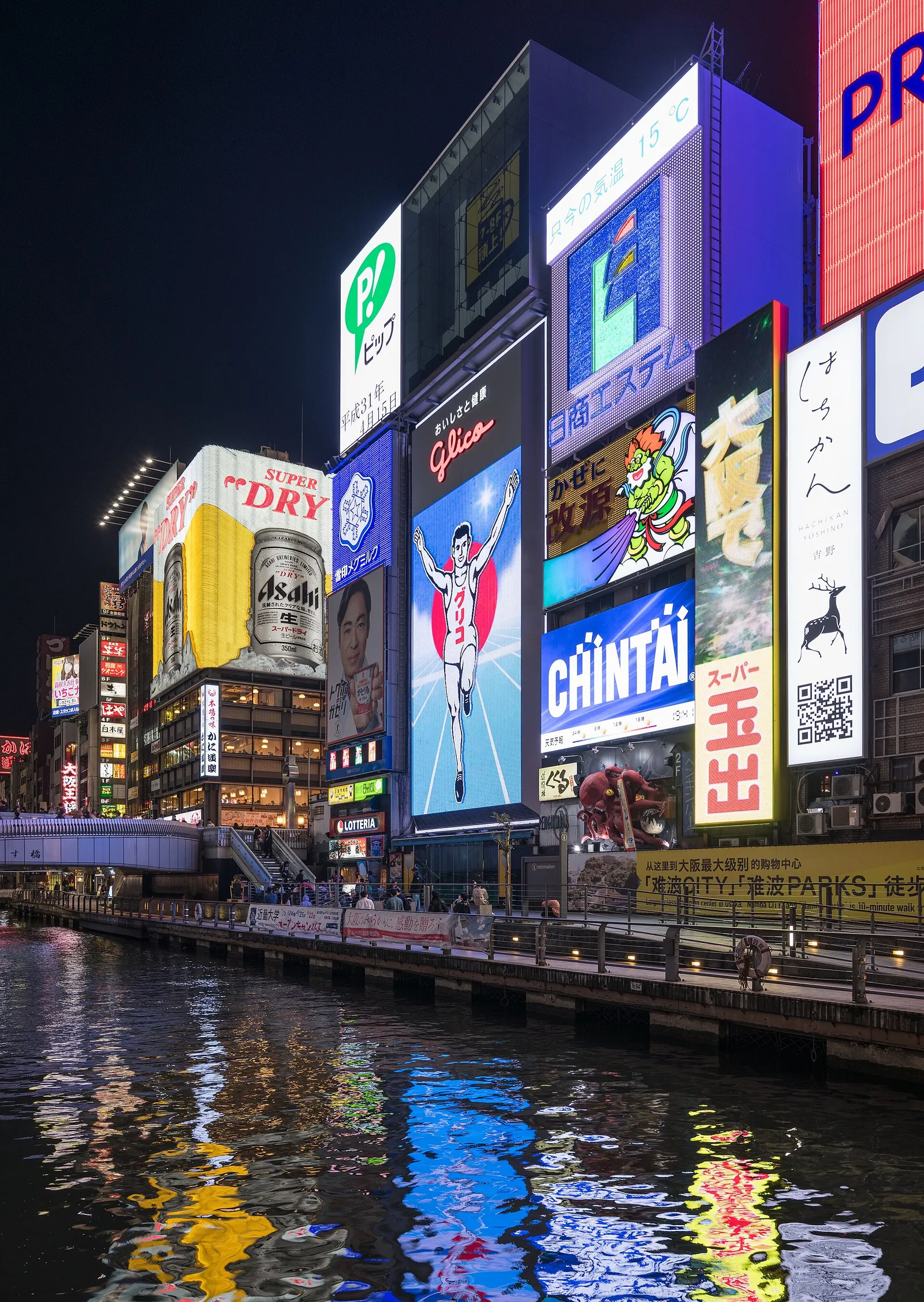
Dotonbori, the canal lined with enormous mechanical signs, which is the image of the city and is best after dark.
Shinsekai, a district frozen somewhere in the 1950s, with a tower in the middle and kushikatsu restaurants underneath it.
The aquarium, one of the largest in the world, which is genuinely excellent and good with children.
Umeda Sky Building, twin towers joined at the top by a floating observation deck reached through a glass escalator tube.
Sumiyoshi Taisha, an old shrine with an extraordinary arched bridge, away from the centre and largely ignored by visitors.
Where to base yourself
Namba and Shinsaibashi, in the south, for food, nightlife and walkability. Most first visits should be here.
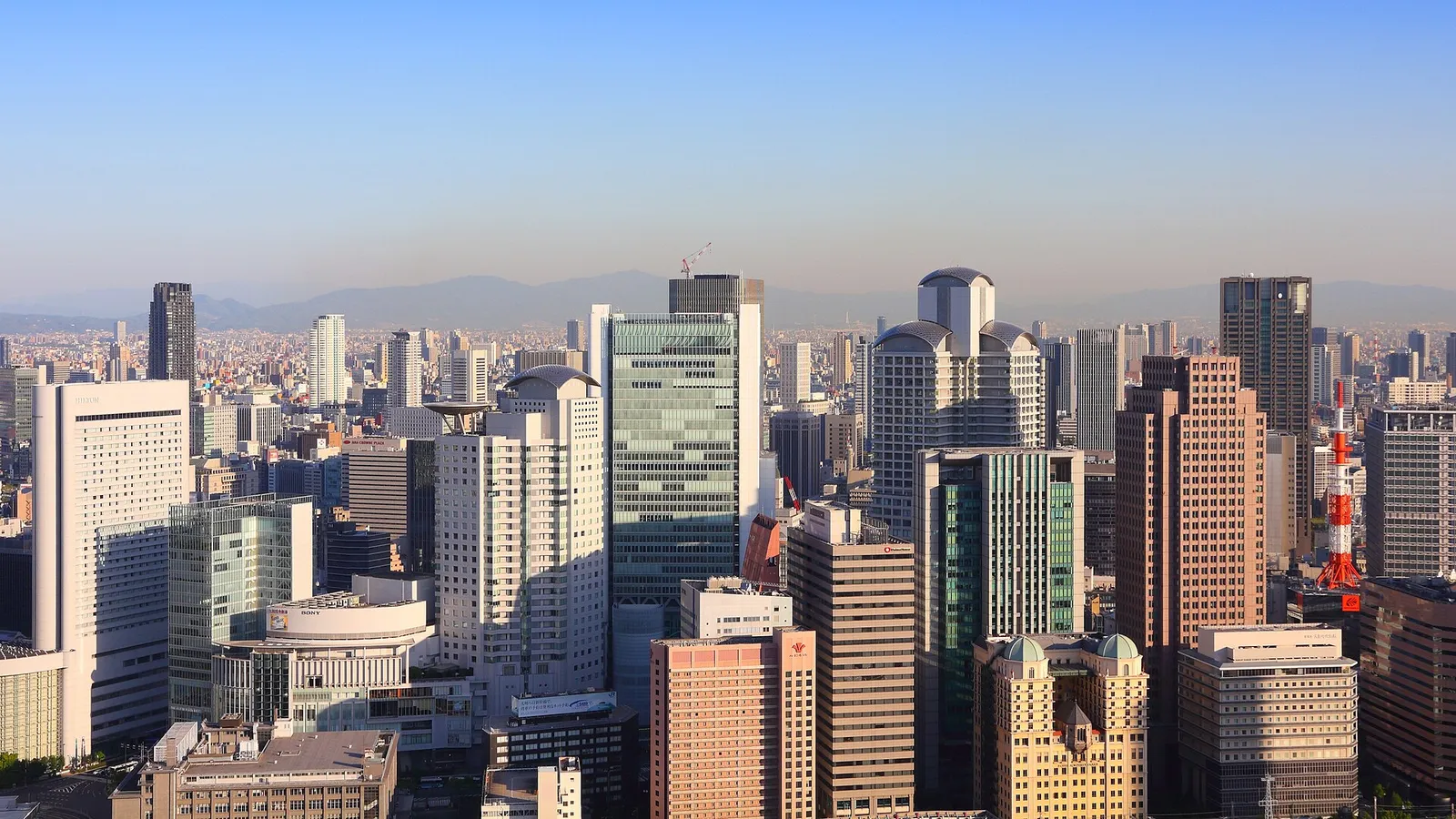
Umeda, in the north, for the main station, department stores and transport out of the city.
Tennoji, cheaper, with a park, a temple and good southbound connections.
The loop line ties all of them together, and the subway does the rest.
Eating, which is the reason to come
Takoyaki, octopus batter balls from a street griddle, eaten scalding.
Okonomiyaki, a savoury cabbage pancake cooked on a hotplate in front of you.
Kushikatsu in Shinsekai, deep fried skewers with a communal sauce pot and one absolute rule about not double dipping.
Kuromon market, for seafood and fruit, best in the morning.
Standing bars under the railway arches in Umeda and Tennoji, which are cheap and welcoming.
Kuidaore, the local word for eating yourself into ruin, which is meant approvingly.
Day trips from here
Kyoto, half an hour, temples and gardens.
Nara, half an hour, deer and the largest bronze Buddha in Japan.
Kobe, twenty minutes, for the harbour and the beef.
Himeji, an hour, for the finest surviving castle in the country.
Koyasan, a couple of hours south and up a mountain, for temple lodging and a cemetery in a cedar forest.
Practical notes
The subway and loop line cover the city and take IC cards.
Escalator side is reversed here compared with Tokyo: stand on the right in Osaka.
Cash is still useful at the smaller food stalls.
Summer is hot and humid, and the covered shopping arcades are the local answer.
The airport is on an artificial island with fast train connections to both main stations.
Where this fits in a Japan trip
Osaka is two nights of its own and a base for several more.
For the comparison most people are actually making when they plan Kansai, our guide to Tokyo or Osaka covers which suits which traveller.
For the capital and how differently it works, our Tokyo guide covers the other end of the country’s spectrum.
And for the district that is the whole reason to be here after dark, our guide to Dotonbori and Osaka street food covers what to eat and where.
The short version
Give Osaka two nights of its own and use it as a base for as many more as your trip allows, because Kyoto, Nara, Kobe and Himeji are all under an hour away and rooms here cost less. Sleep in Namba if you want to walk to dinner. See the castle in the morning, Shinsekai in the afternoon and Dotonbori after dark. Eat takoyaki standing up, okonomiyaki sitting down and kushikatsu without double dipping. And stand on the right on the escalator, which is the opposite of Tokyo.
The theme park on the bay divides visitors more than any other attraction in the city. Our guide to Universal Studios Japan is an honest read on whether it is worth the queue.