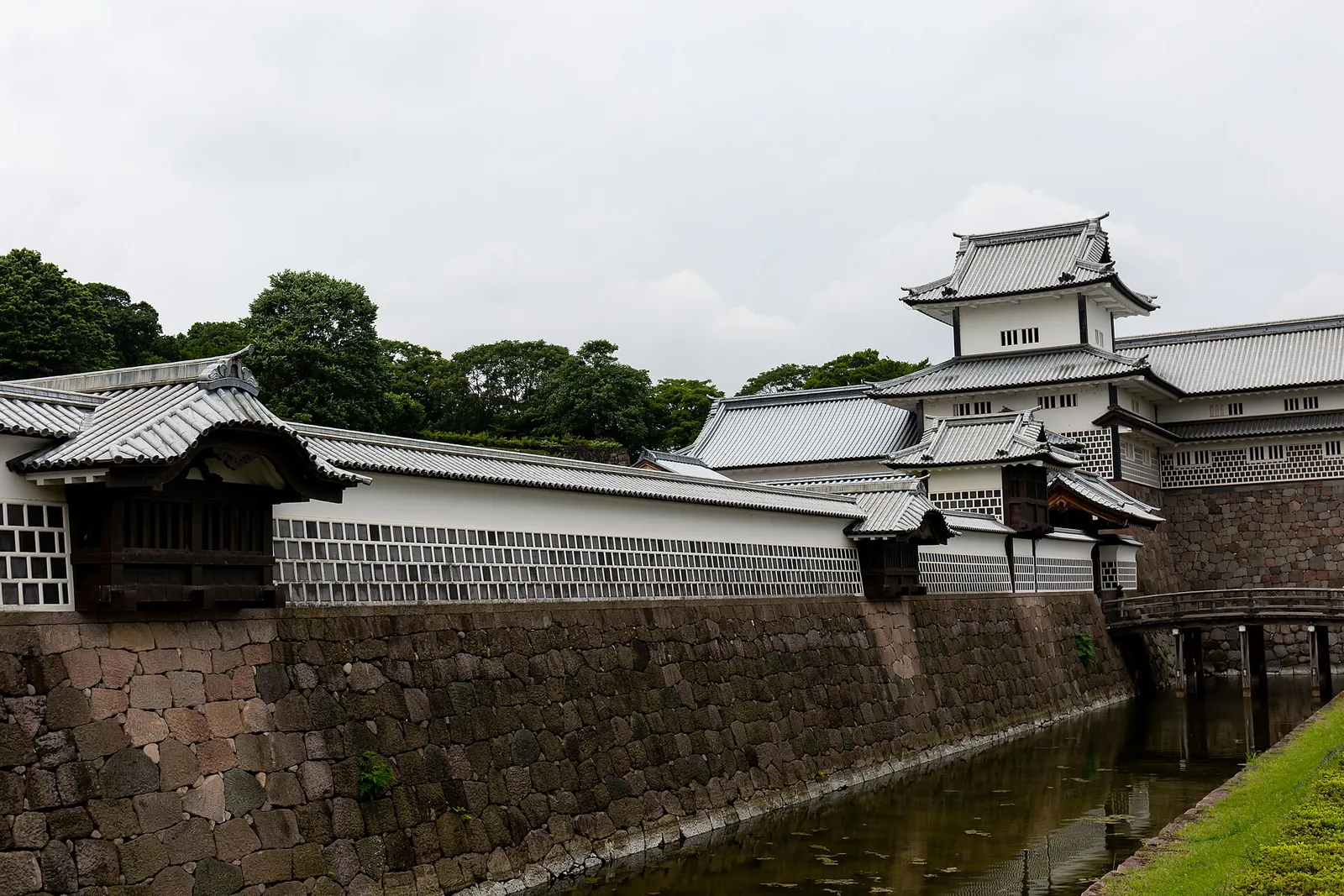
Kanazawa is what a lot of visitors hope Kyoto will be before they arrive: a genuine castle town, largely spared by the bombing of the Second World War, with its Edo period layout still legible on the ground. It sits on the Sea of Japan coast, roughly the same distance from Tokyo as Takayama and Shirakawa-go, and since the Hokuriku Shinkansen reached it, it has become an easy add on rather than a detour. The essentials are close together and walkable, unlike much of Japan’s rail network beyond the big cities.
Kenrokuen Garden
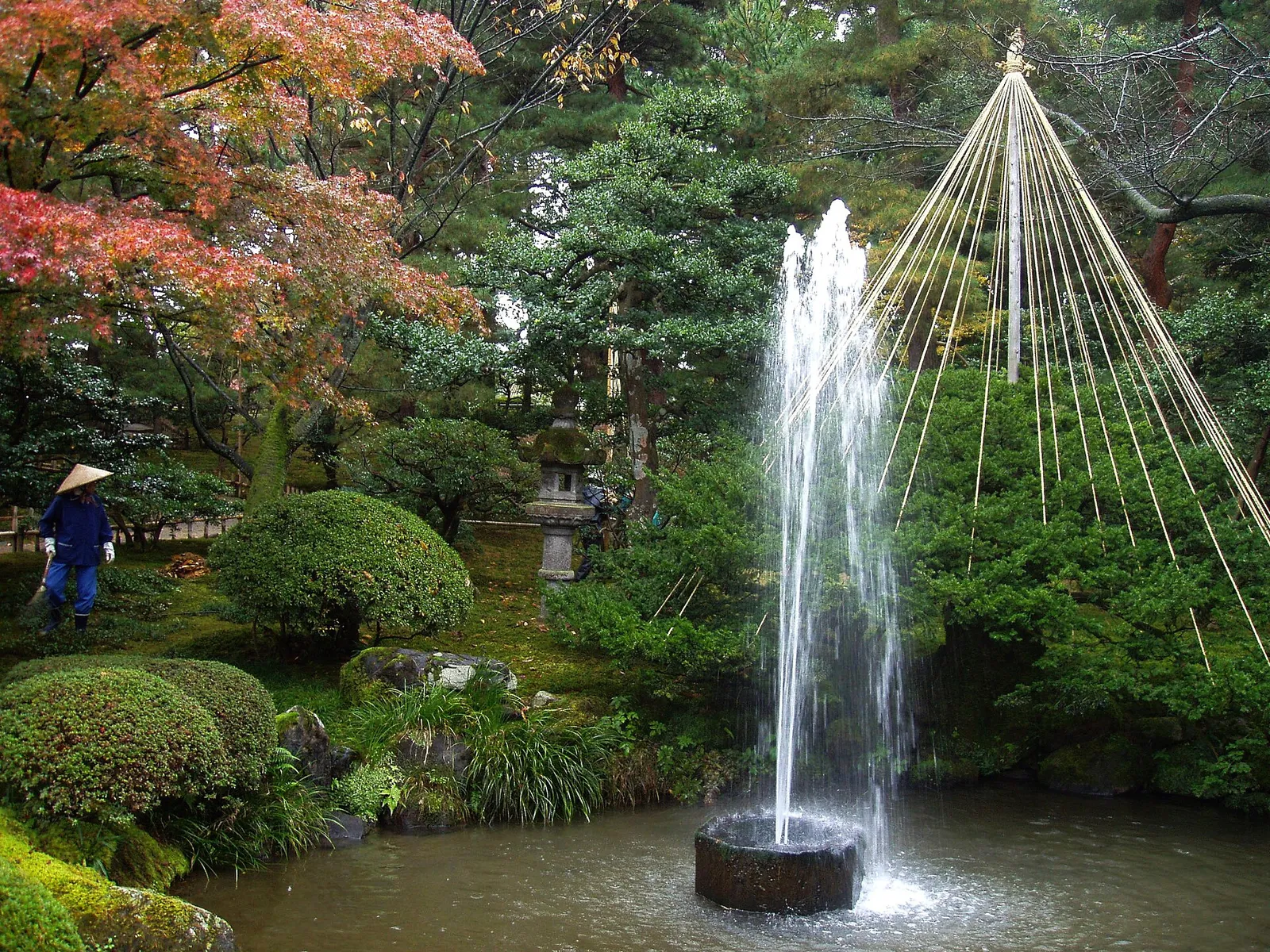
Kenrokuen is conventionally ranked as one of Japan’s three great gardens, and the reputation holds up. It was built over roughly two centuries by the Maeda clan, who ruled the domain and used the garden to display both taste and wealth. The name means “garden of six attributes,” a set of qualities a perfect garden was traditionally supposed to balance, spaciousness and seclusion among them, and the design genuinely tries to deliver all six rather than picking one.
The layout is a strolling garden, meant to be walked rather than viewed from a single fixed point, with ponds, streams and artificial hills arranged so that the view changes constantly as you move.
The Kotoji-toro lantern, balanced on two legs in the Kasumi pond, is the garden’s most photographed feature and appears on a great deal of the city’s tourism material.
Winter brings yukatsuri, the rope supports strung over the pine trees to stop heavy snow from breaking the branches, which have become a seasonal attraction of their own.
Early morning entry is worth arranging if the garden offers it during your visit, since the tour groups arrive later and the light is better for photographs.
Nagamachi and Higashi Chaya: The Samurai and Geisha Districts
A short walk from the castle, Nagamachi is where the domain’s mid ranking samurai actually lived, and a surprising amount of the physical fabric survives: earthen walls capped with roof tiles, narrow lanes designed to be defensible, and a working canal that once supplied local households.
The Nomura family residence is the district’s best preserved samurai house open to the public, with a small garden considered among the finest private gardens in the country.
The mud walls lining the lanes are the visual signature of the district and are protected as part of the historic townscape, so they cannot be altered even where the buildings behind them have changed.
Gold leaf workshops are clustered nearby, since Kanazawa has produced the great majority of Japan’s gold leaf for centuries, and several offer short hands on experiences applying it to small items.
It is quieter than the geisha district, and worth visiting at a slower pace rather than rushing through.
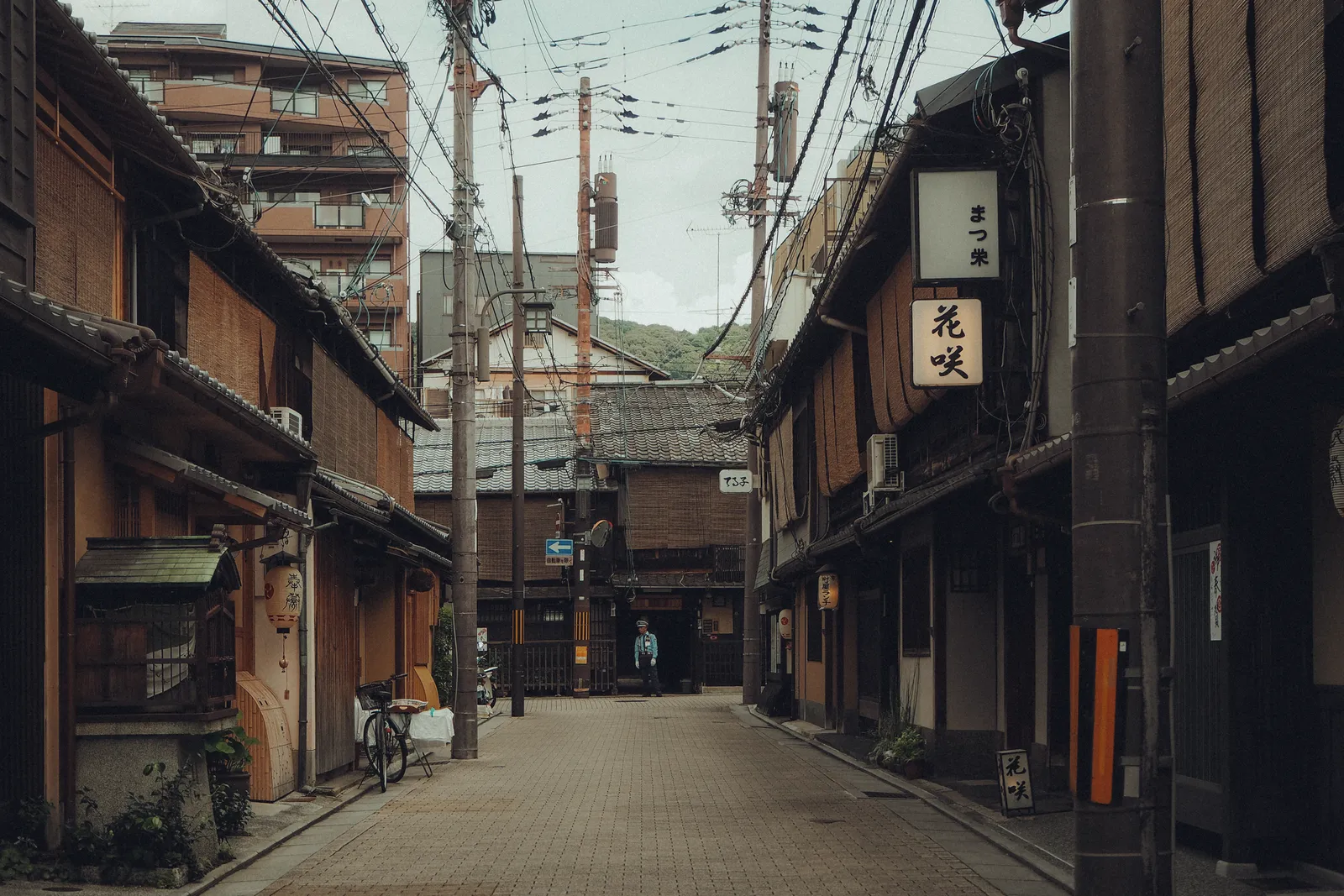
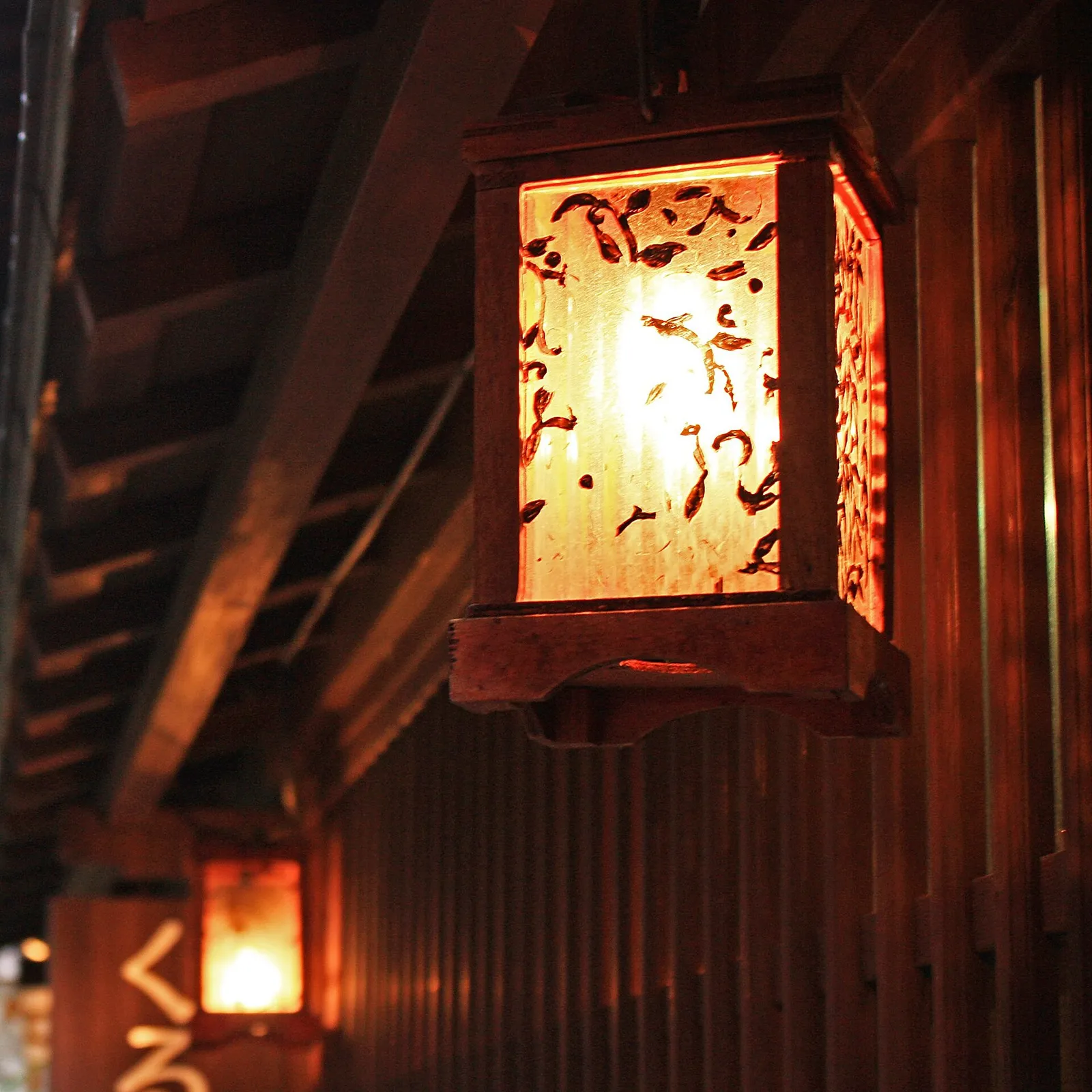
A short walk away, Higashi Chaya, the largest of the city’s surviving teahouse districts, is a row of wooden buildings with distinctive lattice fronted upper floors, where geisha, known locally as geiko, still entertain guests privately today.
The street itself is free to walk and among the most photogenic in the city, especially in late afternoon light.
A handful of former teahouses are open to the public, letting visitors see the tatami rooms and stages where performances once took place, generally for a modest entry fee.
Gold leaf and lacquerware shops line the street, selling everything from affordable souvenirs to serious craft pieces, and some let you watch the work being done.
Actual geisha performances are private, booked through connections rather than sold as tickets to passersby, so seeing one takes a specialist tour or a great deal of luck.
Omicho Market
Kanazawa’s kitchen for roughly four hundred years, Omicho Market is a covered warren of narrow lanes packed with seafood stalls, produce sellers and small counter restaurants, where the city earns its reputation for eating rather than just claiming it.
Crab in season is the headline draw, sold whole, prepared to order, or served over rice at the counter restaurants tucked between the stalls.
Sea urchin, oysters and sashimi from the Sea of Japan are sold at a wide range of prices, and it pays to compare a few stalls before committing to anything expensive.
Breakfast is genuinely a good idea here, since many counter restaurants open early and the market is calmer before the tour groups arrive.
Some stalls do not expect haggling and some do, so it is worth watching how locals interact with a vendor before assuming the marked price is negotiable.
The 21st Century Museum
For a change of pace from castle town history, the 21st Century Museum of Contemporary Art sits a short walk from Kenrokuen and has become one of the country’s most visited contemporary art museums, largely on the strength of one installation.
The Swimming Pool by Leandro Erlich, where visitors appear to be standing underwater seen from above, is the piece that made the museum famous and usually draws a queue of its own.
The building is circular and largely glass walled, deliberately designed with no obvious front or back, so that it can be entered from any direction.
Large parts of the museum grounds and some exhibition spaces are free, with a ticket needed only for specific paid exhibitions, which makes it easy to drop in briefly.
Practical Notes and Where Kanazawa Fits in a Trip
The Hokuriku Shinkansen connects Kanazawa to Tokyo directly, and this line is the reason the city has become far more visited over the past decade.
From Kansai, the journey involves a mix of limited express and shinkansen services; check the current fastest routing before you travel, since it has changed before.
The historic districts are walkable from each other, with a bicycle or the loop bus covering the rest of the compact centre.
Winter is cold and often wet, but it is also when the garden’s roped pine trees and the quieter teahouse district are at their most atmospheric.
Kanazawa works well as a stop between Tokyo and Kyoto, or as a base for the mountain villages further into the Japan Alps. Our guide to Takayama and Shirakawa-go covers those thatched roof villages and what to expect there. And for the shinkansen and IC card logistics that get you here in the first place, our guide to getting around Japan covers how the tickets and passes actually work.
The Short Version
Give Kanazawa a full day at minimum: Kenrokuen in the morning, the samurai and geisha districts either side of lunch, and Omicho Market for eating along the way rather than as one scheduled meal. Add the 21st Century Museum with a second day. The whole city is proof that a castle town left standing beats a reconstruction.
Kanazawa is the natural counterweight to the big two: close enough to reach easily, different enough to be worth the detour. The comparison most people are actually making is with Kyoto, and the honest answer is that Kanazawa is smaller, calmer and far less crowded, without the density of major sites. For a first trip, Kyoto comes first. For a second, or for anyone who found Kyoto overwhelming, this is where to go.