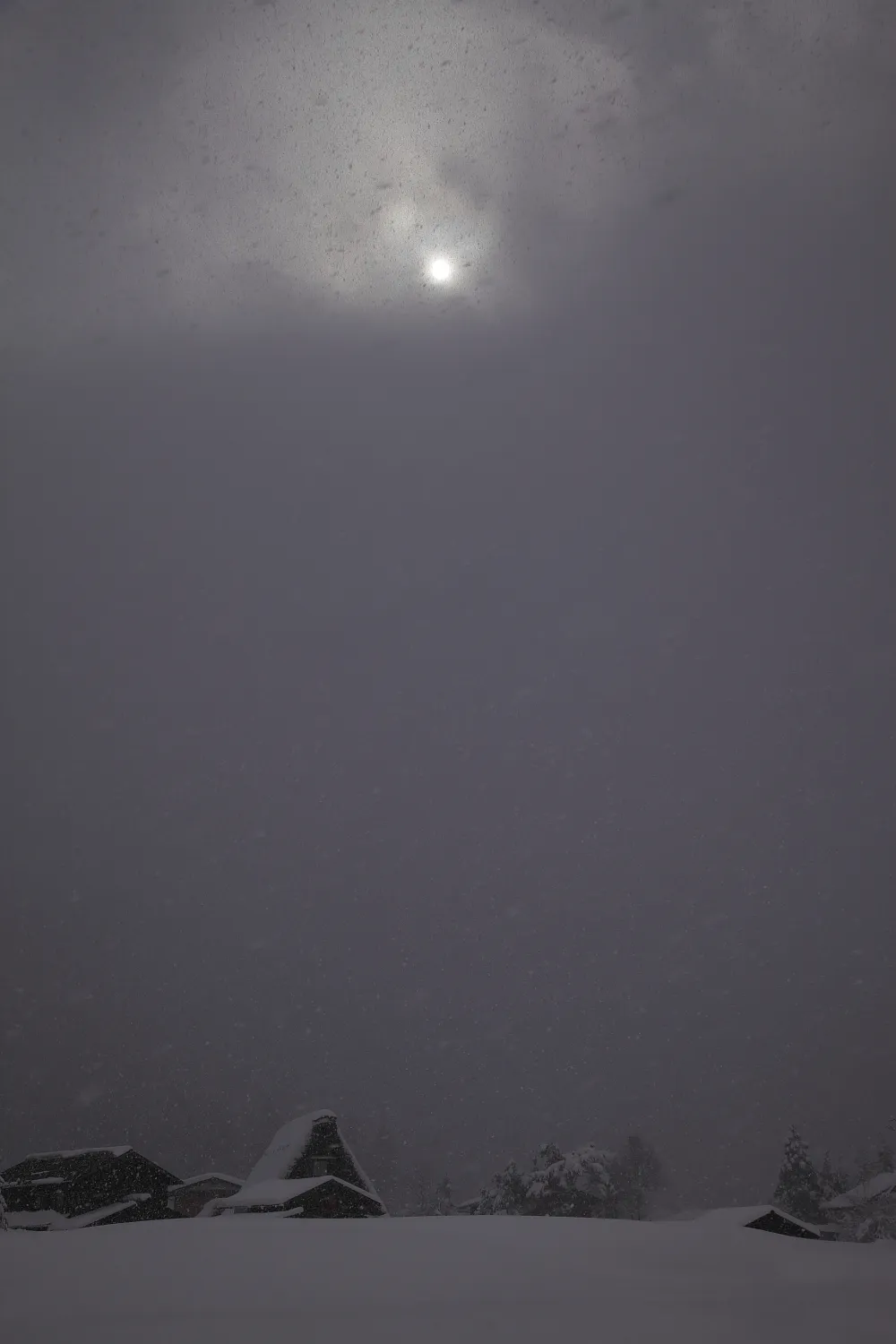
In the mountains between Nagoya and Kanazawa sit two of Japan’s most photographed rural sights. Takayama is a market town whose old quarter of dark timber merchant houses and sake breweries has barely changed since the Edo period. A bus ride further into the hills, Shirakawa-go is a village of steep thatched farmhouses built to shrug off metres of snow, still lived in by the families who own them. Together they are rural Japan at its most complete: rivers instead of neon, and a pace that slows the moment you step off the train.
Takayama, an Edo-era town built for walking
Takayama makes the better base of the two, since its compact historic centre sits almost entirely within walking distance of the station. Direct limited express trains run from Nagoya in around two hours, a scenic ride through mountain valleys, and our guide to getting around Japan is worth checking before you decide whether a rail pass suits a route like this one. Stay the night and you get the town twice: once with the day tour crowds, and again after they leave, when the old quarter empties out and belongs to the people who live there.
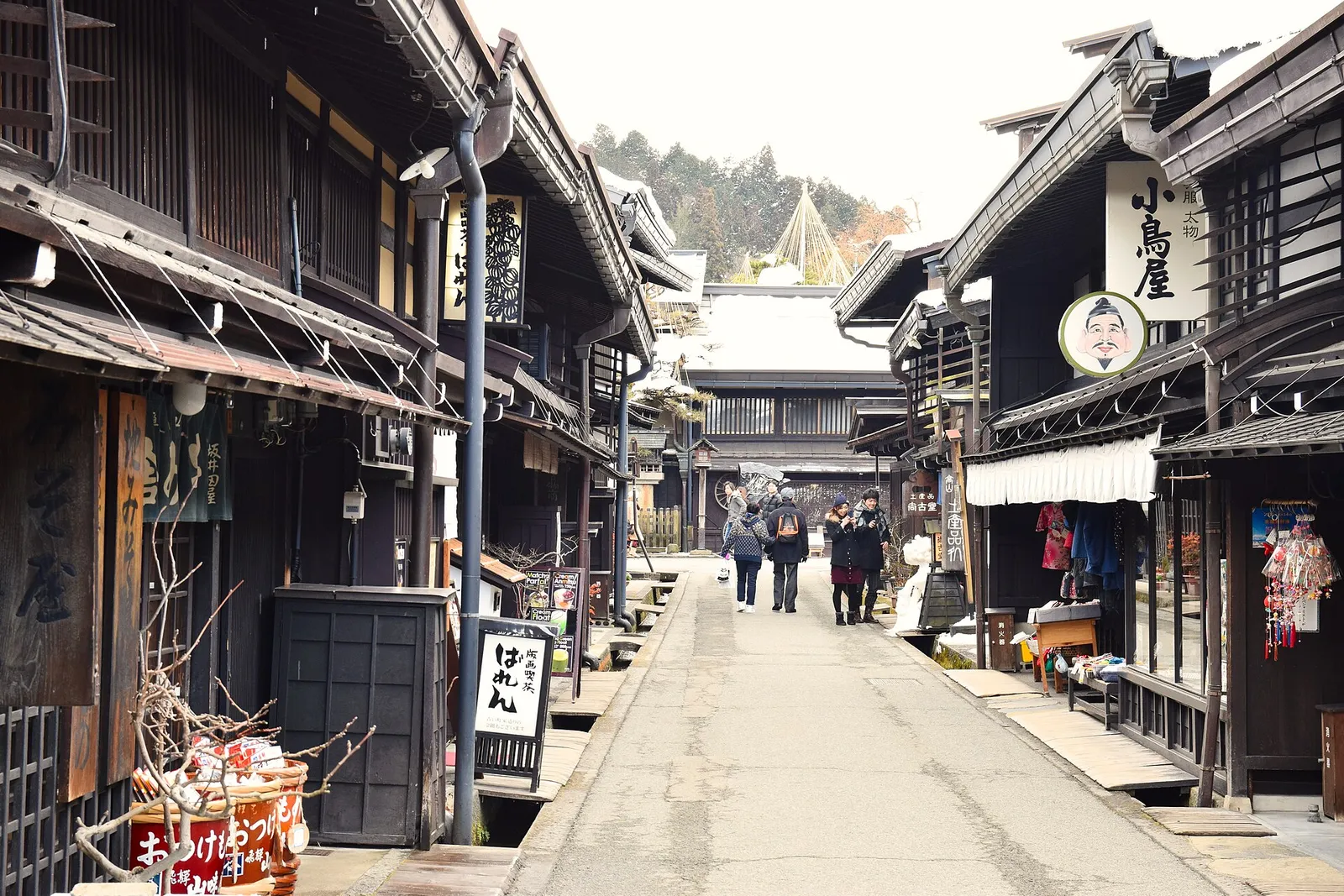
The centre of a visit is Sanmachi Suji, a quarter of narrow, stone-paved lanes lined with dark wooden merchant houses, several still working sake breweries marked by a ball of cedar fronds over the door. Two morning markets set up nearby, selling vegetables, pickles and the small, faceless red good luck dolls the town is known for. Takayama Jinya, the old government house, is one of the few Edo-period administrative buildings still standing in Japan, and Hida no Sato, an open-air folk village on the edge of town, previews the thatched farmhouse style with relocated houses from across the region.
Hida beef and the food of the old town
Takayama is a food destination in its own right. Local Hida beef, a wagyu that rivals anything from further south, turns up as grilled skewers, as beef sushi on a rice cracker, and as steak, alongside Takayama ramen in a clear soy broth. Look out too for hoba miso, vegetables and miso cooked over a small flame on a dried magnolia leaf, and gohei mochi, pounded rice on a stick in a sweet, nutty glaze, both sold from stalls through the old quarter. One honest note: the best places in Sanmachi Suji are small and close earlier than most visitors expect, so do not leave dinner to chance.
Shirakawa-go, a living village under thatch
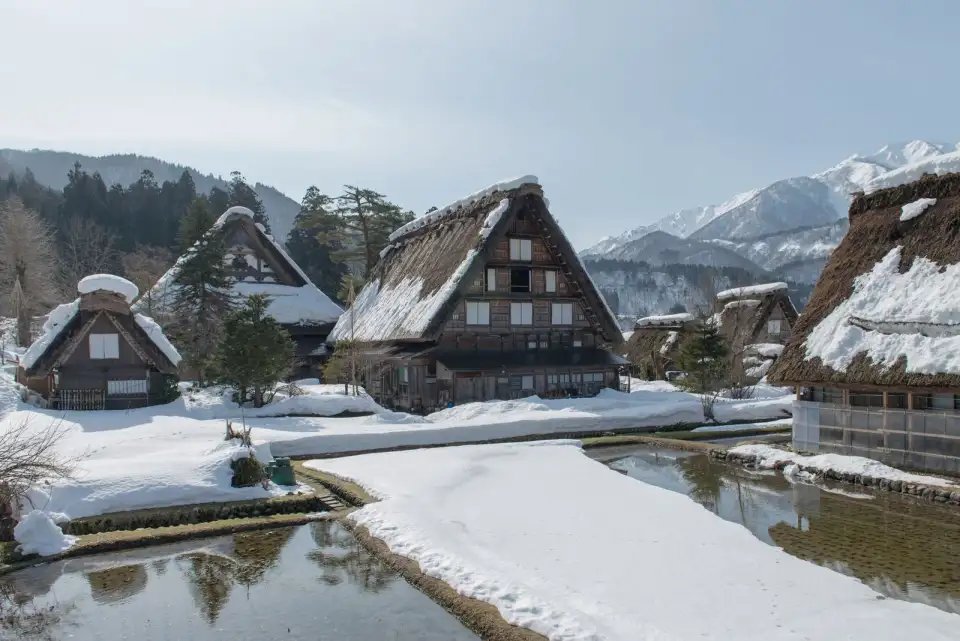
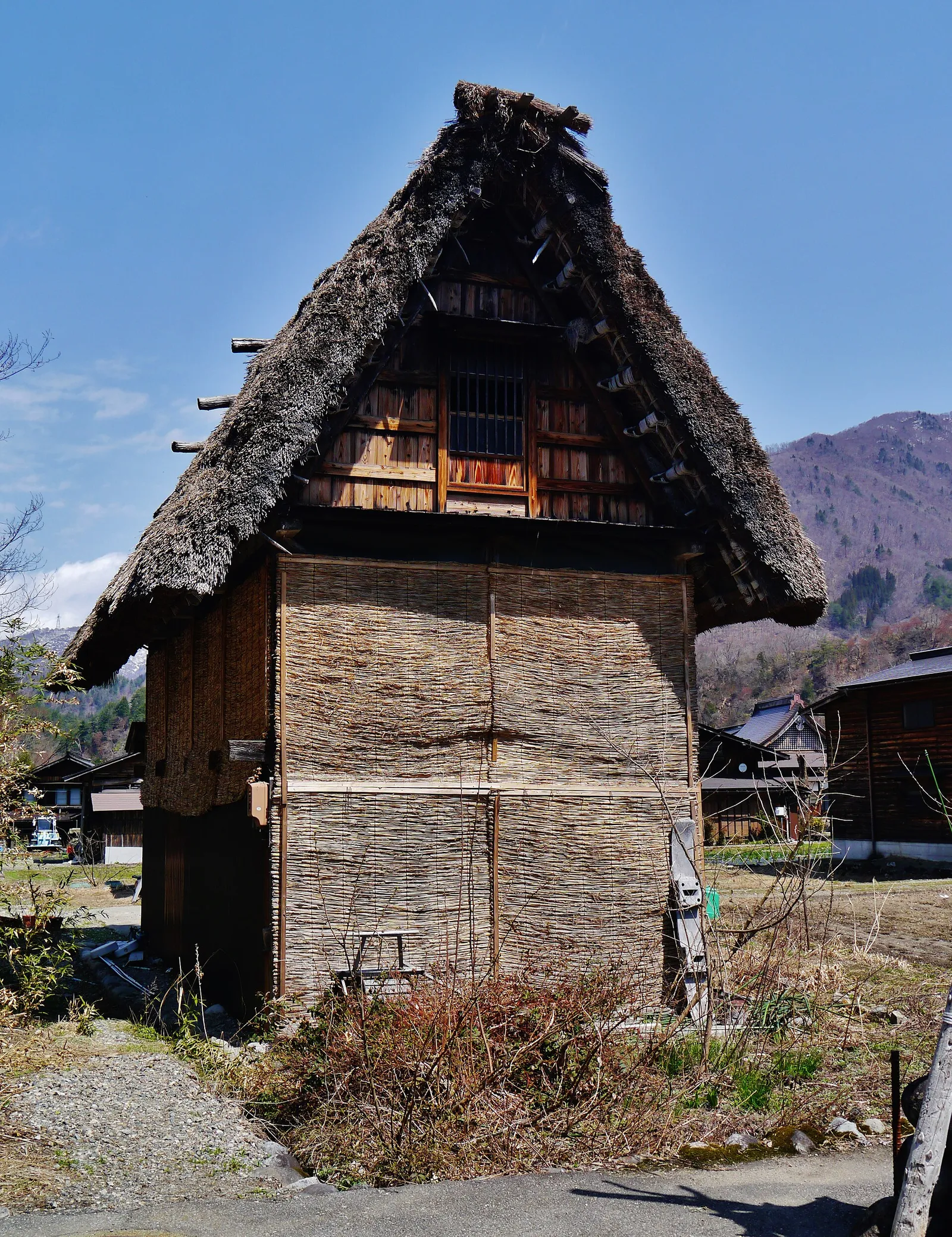
From Takayama, a regional bus covers the roughly fifty minutes out to Shirakawa-go, a UNESCO World Heritage village built almost entirely in the gassho-zukuri style: timber farmhouses with steep thatched roofs designed to shed heavy snow rather than collapse under it. Most run to three or four storeys, the upper floors once used for raising silkworms.
It helps to arrive understanding what this place actually is. Shirakawa-go is not a heritage park: it is a working village where people live, and the community still re-thatches the roofs together as a shared task. A handful of houses are open to visitors, a few more have become cafes, and the rest are simply somebody’s home, often with washing drying in the yard.
For the classic view, climb to the Shiroyama observation point above the village, on foot up a short path or by shuttle. It is also the most crowded spot here, so go up as soon as you arrive. In the village itself, Wada House is open to the public and worth the entry fee: beams lashed together with rope rather than a single nail, and a hearth sunk into the floor whose smoke has cured the thatch for generations. Quiet paths run through the rice paddies beyond the main street, and in autumn they are lined with the same red maples that fill our guide to Japan’s autumn leaves.
Day trip or a night under a thatched roof
The real magic of Shirakawa-go is staying the night. A handful of the gassho-zukuri houses run as minshuku, simple family-run guesthouses, with a tatami room, a home cooked dinner around the hearth, and, once the last bus pulls out, a silence a day visitor never gets close to. Rooms are few and booked out well ahead, bathrooms are usually shared, and dinner is served at a fixed hour with no flexibility either side of it.
For most travellers, a day trip is the simpler choice, since the village is small enough to cover comfortably in half a day. Leave heavy luggage in a locker back in Takayama, and build the day around the return bus, since that is what decides when your visit ends.
Winter here, and respecting a place people call home
Winter turns Shirakawa-go into the postcard everyone recognises, but it is not just decoration. Paths are cleared yet still slick underfoot, and snow slides off the steep roofs without warning, so bring shoes with real grip, and allow for the early dark and the chance of a delayed bus.
The village’s evening winter illuminations, when selected houses are lit after dusk, are the most photographed thing here and the hardest to plan around: they run on a handful of dates set each year, access is by advance registration, and the limited rooms nearby book out for those nights first. Do not build a trip around a specific date; check the official Shirakawa-go tourism site closer to the time instead. A plain snowy day here, illuminations or not, is still one of the best-looking things in Japan.
And because this is somebody’s home rather than an exhibit: stay off private land, do not photograph residents, their washing, or the inside of a house that is not open to visitors, and keep to the marked paths rather than cutting across the rice paddies. Smoke only where it is permitted, and carry out anything you bring in, since there is almost nowhere here to put it.
Where this fits in a Japan itinerary
The easiest way to slot this region into a trip is to keep moving forward rather than doubling back: Nagoya to Takayama, a night or two there, then on through Shirakawa-go towards Kanazawa, so the mountains become a corridor rather than a detour. If you are weighing up mountain day trips elsewhere in the country, our guide to Nikko covers the other classic option, shrines and a waterfall a couple of hours out of Tokyo. Takayama and Shirakawa-go sit further off the main line and take real planning to reach, which is why they still feel like somewhere the tour buses have not quite caught up with.
An hour further along the same line sits the castle town that the war left alone. Our guide to Kanazawa covers the garden, the samurai and geisha districts and the market.