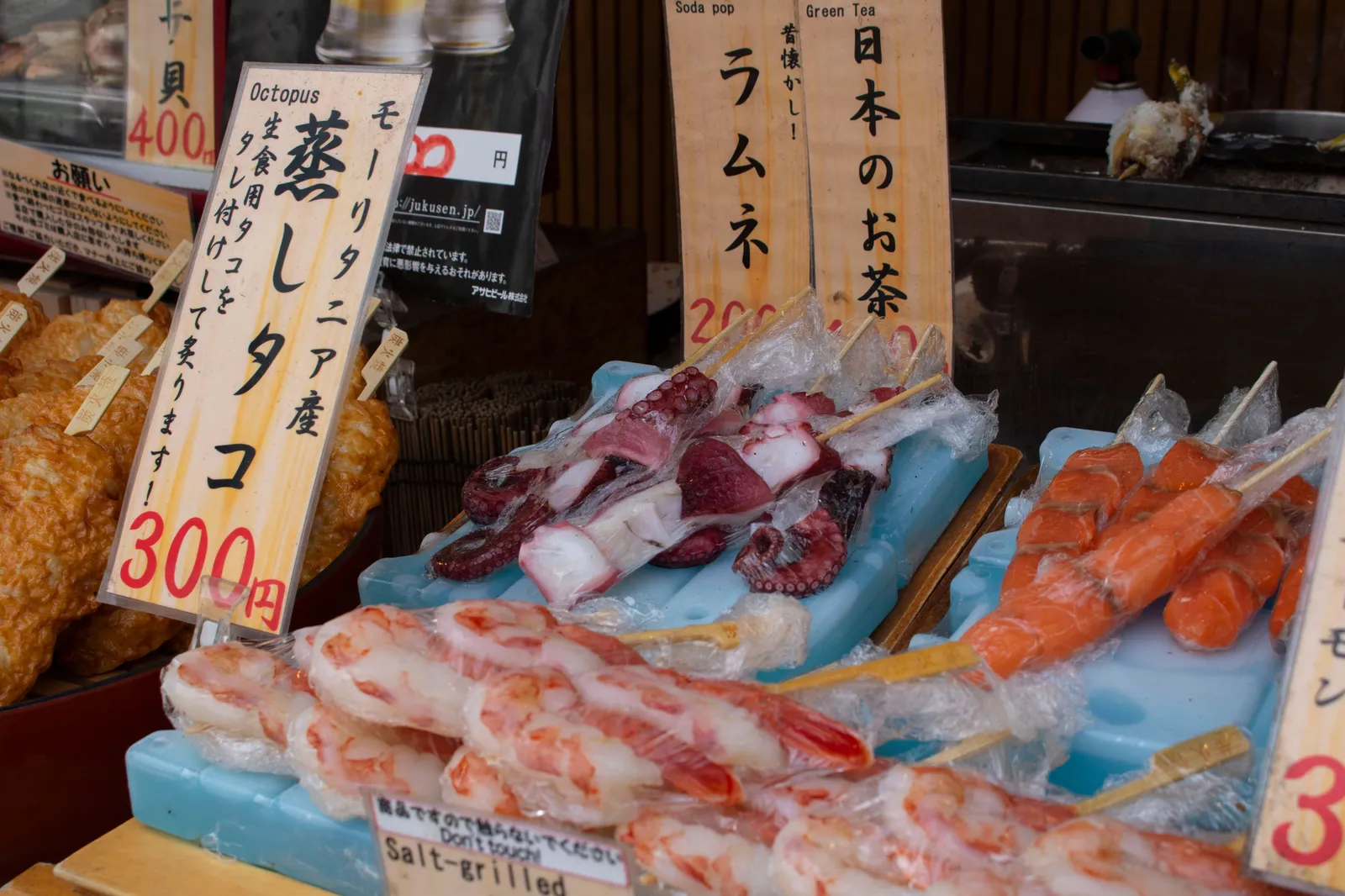
Kansai calls itself Japan’s kitchen, and after a few days here it is hard to argue. This plan drops the usual sightseeing-first structure and builds each day around eating, using temples, markets and neighbourhoods as the route between meals rather than the other way round. It works well from a base in either Osaka or Kyoto, since the two sit close enough by train that the food itself becomes the reason to move around. For the wider picture on what to order and where, see our Japan food guide, and read Dotonbori’s street food before your first Osaka evening.
Itinerary at a glance
| Day | Base | The signature experience |
|---|---|---|
| 1 | Osaka | Making your own okonomiyaki on the griddle |
| 2 | Osaka | A morning market walk with tastings at Kuromon Ichiba |
| 3 | Kyoto | A kaiseki lunch, far cheaper than the same kitchen’s dinner |
| 4 | Kobe | Learning to spot a genuine certified Kobe beef restaurant |
| 5 | Uji | Matcha at its source and a tasting flight |
Day 1: Osaka street food, Dotonbori and Shinsekai
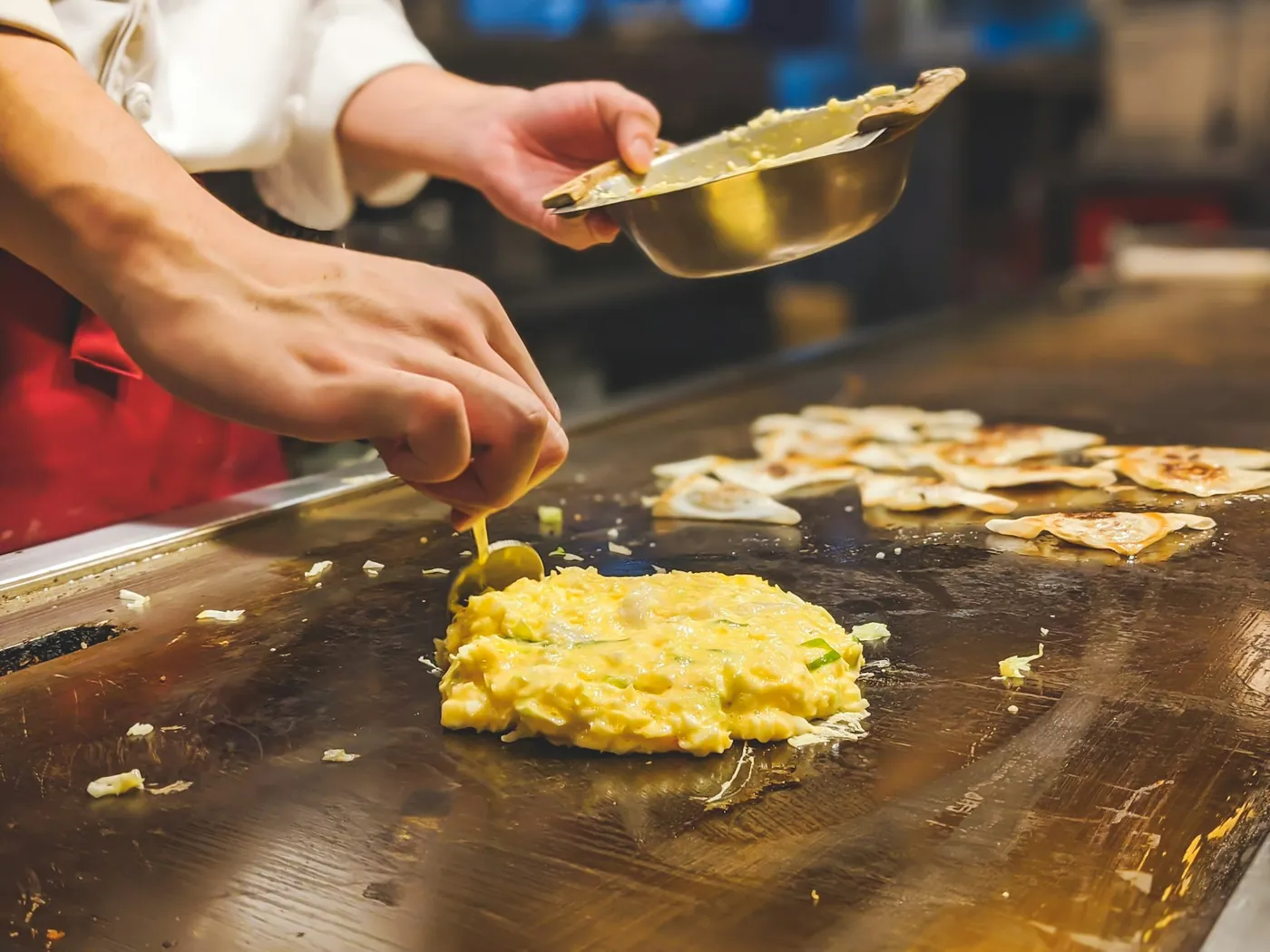
Osaka earns its reputation as Japan’s food capital in the first hour you spend here, and Dotonbori is where that reputation is loudest. The canal-side strip is packed with stalls turning out takoyaki, small balls of batter and octopus cooked on a special griddle and finished with sauce and dancing bonito flakes, and okonomiyaki, a savoury cabbage pancake cooked to order in front of you. Some restaurants let you griddle your own, batter and toppings arriving at your table for you to cook, which turns dinner into a small performance. Beyond Dotonbori, Shinsekai has a rougher, more old-fashioned character, its retro tower presiding over streets of kushikatsu counters serving breaded, deep-fried skewers of meat and vegetables. The house rule here is strict and universal: no double-dipping a used skewer back into the shared sauce, only fresh ones, a small but firmly enforced piece of Japanese dining etiquette.
Food: takoyaki, okonomiyaki and kushikatsu are the three dishes to build the day around, all best eaten standing up at a counter rather than seated at a formal table. The signature experience: cooking your own okonomiyaki on the griddle at a table that hands you the ingredients and lets you take over. Optional tour: a Dotonbori and Shinsekai food tour is worth booking if you want a local guide steering you past the tourist-facing stalls to the ones with a genuine local following.
Day 2: Osaka markets, Kuromon Ichiba and a standing bar
Give the second day to Osaka’s markets, starting with an early walk through Kuromon Ichiba, a covered arcade where fishmongers grill scallops, oysters and skewers right at their stalls for you to eat on the spot. It gets busy quickly, so an early morning visit means shorter queues and fresher tastings before the day-trip crowds arrive. Later, a depachika, the food hall in the basement of a major department store, is worth an hour on its own, rows of counters selling everything from delicate wagashi sweets to elaborate bento boxes prepared fresh through the day. As evening comes, look for a standing bar tucked under the railway tracks, a distinctly Osaka style of drinking spot where regulars perch at a narrow counter with a small plate and a cold drink between trains rattling overhead.
Food: grilled seafood straight off the stall at Kuromon Ichiba is as fresh as street food gets, and a depachika box makes an easy, high-quality lunch to eat in a nearby park. The signature experience: a morning market walk with tastings, working your way down the arcade stall by stall before the crowds build. Optional tour: a Kuromon Ichiba guided tasting walk is useful for language help ordering and for pointing you towards stalls that specialise in what is in season.
Day 3: Kyoto, Nishiki Market and kaiseki
Move to Kyoto for a more refined register of Kansai cooking. Nishiki Market runs end to end through the centre of the old city, a narrow covered street of stalls selling pickles, skewers, tofu products and local specialities that rewards slow grazing rather than a single stop. For lunch, look into a kaiseki set menu, the multi-course, seasonally driven style of formal Japanese dining that Kyoto is famous for; the same kitchens that charge a premium for dinner often serve a scaled-down lunch version at a noticeably gentler price, making midday the smarter time to try it. In the temple district, tofu and yuba, the delicate skin that forms during soymilk preparation, appear across everything from simple simmered dishes to full tasting courses, a tradition that traces back to centuries of Buddhist temple cooking.
Food: a kaiseki lunch is the standout of the day, and tofu or yuba dishes near the eastern temples round out the afternoon without weighing you down before an evening out. The signature experience: a Kyoto cooking class or a sake tasting in Fushimi, the historic brewing district on the city’s southern edge. Optional tour: a Nishiki Market guided tasting walk is a good use of an hour if you want context on what each stall specialises in, since much of the signage is in Japanese only.
Day 4: Kobe, beef and the harbour
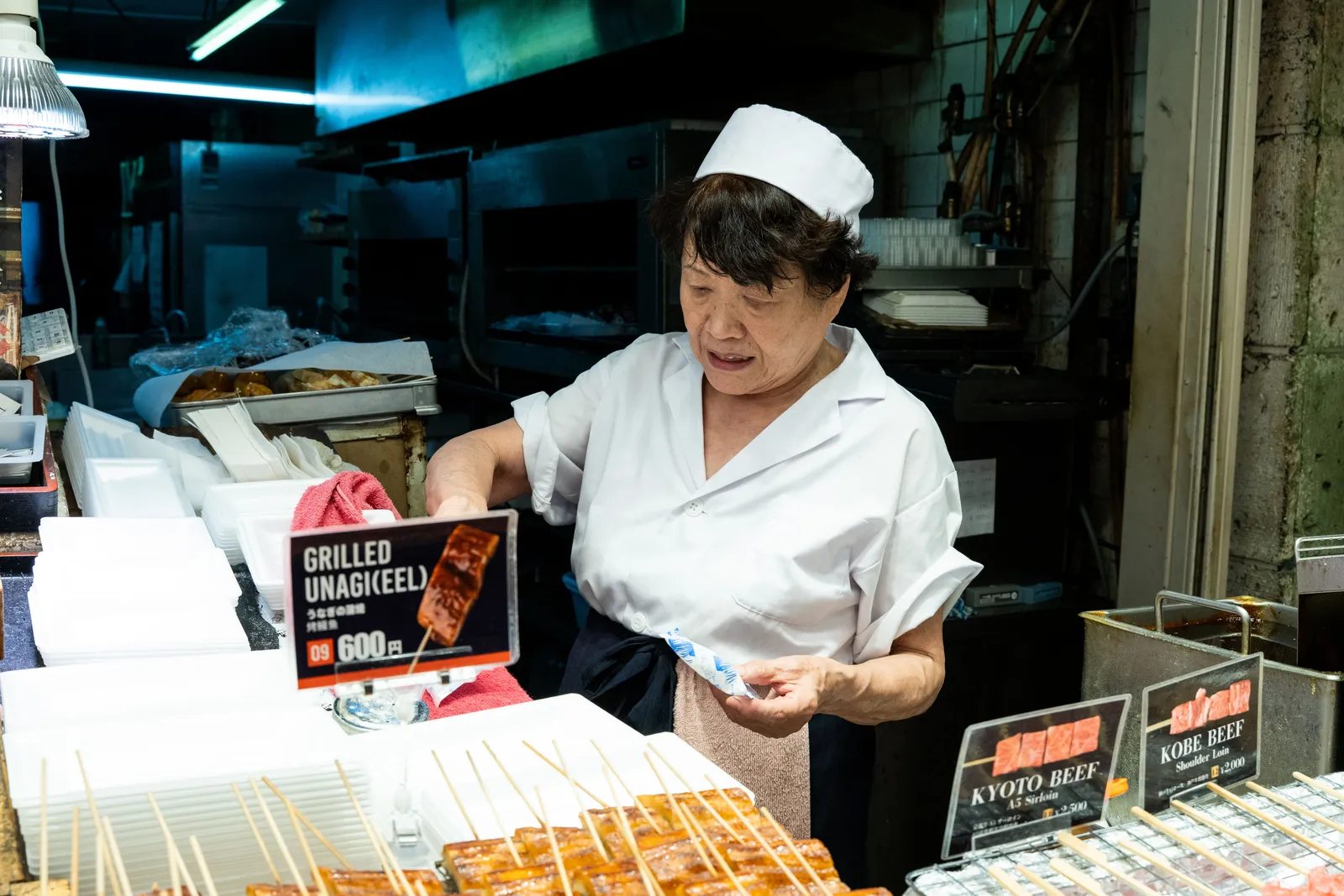
Kobe sits close enough to Osaka and Kyoto for an easy day trip, and its name is attached to enough loosely related beef around the world that it is worth knowing what to look for locally. Genuine Kobe beef comes from a specific breed raised under a certified programme, and restaurants that serve the real thing tend to display their certification clearly rather than relying on the name alone printed on a sign outside; if in doubt, ask. Beyond the beef, Kobe’s harbour area makes for a pleasant wander, and the Nada district on the city’s edge is one of Japan’s most important sake-brewing regions, its breweries built here specifically for the quality of the local water. A brewery tour is a low-key, unhurried way to spend an afternoon, usually finishing with a tasting flight that shows how differently the same rice and water can turn out.
Food: a certified Kobe beef meal is the obvious centrepiece, cooked simply, usually on a teppan grill, to let the marbling do the work. The signature experience: a Nada sake brewery tour, walking through the same water sources that drew the industry here in the first place. Optional tour: a combined Kobe beef and Nada sake day tour bundles both halves of the day if you would rather not plan the connections yourself.
Day 5: Uji, matcha at its source
Finish the trip in Uji, a short ride from Kyoto and the historic heart of Japan’s matcha and green tea production for centuries. Byodoin, the temple whose image appears on the ten-yen coin, is worth the visit for its architecture alone, reflected in the pond in front of it in a way that has made it one of the most photographed buildings in the country. The town itself is built around tea in a way few other places are: shops offering tasting flights that show the difference between grades and preparation styles, and a run of cafes serving matcha soba, matcha desserts and other dishes that use the tea as an ingredient rather than just a drink. Given how much of Kansai’s cooking rests on dashi, a stock typically made from fish and kelp, it is worth asking about ingredients if that matters to your diet, since even vegetable-forward dishes can carry a fish-based base.
Food: matcha soba and matcha sweets are Uji’s signature, best paired with a proper tasting flight to understand grade and preparation before you buy tea to take home. The signature experience: a tea tasting flight at a shop that has been selecting leaves from the surrounding hills for generations. Optional tour: a Uji tea ceremony and tasting experience is worth booking ahead if you want the full ritual explained rather than just the cup at the end.
Practical tips
- Much of Kansai’s stock is dashi based, so flag any fish or shellfish restriction clearly when you order, even for dishes that look vegetable-only.
- Standing bars and market stalls often expect cash, so carry more than you think you will need through Osaka’s markets.
- Trains link Osaka, Kyoto, Kobe and Uji quickly and often; see getting around Japan for how the local lines and IC cards work.
- Kaiseki and any Kobe beef restaurant with a wait worth having are best booked ahead rather than walked into.
- See our Kyoto guide for how to fit temple visits around this food-first structure if you want to add sightseeing back in.
- Opening hours for markets and individual stalls shift by season and by stallholder, so confirm timing locally rather than assuming a fixed schedule.