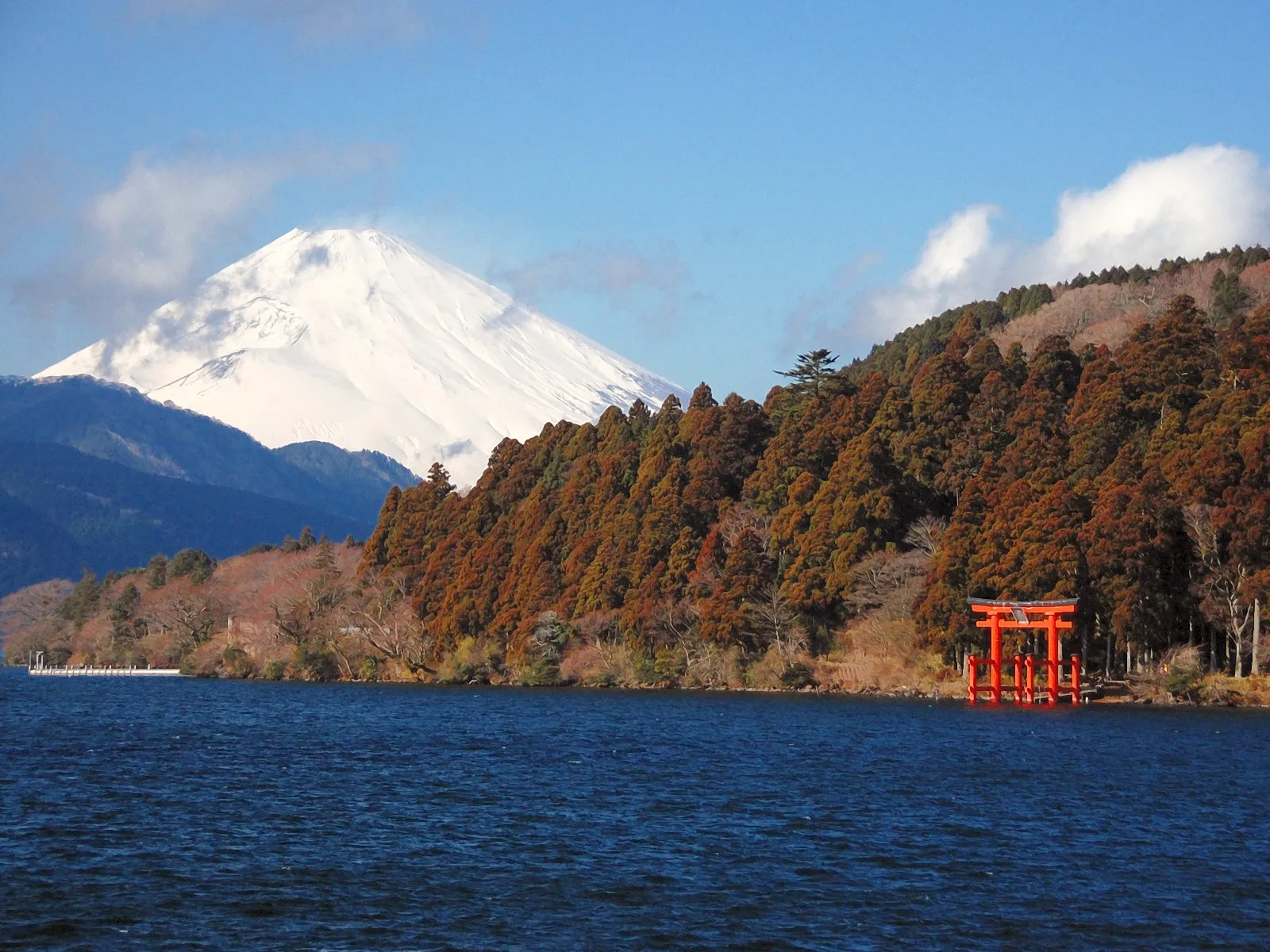
Hakone is a volcanic caldera ninety minutes from Tokyo that has been turned, with characteristic thoroughness, into a circuit. You arrive by train, transfer to a small mountain railway that climbs by reversing back and forth up the hillside, then a funicular, then a ropeway over a valley of sulphur vents, then a boat across a crater lake, then a bus, and you end up back where you started having done almost no walking and seen a great deal. Along the way there is hot water everywhere.
The loop, in order
The mountain railway, which switchbacks up the hillside, the driver and guard changing ends at each reversal.
The funicular, a short steep hop to the ropeway station.
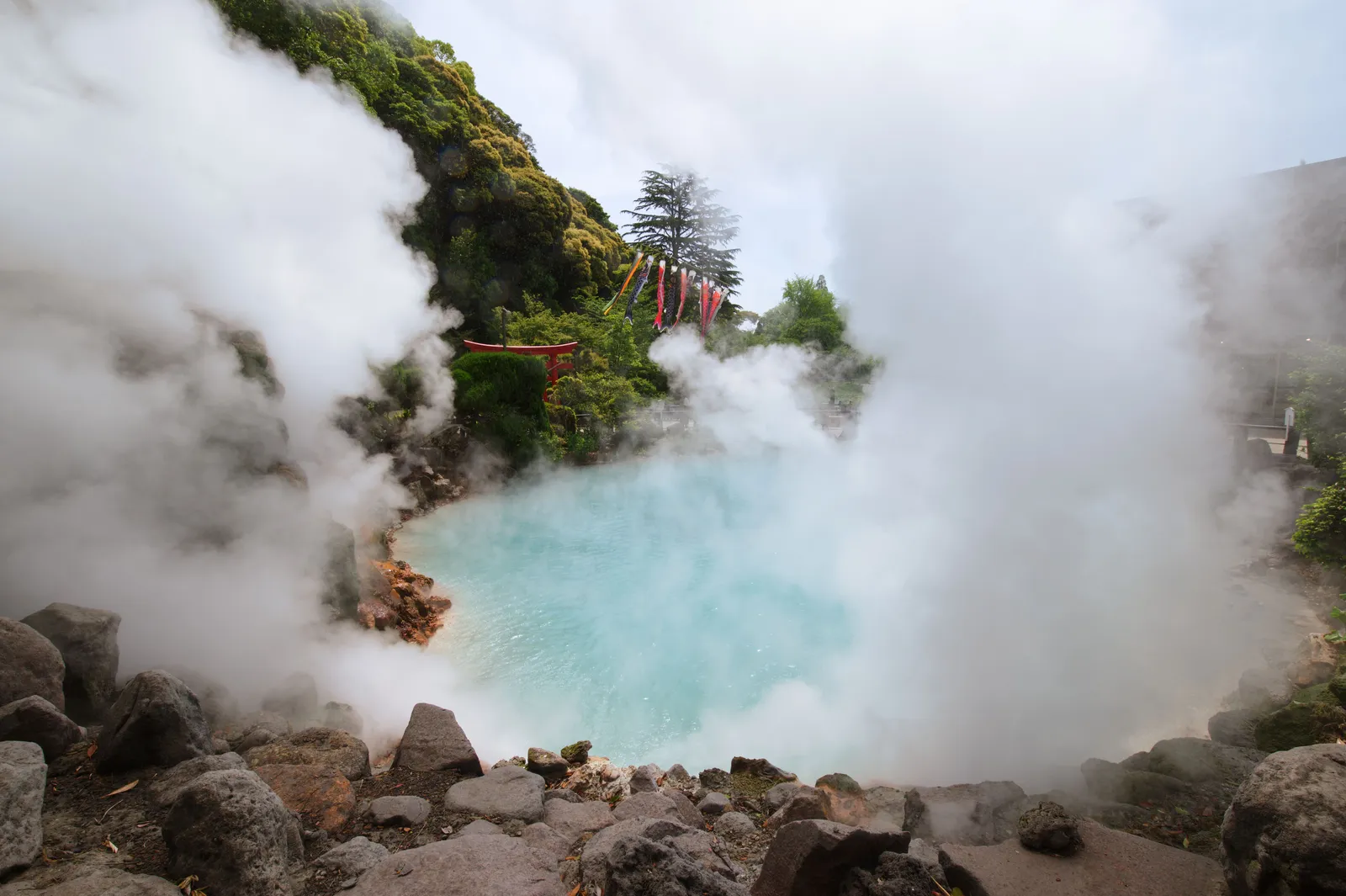
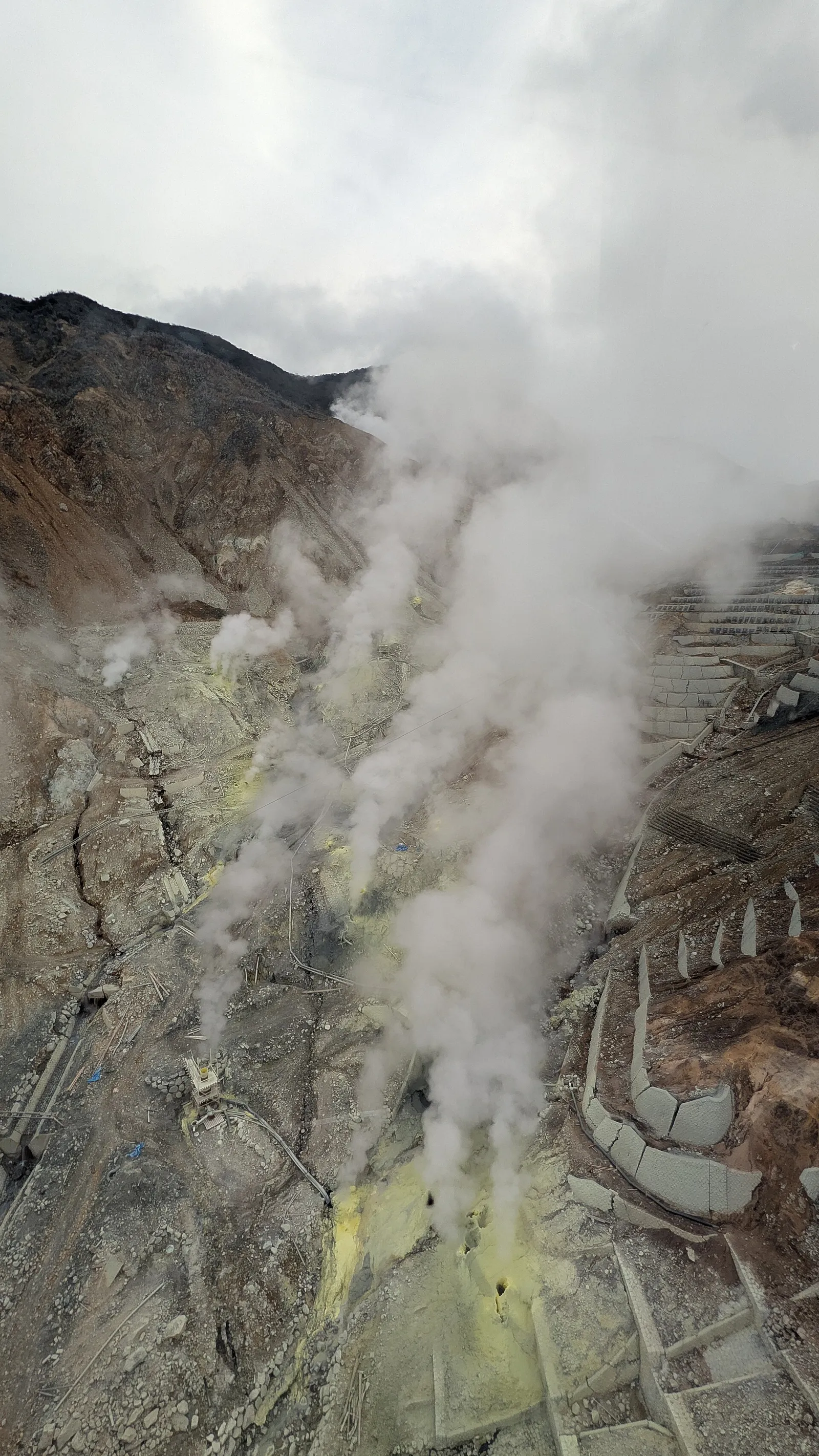
The ropeway, crossing directly over Owakudani, a valley of steaming sulphur vents where they boil eggs black in the hot springs.
The lake boats, styled as pirate ships for reasons nobody can defend, crossing Lake Ashi.
The bus back down to the main station, closing the circle.
Roughly five to six hours without stopping properly, which is why one night is better than one day.
What to stop for
The open air museum, a hillside of modern sculpture with a Picasso pavilion and a hot spring foot bath, which is far better than it sounds.
Owakudani, for the sulphur, the view and the black eggs, subject to volcanic activity closures.
The lake shore torii at Hakone Shrine, standing in the water, which is the photograph everyone wants and now has a queue.
The old Tokaido road, a surviving stretch of cedar lined highway with a restored checkpoint.
A narrow gauge detour to Gora, where most of the ryokan are.
The baths, which are the actual reason to be here.
The onsen part
Public baths in the towns, cheap and open to day visitors, with towels for hire.
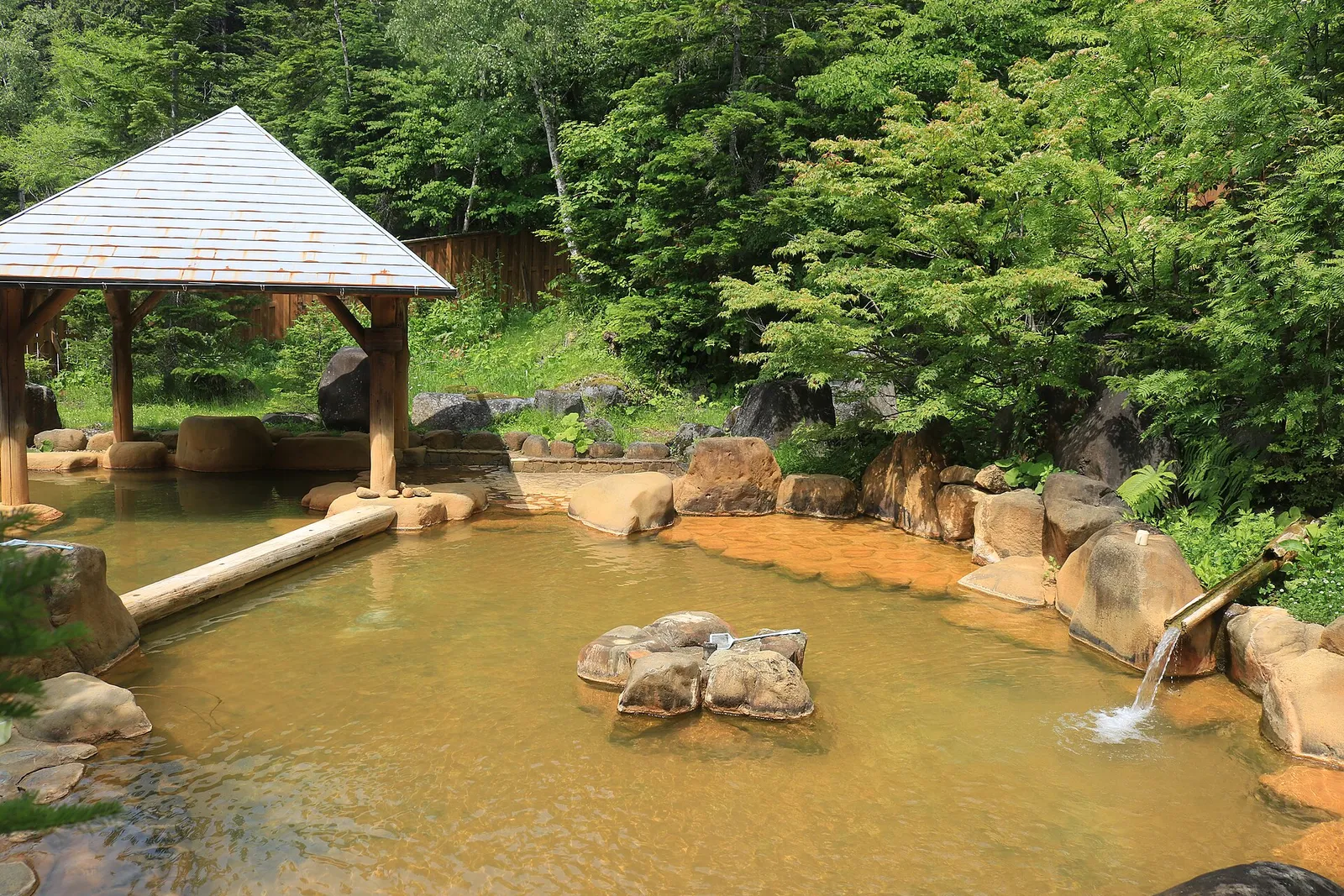
Ryokan baths for guests, usually with an indoor and an outdoor pool.
Private baths, bookable by the hour at many properties, which solve tattoos and shyness at once.
The rules: wash thoroughly at the taps before getting in, no swimwear, no towel in the water, hair up.
Water quality varies between springs, and several here are genuinely different in mineral content and colour.
Practical notes
The private railway from Tokyo runs from a different terminus than the bullet train and is the usual route.
Luggage forwarding from your Tokyo hotel to the ryokan is inexpensive and normal, and it makes the loop far easier.
The regional pass covers most of the loop and is worth pricing against your plan.
Autumn weekends are the busiest of the year here, and everything queues.
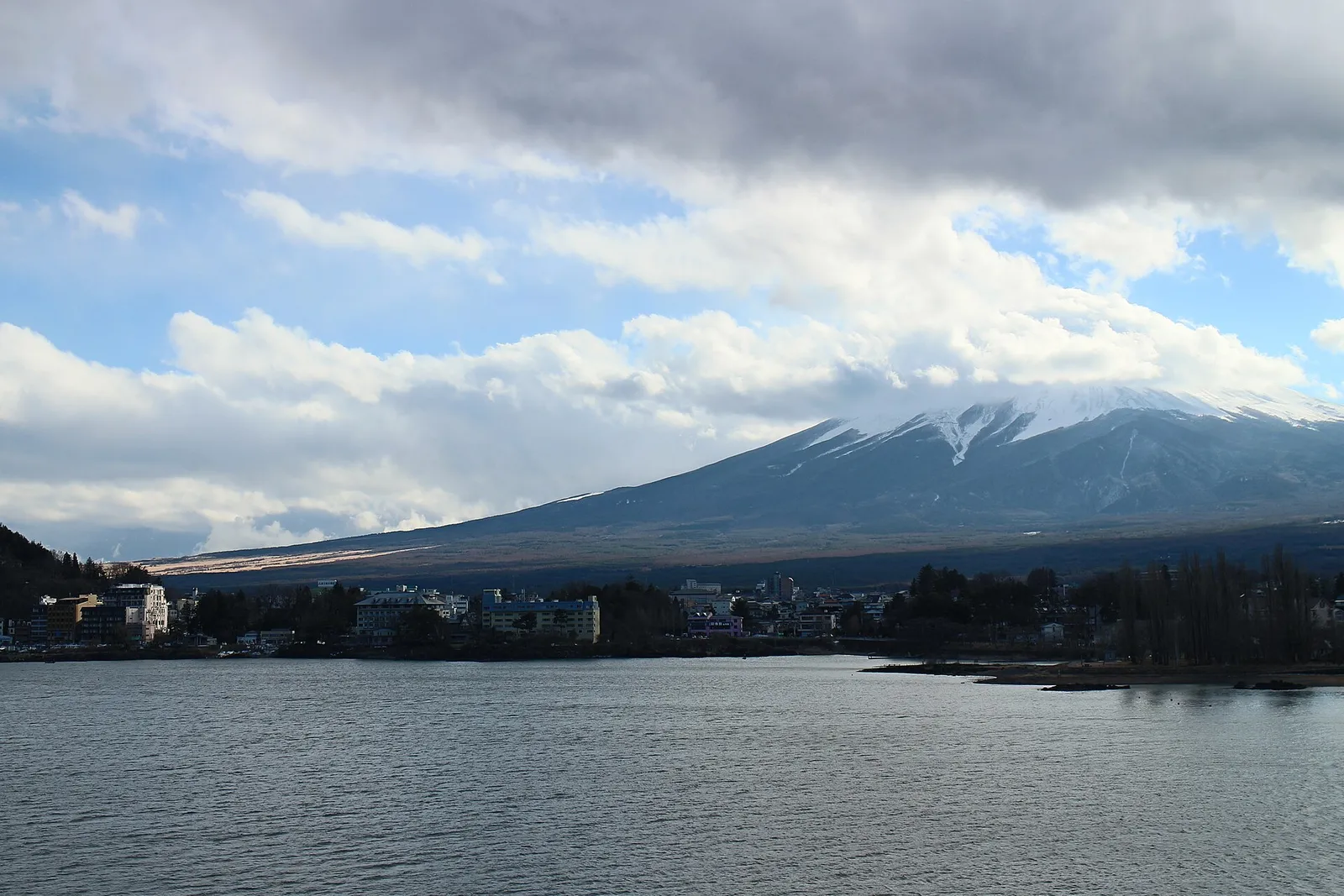
Fuji is shy. Do not build the day around seeing it.
Cash is still useful in the smaller towns.
Where this fits in a Japan trip
Hakone is one night, ideally between Tokyo and Kyoto rather than as a return trip.
For what actually happens in a Japanese bath and the etiquette that makes it comfortable, our onsen guide covers the rules.
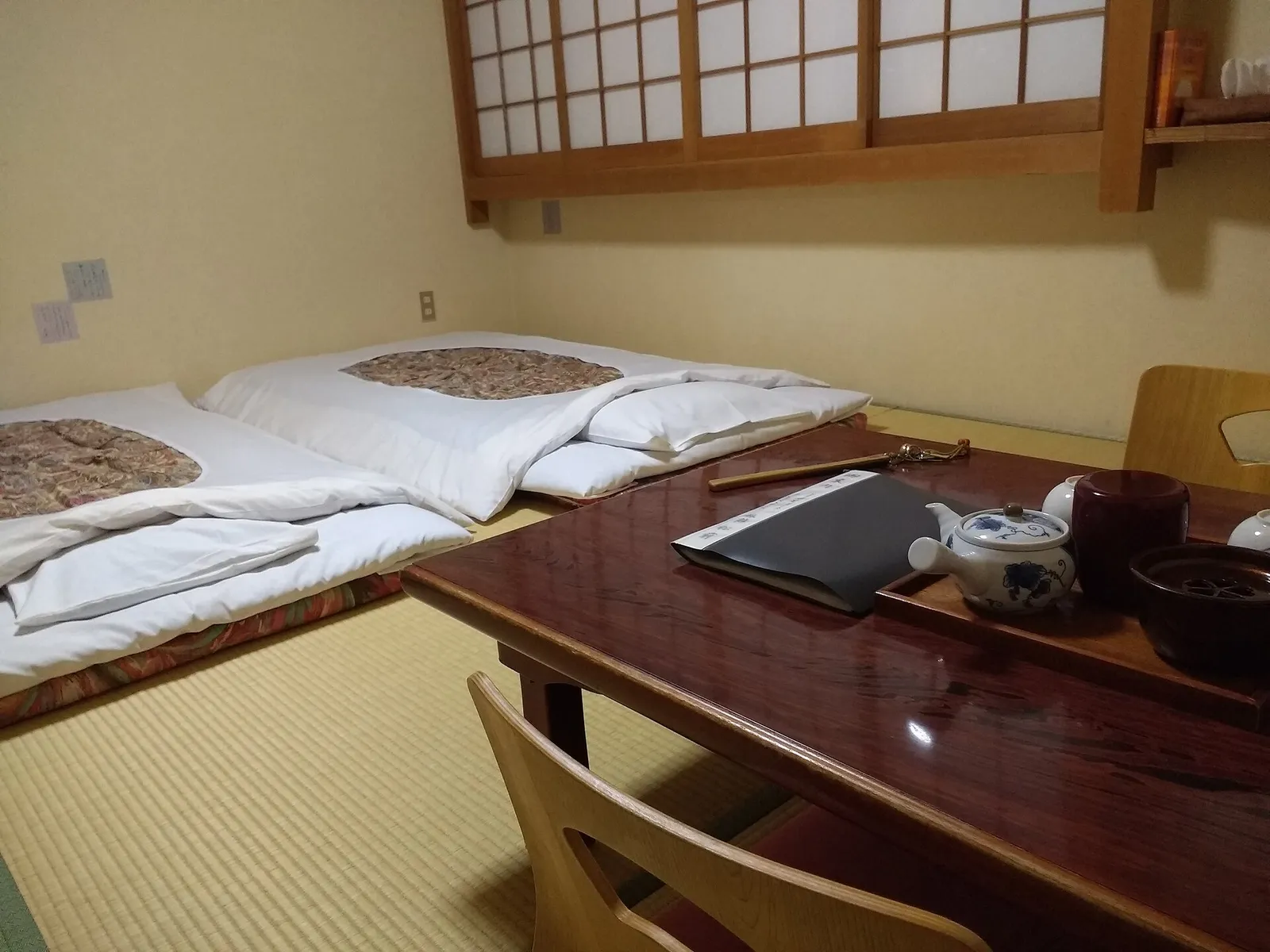
For the kind of inn most people stay at here, and what the dinner and the yukata are about, our ryokan guide covers the experience.
And for the other side of the mountain, with the lakes and the classic pagoda view, our guide to Mount Fuji and Kawaguchiko covers the alternative.
The short version
Give Hakone one night rather than one day, and forward your luggage from Tokyo so you are carrying nothing on the loop. Do the circuit in order, stop at the open air museum, and check whether the ropeway is running before you build the day around it. Book a room with a private bath if the budget stretches, because it is the difference between visiting and enjoying. Get in the water twice, once at night and once before breakfast. And treat any sighting of Fuji as a bonus rather than a plan.
Hakone works better as part of a loop than as a single night. Our five days of onsen and nature links it to the Fuji lakes and the baths beyond them.