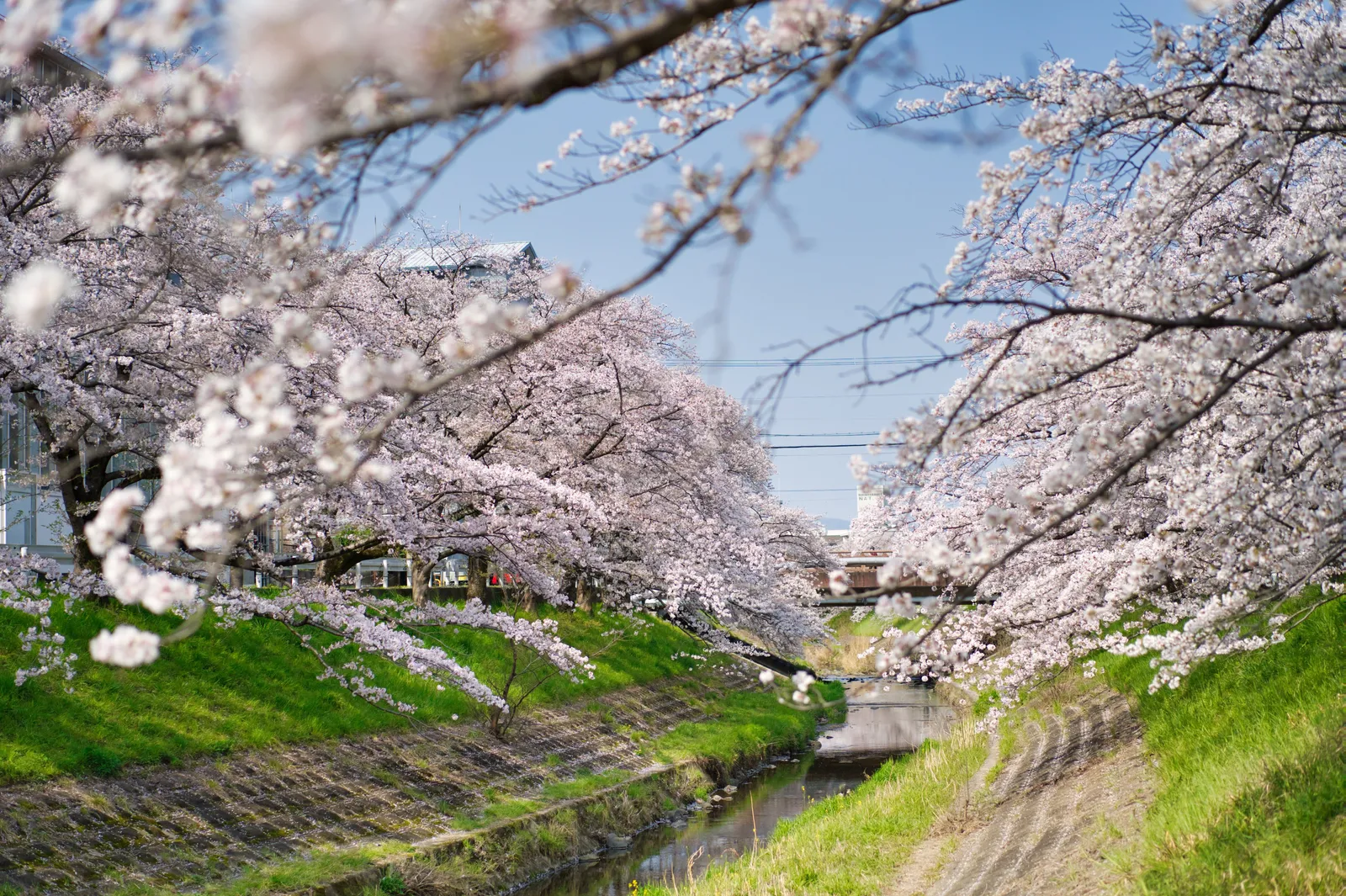
Every year around January, maps start circulating with a line drawn across Japan and a date printed next to each city. They look authoritative, they get shared widely, and they are then quietly revised several times before spring arrives. Understanding what those maps are actually measuring, and what they are not, is the difference between a trip built on a forecast and a trip wrecked by one. Our guide to the best time to visit Japan covers the year as a whole; this one is about the few weeks that people plan entire trips around.
What the forecast is actually measuring
The blossom forecast is not a single official pronouncement. The national meteorological agency withdrew from issuing its own years ago, and the maps you see now come from private weather companies working from the same underlying idea: a network of designated sample trees, each one watched by observers who record the day it opens.
That matters for two reasons. First, several forecasters publish at once and their dates do not always agree, so a difference of a few days between two maps is normal rather than a sign that one is wrong. Second, the forecast is a prediction about specific trees in specific parks, not about every tree in the city, and the trees around you will run slightly ahead or behind depending on shelter, sunlight and how close they sit to a warm building.
Kaika and mankai, and why the gap matters
Two words carry most of the meaning on those maps.
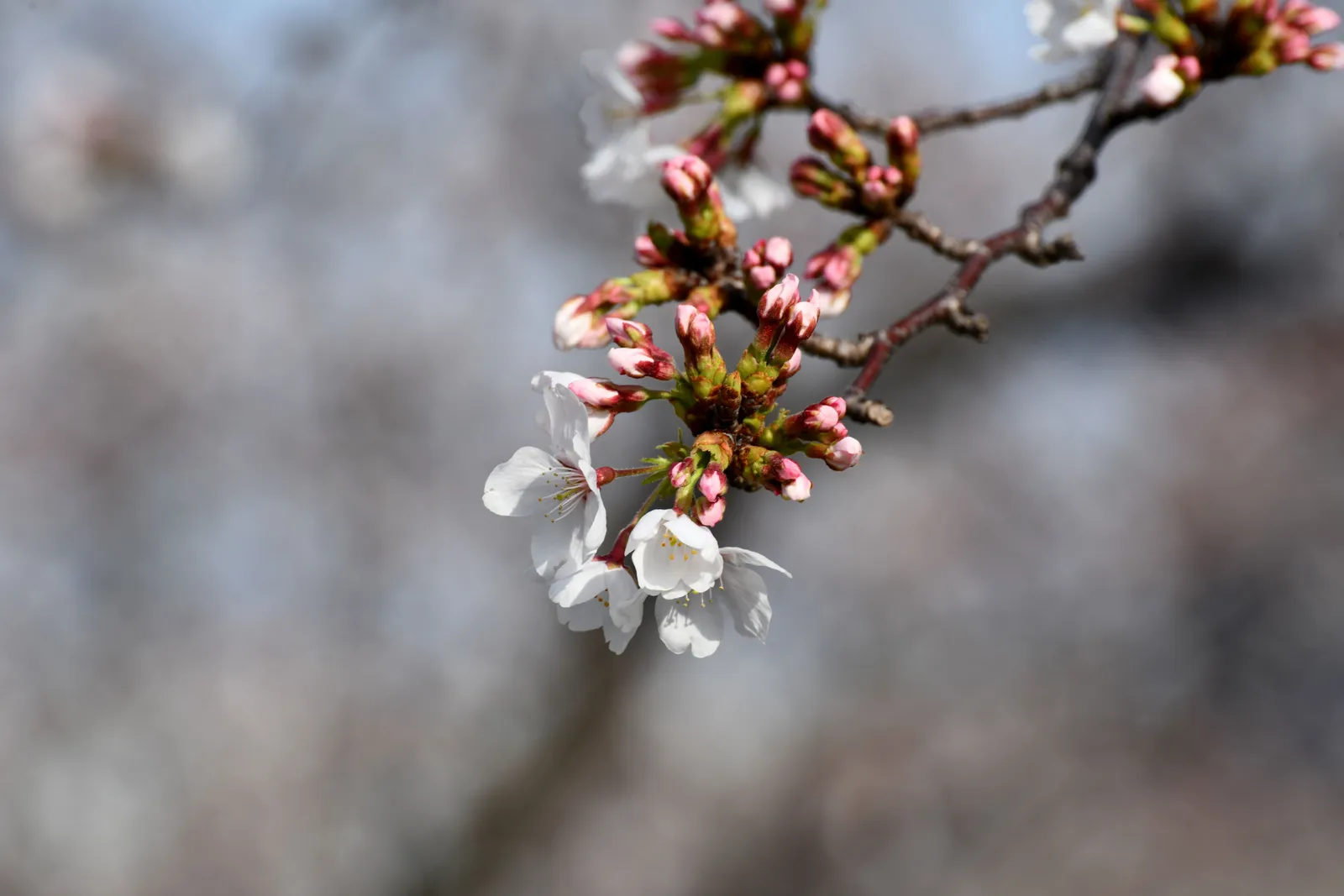
Kaika is the opening date: the day the sample tree is judged to have put out its first blossoms. Mankai is full bloom, when the tree is judged to be roughly eighty percent open, and it usually arrives about a week after kaika.
The gap is where plans go wrong. A traveller who reads the kaika date, books flights around it and arrives the following morning finds a tree with a scattering of flowers on it rather than the canopy in the photographs. A warm run of days compresses that week, a cold snap stretches it out, and the forecasters adjust accordingly as the season approaches.
Roughly when each region blooms
Long term averages are more useful for planning than any single year’s forecast, because they are what you have available when the booking decision has to be made.
The season generally begins in the far southwest and moves northeast over several weeks. The southern main islands come first, the big central cities follow, the north of the main island runs later again, and the northern island is last by a wide margin, often not until the tail of the run. Altitude shifts everything: a mountain town can sit well behind a lowland city an hour away, which is why hill destinations are a useful second chance for anyone who arrives to find the petals already down.
Treat all of this as a pattern rather than a timetable, and confirm the current year against a live forecast before committing to anything that cannot be moved.
Building a trip that can chase the front
The pattern above is also an opportunity, and it is the single best trick available to anyone whose dates are locked.
Because the front moves, a trip that travels can stay with it. Arriving into the south and working north, or simply keeping a mountain destination in reserve, converts a fixed date into a moving target you can follow. A trip that sits in one city for ten days has one roll of the dice. A trip that moves has several, and the rail network makes moving genuinely easy.
Hanami: what actually happens under the trees
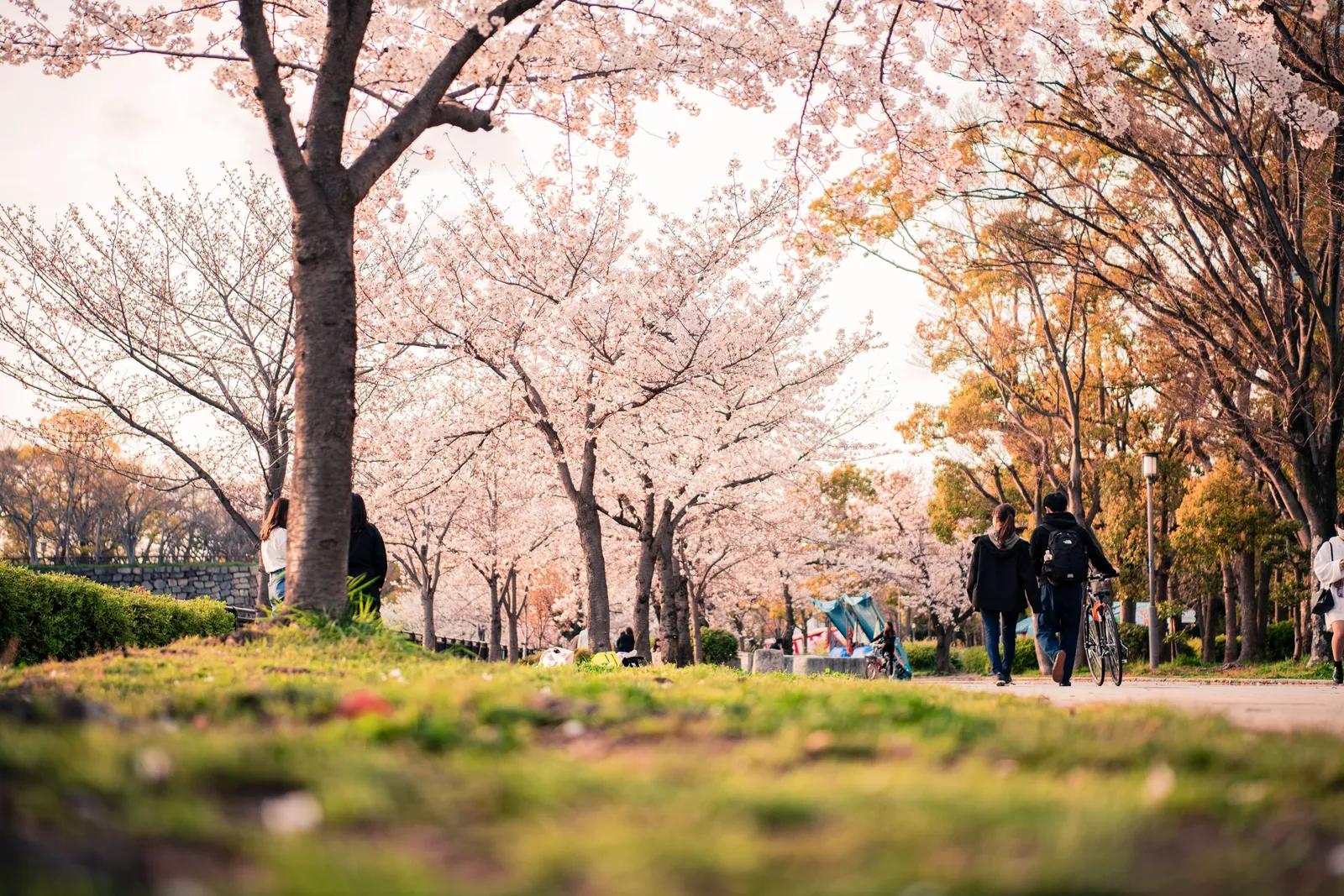
Hanami translates as flower viewing, and in practice it is a picnic. Groups lay out sheets under the trees, food and drink come from the nearest convenience store or department store food hall, and the gathering runs from the afternoon into the evening. In the busiest parks, someone from a group arrives early to hold the space, and popular parks light the trees after dark for a second, quieter version of the same thing.
Two courtesies are worth knowing. Take your shoes off before stepping onto someone’s sheet, and take everything you brought away with you, since public bins are scarce. Beyond that, the etiquette is the ordinary etiquette of a shared public space. For the parks and viewing spots themselves, our cherry blossom guide covers where to go once you have worked out when.
What the season does to prices and availability
This is the part the forecast maps never mention. Blossom season overlaps with heavy domestic travel and draws the largest international demand of the year, and the effect on accommodation in Kyoto and central Tokyo is severe. Rooms are taken months in advance, rates rise well above the ordinary run of the year, and what remains late tends to be further from the centre.
For how the rest of the calendar behaves, region by region, our month by month weather guide covers the year.
The practical sequence, then, runs opposite to instinct. Book the trip on the long term averages, take flexible rates where they are offered, and let the forecast adjust the days rather than choose them. Waiting for certainty means waiting until the good options have gone. Prices quoted anywhere for this season should be confirmed directly with the property, in yen, because the season’s rates move more than the rest of the year’s do.