Mount Fuji looks close enough to touch from a passing train, and plenty of visitors decide they want to stand on top of it. This is a serious undertaking, not a scenic add-on: a climb of six to ten hours each way, at altitude, inside a short season, on a mountain that makes its own weather. Handled well it is one of the best things you can do in Japan. Handled casually, or at the wrong time of year, it is genuinely dangerous.
A different trip from the view at the lake
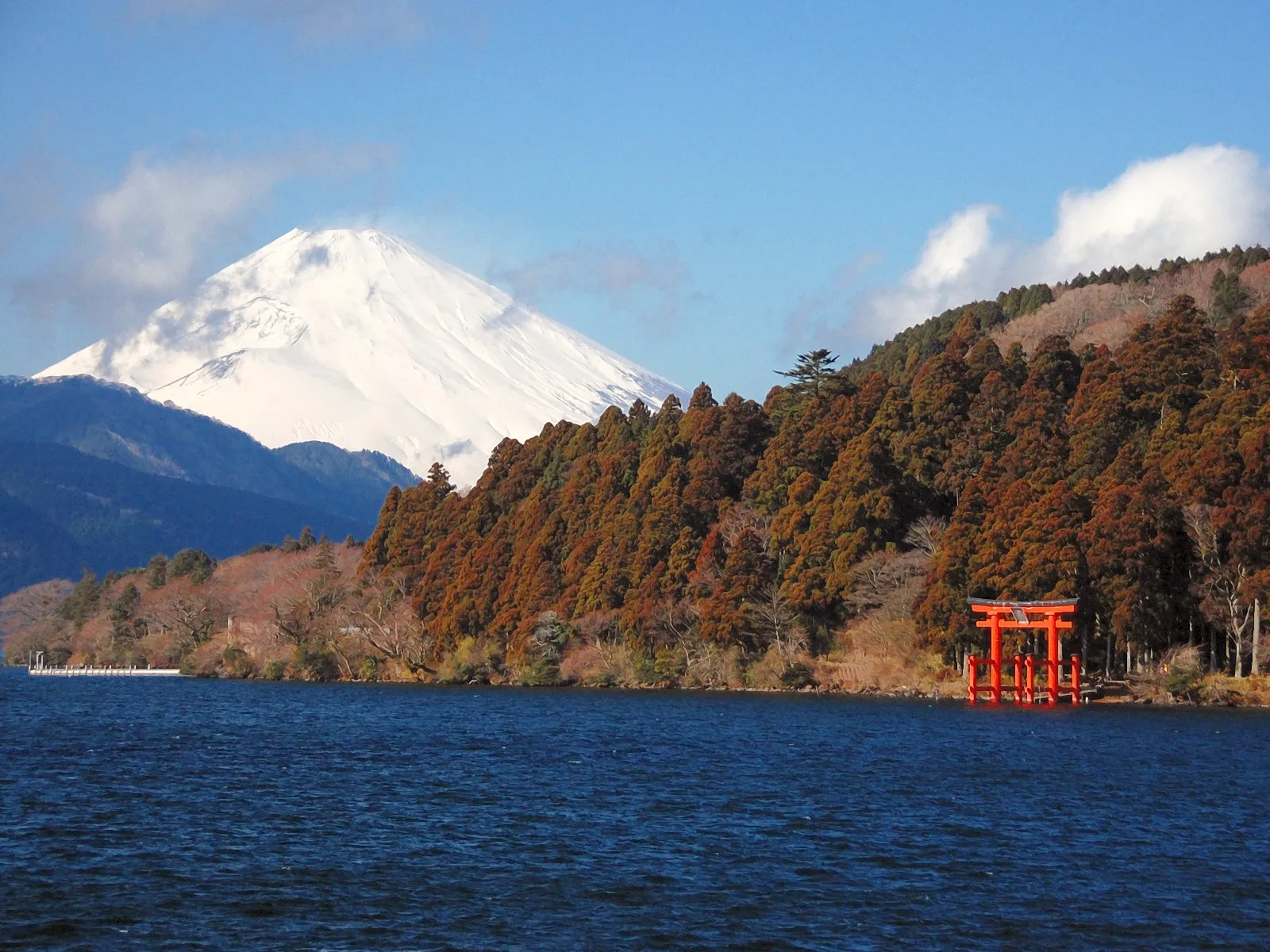
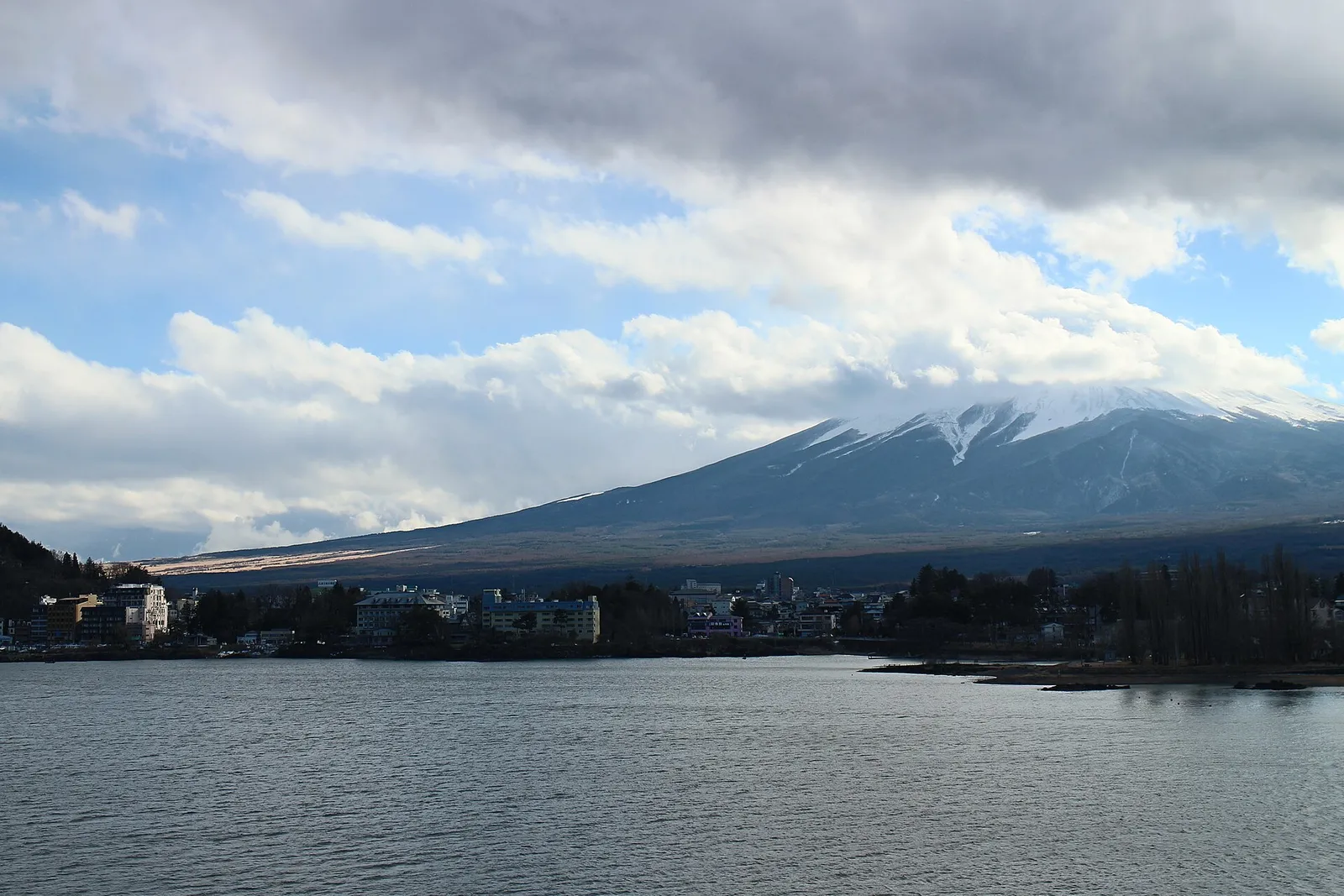
Climbing Fuji and looking at Fuji are two different trips, worth separating before you book anything. Most visitors who put the mountain on their itinerary actually want the view: the cone across a lake, framed by cherry blossom, or a silhouette from a hotel window at dawn. If that is you, our guide to seeing Mount Fuji from Kawaguchiko covers where to stand and which months give the best odds of a clear sky, in an afternoon rather than a day and a night. Climbing is a different commitment, and the rest of this guide covers the season, the trails, the huts, and whether it belongs on a first trip to Japan.
The season, and the mountain outside it
The climbing season is short and official: roughly early July to early September, with exact dates set fresh each year by the two prefectures the mountain straddles. In that window the huts open and the trails clear of snow and ice. Outside it the trails are closed, and this is not mere caution: snow and ice return to the upper slopes, huts shut down, and there is no rescue infrastructure on standby. People die on Fuji most years, mostly outside the season or in bad weather within it. Outside the summer window, this trip is simply not available to you.
The four trails
Four trails lead to the summit, and the choice depends on fitness, starting point and how much company you want.
| Trail | Difficulty | Typical ascent | Best for |
|---|---|---|---|
| Yoshida | Moderate | 5 to 7 hours | First-timers, the most huts |
| Subashiri | Moderate | 6 to 8 hours | A quieter, forested start |
| Gotemba | Hard | 7 to 10 hours | Experienced hikers, fewest crowds |
| Fujinomiya | Moderate to hard | 5 to 7 hours | Access from Osaka and Kansai |
Yoshida is the most popular by far, easiest from Tokyo, with the most huts and aid stations. It is the sensible default for a first climb.
Fujinomiya starts at the highest fifth station and looks shortest on paper, but it is the steepest, sharing much of the same trail for ascent and descent.
Subashiri begins in forest shade, then merges into the Yoshida route around the eighth station, carrying the same crowds on its final stretch.
Gotemba is the wildest option, with the fewest huts and people, at the cost of the longest day.
Direct buses run to each fifth station from Tokyo through the season; for the other side of the mountain and what to do when the climb is out of season, our Hakone guide covers it.
Fees, registration and mountain huts
Access to Fuji has become more regulated, and the rules keep moving. A system of entry fees, daily climber caps, overnight gate closures and mandatory registration now applies to the main trails, changed in some way almost every recent season, and it is not uniform: the details differ by trail and by which of the two prefectures administers it. This guide will not quote a specific fee, cap or gate time, since a number printed here could well be wrong by the time you climb. Check the official prefectural website for your trail before booking flights, and register in advance if the system requires it.
Mountain huts sit at intervals from around the seventh station upward, and they are basic: a shared sleeping platform, simple hot food, and paid toilets rather than private rooms. They break the climb into a manageable overnight stage, and in the short season they fill up, so a berth needs booking ahead. Treat the hut as part of the access system, not a separate errand: on a busy August weekend, turning up without a reservation can mean no bed at all.
Timing the ascent for sunrise
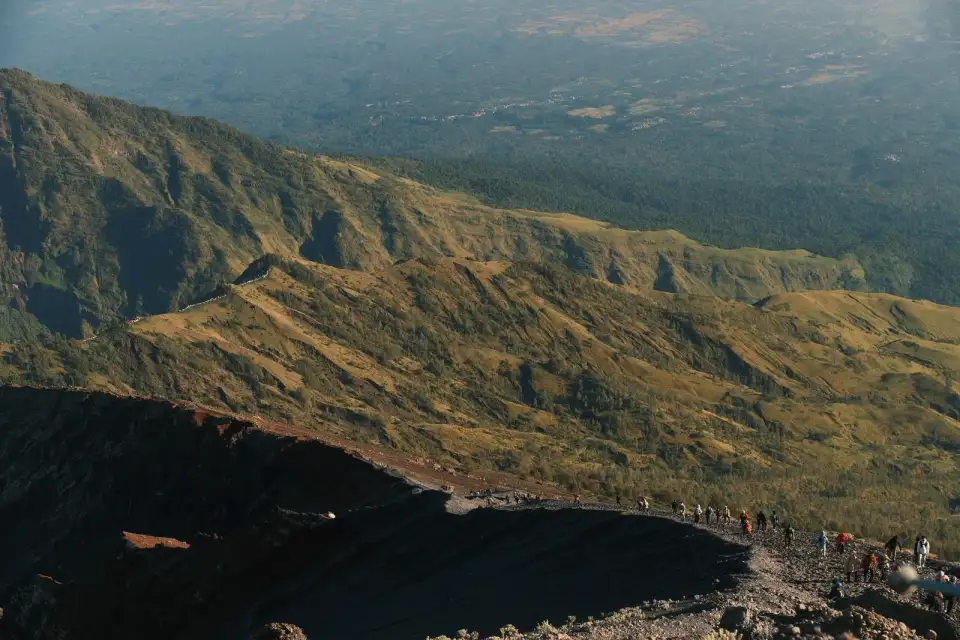
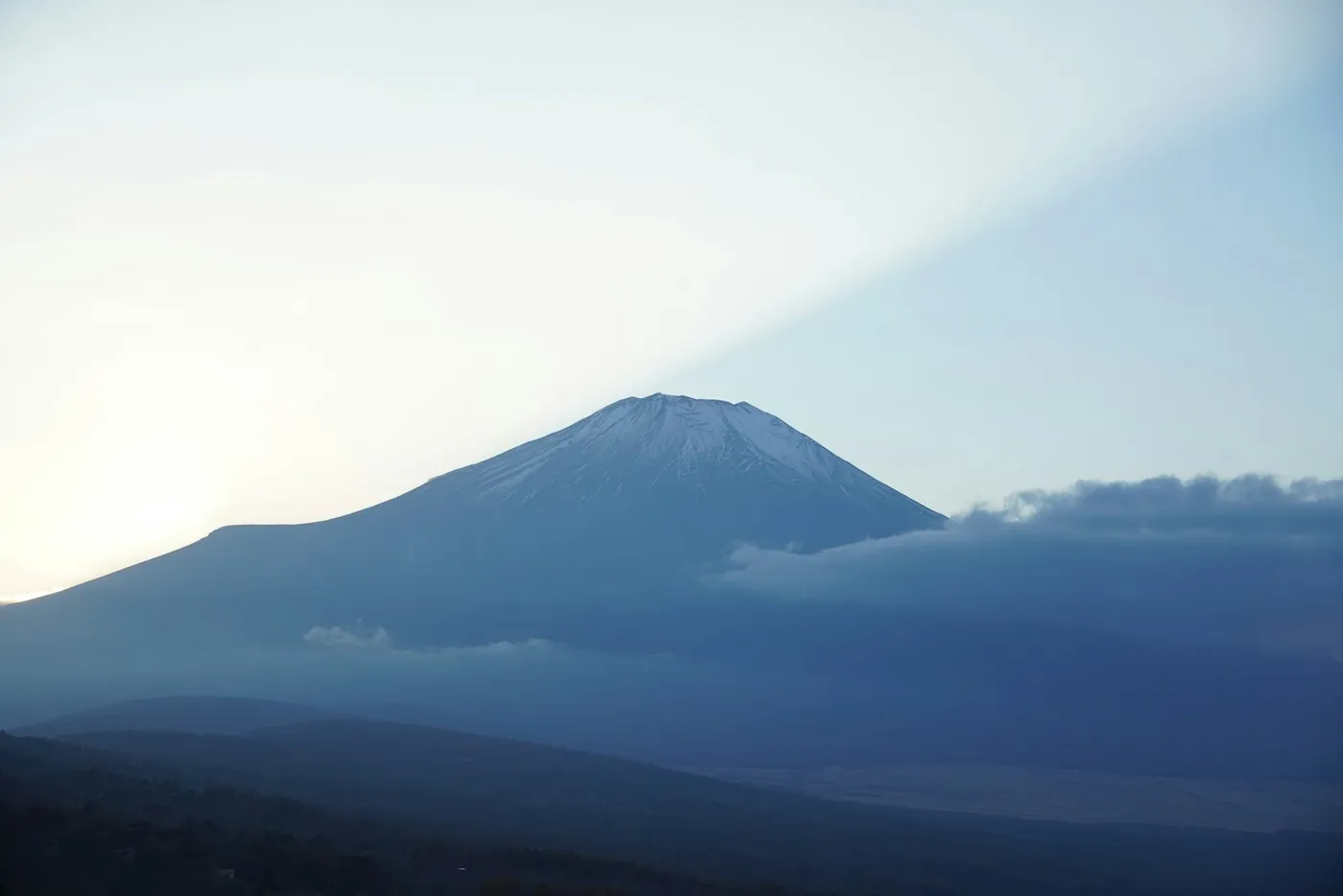
Most climbers aim to reach the summit for sunrise, known as goraiko, in one of two ways. The safer, more common approach is to climb to a hut in the afternoon, sleep a few hours, then set out again at night to reach the top before dawn. Breaking the climb into two stages gives your body time at the hut’s altitude before you go higher.
The other option is to skip the hut and climb through the night in one continuous push, timed to summit around dawn. It sounds simpler, no hut to book, no bed you barely use, but in practice it is the harder of the two. You climb the coldest hours with no rest and no time to adjust, fatigue and altitude symptoms compound each other, and several trails now restrict overnight entry without a hut reservation for exactly this reason.
Either way, expect company. The final stretch on the busiest trails can slow to a shuffling queue in the dark before dawn, and the crater rim at sunrise is crowded rather than solitary. Most people who make it still say it was worth the wait.
Altitude, cold and whether to climb it at all
The fifth stations sit around 2,300 to 2,400 metres, and the summit is 3,776 metres. Covering that gap in well under a day is why altitude sickness is common here, catching fit people off guard, since it is a matter of pace rather than fitness. Headache, nausea, dizziness and shortness of breath are common on the way up. Go slower than feels necessary, drink water steadily, and rest at the first sign of a headache. A hut night that breaks up the ascent is the best defence, and if symptoms worsen, the only fix is to descend.
The cold is the other surprise: even in August, the summit is routinely close to freezing before dawn, and wind makes it feel colder still. Climbers who leave the fifth station in a t-shirt spend the last hour before sunrise shivering for the moment they came for.
So should a first-time visitor to Japan climb it? For most people, honestly, not on a first trip. It takes a full day and night, it is demanding, and access rules or weather can undo months of planning for a sunrise you might not even get. A confident hiker with the season confirmed and a buffer day will find it a genuine highlight. If you are unsure, or short on time, you will see just as much of the mountain, with far less risk, from the Kawaguchiko side. Weigh the timing against the best time to visit Japan, since the climbing window and the clearest viewing months barely overlap.