Japan will almost certainly be the safest country you have ever visited. Statistically, your biggest dangers are overeating and missing the last train. But “almost certainly” is doing some work in that sentence, and the travelers who save five numbers before landing are the ones who stay calm when the phone alarm screams at 3am or a knee gives out on a temple staircase. This guide covers the numbers, the systems behind them, and the small amount of preparation that turns any emergency in Japan into a manageable errand.
The two numbers that matter most
Japan splits emergencies across two lines, and it helps to burn the difference into memory. Dial 110 for police: crime, traffic accidents, anything that needs officers. Dial 119 for fire and ambulance: the same call center dispatches both. Both numbers are free from any phone, work from mobiles with foreign SIMs, and connect from the green public payphones without coins, look for the red emergency button.
When you call, lead with where you are, then what happened. Addresses in Japan are famously cryptic, so use a landmark, a station name, or read the location straight from your map app. Operators in major cities can loop in an interpreter for English and several other languages; it may take a moment, so stay on the line. And a distinctly Japanese note: ambulances are free, but they are for genuine emergencies. For a worrying-but-not-critical situation in Tokyo you can dial #7119, a consultation line that helps you decide whether you need an ambulance or a clinic.
Save this table before you fly:
| Number | What it is | Notes |
|---|---|---|
| 110 | Police | Free, 24 hours, interpreter possible |
| 119 | Fire and ambulance | Free, 24 hours, one number for both |
| 118 | Coast guard | Emergencies at sea |
| #7119 | Emergency consultation | Tokyo and some regions, “do I need an ambulance?“ |
| 050-3816-2787 | Japan Visitor Hotline (JNTO) | 24 hours, English, for tourists in trouble |
The tourist’s secret weapon: the Japan Visitor Hotline
The number most visitors have never heard of is the one built for them. The Japan Visitor Hotline, run by the Japan National Tourism Organization, answers 24 hours a day, 365 days a year at 050-3816-2787, in English, Chinese and Korean. It exists precisely for foreign travelers in trouble: sudden illness and where to find an English-speaking doctor, a lost passport, a typhoon scrambling your plans, or an emergency where the language wall feels too high. The staff can explain your options, point you to the right service, and help bridge conversations. Save it under a name you will find in a panic.
For anything involving a lost passport, your next call is your embassy or consulate. Look up your country’s mission in Tokyo (many also have consulates in Osaka) and save the number and address before the trip. Embassies handle emergency travel documents, and they are the right contact if you are hospitalized, arrested or caught in a disaster. Police can cancel and report, but only your embassy can replace a passport.
Koban: the police box on the corner
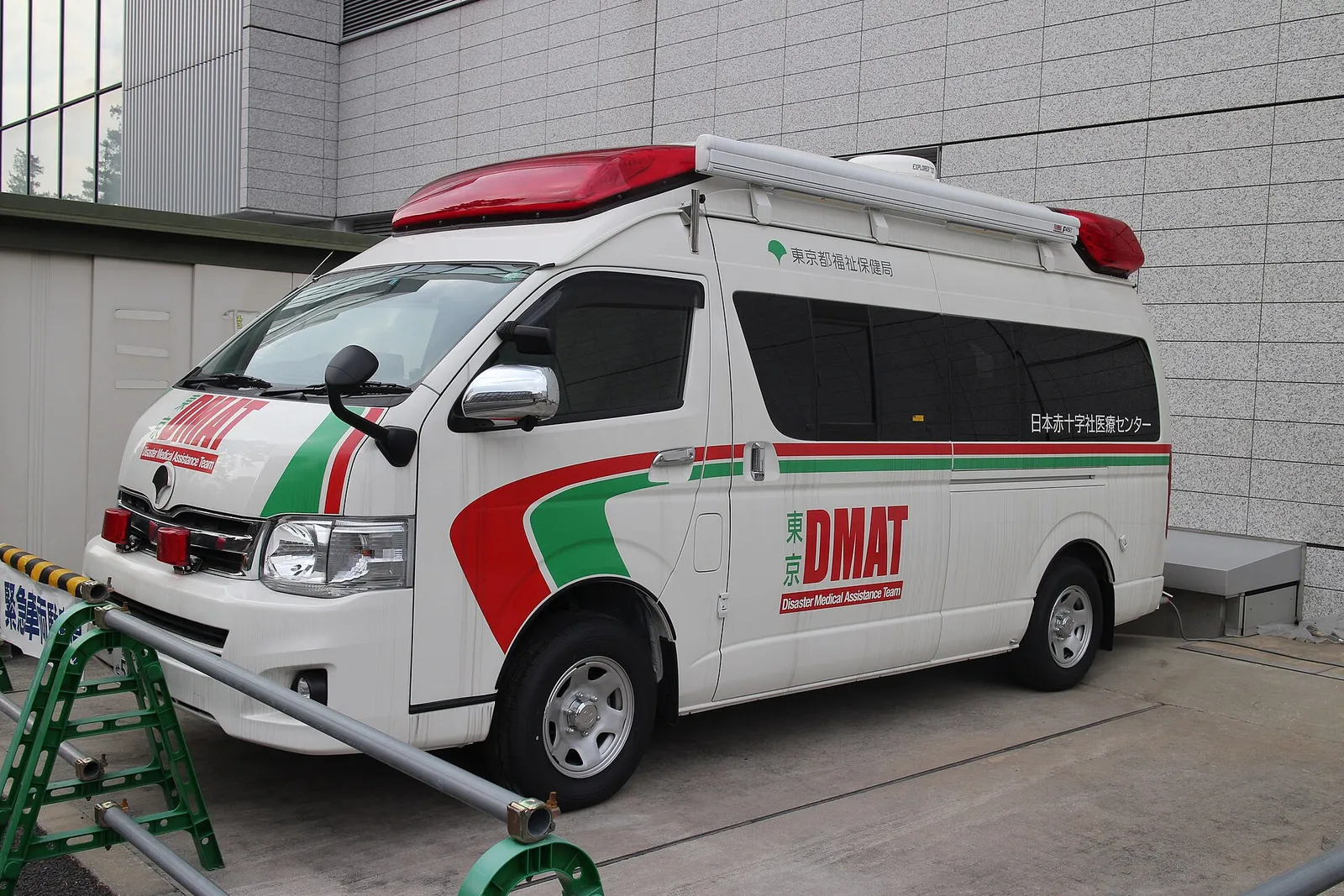
Japan’s neighborhood policing runs through the koban, the tiny staffed police boxes you will see near stations and intersections, there are thousands across the country. For a visitor they are less about crime and more about everything else: this is where you report a lost wallet (and where, remarkably often, someone has already handed it in), ask directions, or get help when something feels wrong. Walk in, say what happened, and be patient with the paperwork; if you plan an insurance claim for stolen property, the police report from a koban is the document your insurer will want.
Earthquakes, typhoons and the loud phone alarm
Japan lives with the earth’s moods, and it manages them better than anywhere on the planet. Small tremors are routine and locals barely look up. What you should know is the system: every phone in Japan, including yours on roaming or a local eSIM, receives J-Alert early warnings, a jolting alarm that may arrive seconds before shaking. If it sounds, drop low, protect your head, move away from windows, and do not run outside mid-shake. In coastal areas after a long or strong quake, head uphill without waiting for instructions; tsunami evacuation routes are signposted in English.
Typhoon season peaks roughly August through October. Modern forecasting gives days of warning, and the main tourist impact is transport: trains, including the shinkansen, suspend service in advance of a big storm, covered in our getting around Japan guide. Watch the forecast, build a buffer day before your flight home, and treat a typhoon day as an excuse for a long lunch. Hotels are sturdy; the danger is being on the move.
An emergency plan needs a connected phoneA Japan eSIM means maps, translation and emergency calls work from the moment you landDoctors, hospitals and the drugstore on every corner
For everyday ailments, Japan’s drugstores are a gift: chains like Matsumoto Kiyoshi, Welcia and Sundrug stock cold remedies, painkillers, stomach medicine and allergy relief, no prescription needed, and staff will gamely work through a translation app with you. Two caveats: some ingredients common in Western medicine are restricted or dosed differently in Japan, so your exact usual brand may not exist, and prescription medication requires a doctor’s visit and a dispensing pharmacy.
If you need a doctor, large cities have clinics and hospitals with English-speaking staff, and both the Visitor Hotline and your insurer’s assistance line can point you to one and help book. Care is superb, and as a visitor you pay in full, a consultation might run 5,000 to 15,000 yen (roughly US$35 to US$100), while a hospital stay climbs fast into serious money. That, in one sentence, is the case for travel insurance, and for reading our first-timer guide on what to sort before you fly. Also worth knowing: food hygiene in Japan is world class, so eat the street food and the raw fish with confidence, as our Japan food guide urges at length.
The short version
Save five numbers: 110 for police, 119 for fire and ambulance, #7119 for “is this an ambulance situation”, the Japan Visitor Hotline at 050-3816-2787 for anything in English at any hour, and your embassy. Learn what a koban is and use it freely. If the phone alarm sounds, get low and stay inside; if a typhoon is coming, stop moving and wait it out. Carry insurance you will probably never use. Then relax, because you are in one of the safest countries on earth, and the odds are you will go home with nothing but stories about the food.