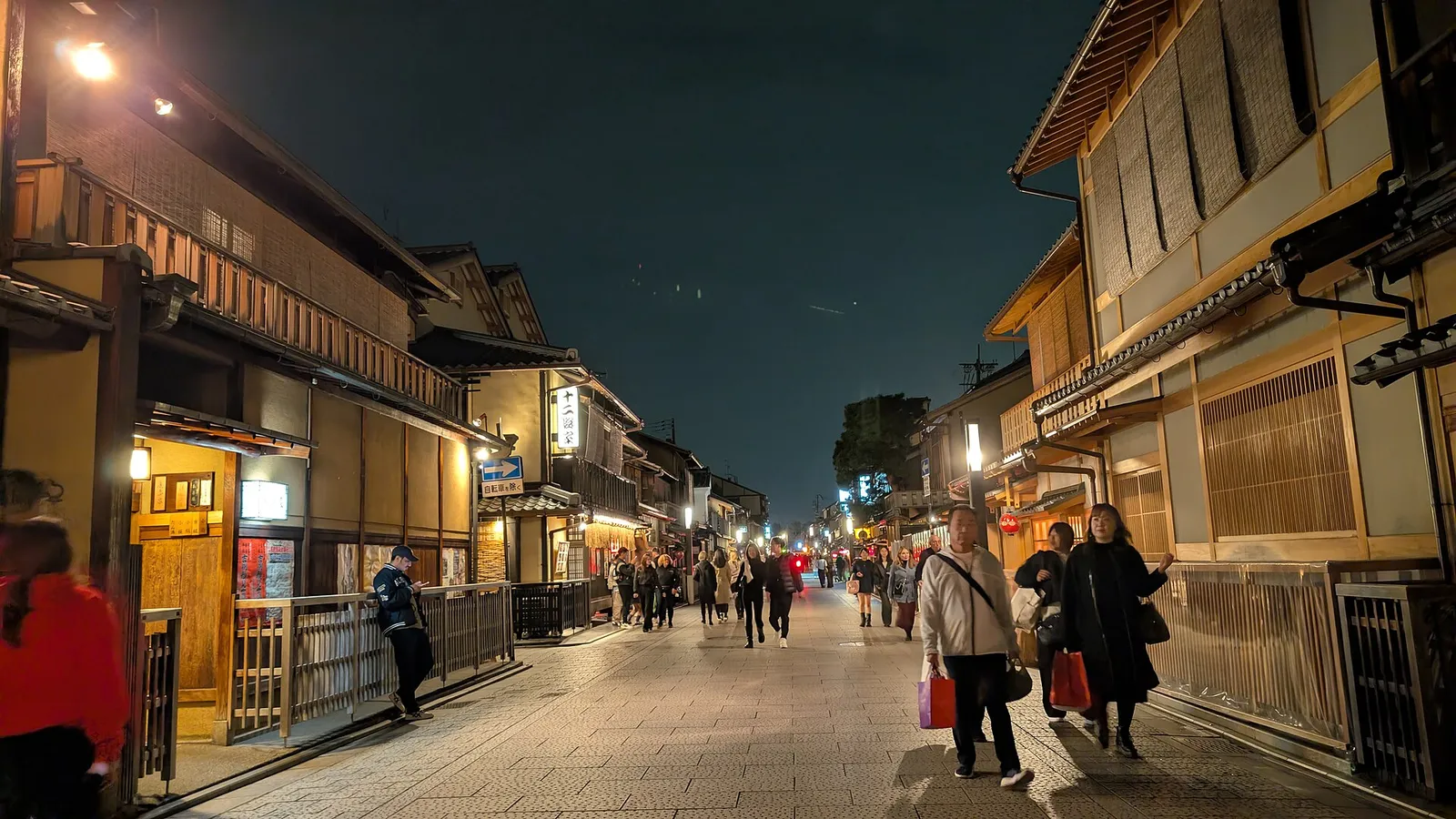
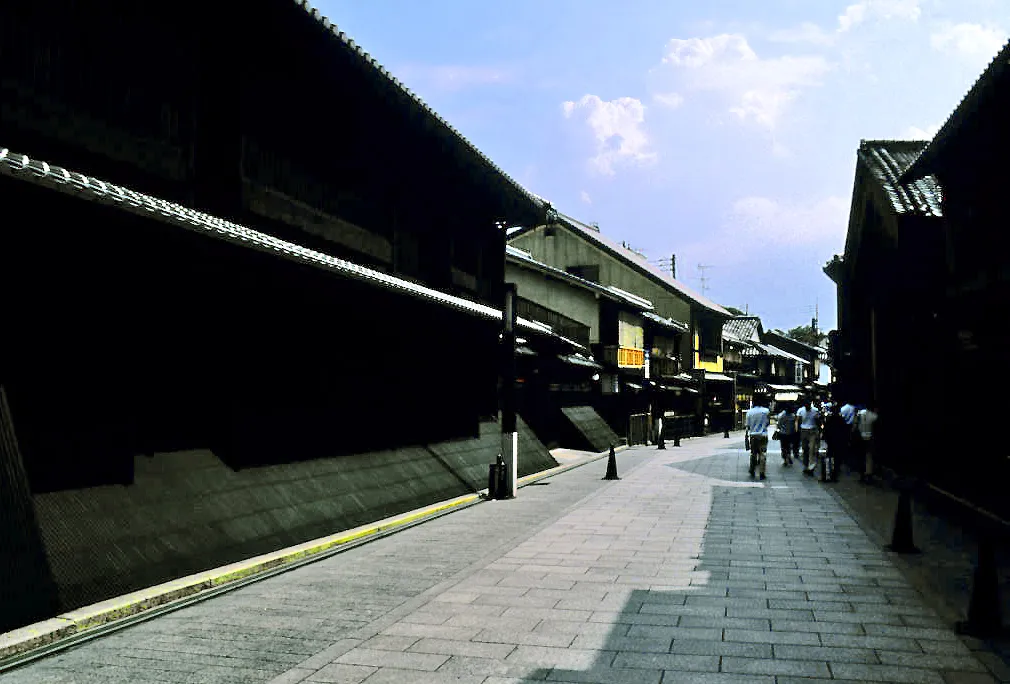
Gion is a working neighbourhood that happens to be several centuries old. It sits on the eastern bank of the Kamo river in Kyoto, built of dark timber fronts, lattice screens, stone paving and lanterns that come on at dusk. It is also where the teahouses are.
The honest way to approach it is this: you are walking down somebody else’s street, past somebody else’s front door, and the woman in the beautiful kimono is late for work. Get that right and Gion is one of the loveliest hours in Japan. Get it wrong and you are the reason those alleys now have signs on them.
Who you are actually looking at
A geiko is a fully qualified performing artist: traditional dance, the three stringed shamisen, song, and the practised art of conversation. Geisha is the national word, joining the characters for art and for person; in Kyoto they are geiko.
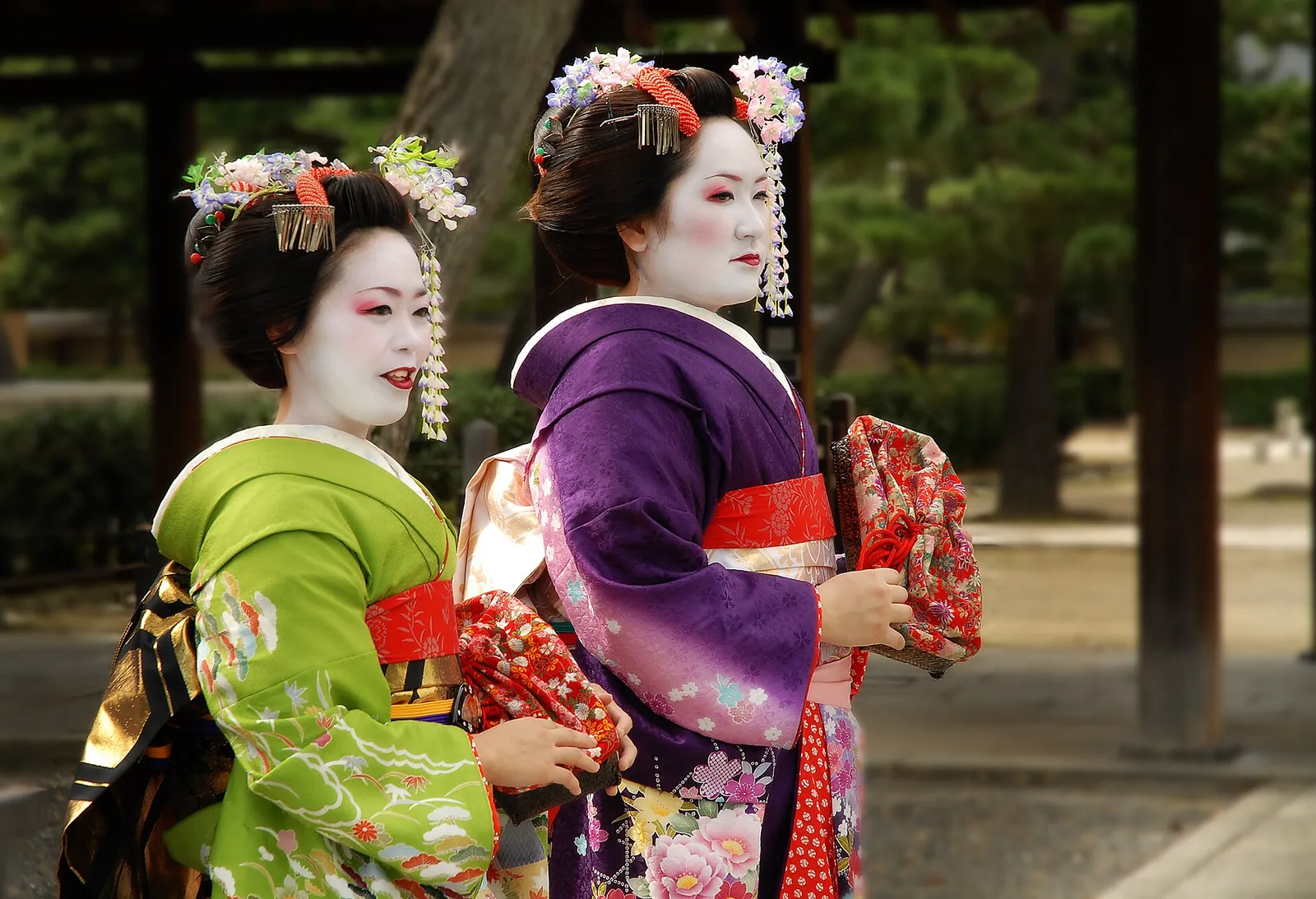
A maiko is her apprentice, usually in her late teens, and she is the one people photograph: a bright kimono with long trailing sleeves, a long obi hanging down her back, seasonal ornaments in her own hair, and tall wooden sandals that force short careful steps.
The training takes years, lived in an okiya, the house that lodges her, covering dance, music, tea, calligraphy and the Kyoto dialect long before anything glamorous.
A few hundred women work across the five geisha districts of the city, of which Gion Kobu is the best known.
Most of the kimono you see by day is rented. Shops all over the eastern side of the city hire them out by the hour, and a few studios do full maiko makeovers. It is why the lanes look far busier with geisha than they are.
The lanes worth walking
Hanamikoji is the one on the postcards, running south from Shijo: dark timber, fine lattice, small cloth signs and almost no shopfronts, because most of those doors are homes and workplaces.
Shirakawa is a canal a short walk north of Shijo, lined with willows and cherry trees and overlooked by wooden houses with balconies. In blossom season it is the prettiest few hundred metres in the district.
Pontocho sits across the river, one lane wide, packed with restaurants from cheap to formal, and in summer many build platforms over the water.
The slope up to the pagoda begins a few minutes south, where the five storey Hokanji pagoda stands at the head of a stone lane. Not Gion proper, but almost everybody walks it.
The pleasure here is uniformity rather than any single building: the same dark wood, lattice and paving, repeated until it becomes a mood.
The rules, and they are not suggestions
Kyoto had a real problem here, not an imagined one: visitors chasing maiko down the street, blocking their path, pulling at sleeves and pushing cameras into their faces. Private side alleys off the main lane have been closed to visitors, signs at their entrances warn that entering them and photographing people without consent carry penalties, and the city has repeatedly asked people to stay on the public streets. The wording, the boundaries and the amounts have all changed more than once, so read the sign at the mouth of each lane and follow current local guidance rather than something you saw in a video.
The rules themselves are not complicated:
- Treat the private lanes as private. A sign telling you not to enter is a boundary, not a photo opportunity.
- Never chase, follow or step into the path of a geiko or maiko. She is on her way to work.
- Never touch a person, a kimono, a sleeve or a parasol, under any circumstances.
- Do not photograph anyone without asking, and accept a refusal quietly. No flash, no zooming into faces, no crowding a doorway.
- Keep your voice down, do not block a narrow lane in a group, and let residents through.
- Follow the requests posted around the district, including not eating while walking.
One test covers all of it: would this be acceptable outside your own front door?
Where you can actually watch the art
Teahouses work by introduction. A new guest arrives through an established customer who vouches for them, and the bill is settled afterwards through the house. That is a credit system built over generations rather than a door policy aimed at foreigners, and it is why you cannot walk in.
The visitor theatre in Gion stages a short evening programme of traditional arts, with tea, dance, music and comic theatre, and it works because everyone in the room knows their role. Programmes and seasons have changed in recent years, so check the official schedule first.
The seasonal public dances are the real thing. Each district stages its own run, the Gion spring programme being the famous one, usually in April. Dates, venues and seat classes shift from year to year, and tickets generally run to a few thousand yen depending on the seat. Book through the official box office.
Arranged dinners with a maiko or geiko are sold through hotels, ryokan and specialist agencies, held in a restaurant or private room rather than an ochaya. Costs vary enormously with group size, so confirm what is included, and in which language the evening runs, before you commit.
When to come, and what the odds really are
Walk the district twice. Before eight in the morning the lanes are empty and often still wet, and you see the buildings instead of the backs of other people. Then again after dark, once the lanterns are lit and the day visitors have gone, which is when Gion becomes the place everyone came for.
As for a sighting: the usual window is roughly half past five to half past six in the evening, when geiko and maiko move between the house and their first appointment. Even then, expect nothing. There are few of them, they move quickly, they often take a taxi, and plenty of people who behave perfectly go home having seen no one.
Where Gion fits in a Kyoto trip
Gion is an hour of your day, twice, rather than a destination that fills one.
For how to structure the days around it, and where to base yourself, our Kyoto guide covers the ground.
For the temples on the hillside above the district and the torii tunnel south of the city, our guide to Kyoto’s temples and Fushimi Inari covers what to prioritise.
And for the opposite side of the city, best taken as a separate morning, our Arashiyama guide covers the bamboo grove and the western hills.
For a day out of Kyoto’s opposite number in the east, our Nikko day trip guide covers the shrine complex in the cedars.
And for the loudest possible contrast with these lanes, our Akihabara guide covers the Tokyo district that does the exact opposite of restraint.
Walk it early, walk it again after dark, stay out of the private alleys, and put the camera down when a person rather than a building is in front of you. Do that and you get the Gion worth the trip.