Koyasan is not a temple you visit but a temple town you stay in, a monastic settlement founded on a mountain plateau in the year 816 by the monk Kobo Daishi as the headquarters of Shingon Buddhism, and it is still functioning as exactly that. Well over a hundred temples remain, dozens of them taking overnight guests, and the town has none of the theme park feeling that can creep into more heavily visited religious sites. It sits comfortably alongside Nikko and Kyoto’s temple circuit as one of the country’s essential stops for anyone interested in what these places are actually for, rather than only what they look like.
What Koyasan is
Shingon Buddhism, the esoteric school Kobo Daishi established here, remains one of the major traditions within Japanese Buddhism, and Koyasan is treated by its followers as sacred ground in a fairly literal sense.
The mountain plateau sits at real altitude, ringed by eight peaks said to resemble the petals of a lotus, part of why the site was chosen in the first place.
A UNESCO World Heritage designation covers Koyasan alongside other sacred sites and pilgrimage routes in the Kii mountain range, recognising the whole landscape rather than a single building.
Staying in a shukubo and eating shojin ryori
The overnight temple stay, known as shukubo, is the experience that makes Koyasan worth more than a rushed day trip, and it is bookable by anyone rather than reserved for pilgrims or practitioners.
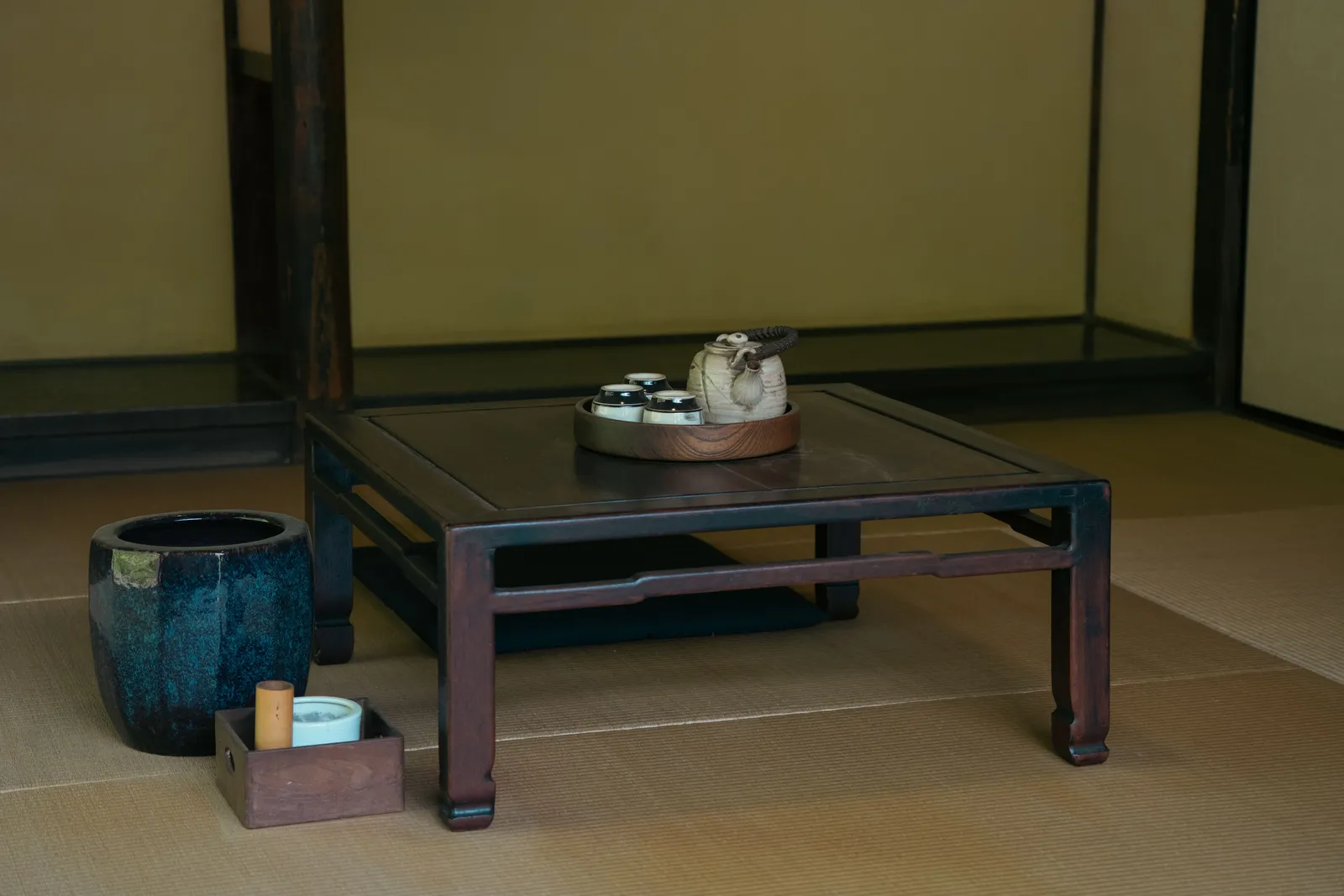
Rooms are simple tatami rooms with futon laid out for sleeping, shared or occasionally private bathing facilities, and a level of quiet that most hotels cannot manufacture.
Dinner and breakfast are shojin ryori, the temple’s vegetarian cooking, usually served in your room as a formal multi course meal. It follows Buddhist dietary principles, so no meat, fish or pungent vegetables such as garlic and onion appear, and the meal leans on tofu, seasonal vegetables and wild mountain plants, presented with the same care as a formal kaiseki meal.
Morning prayers are open to guests who want to attend, as guests rather than participants, and no one is obliged to go. It is usually the closest a visitor gets to an active Buddhist ritual up close rather than a staged demonstration, a reminder that Koyasan is a working religious community first and a place to stay second.
Booking ahead is genuinely necessary, particularly in the spring and autumn colour seasons, since guest rooms across even a hundred plus temples are still limited. Expect a shukubo stay to cost more than a business hotel and less than a high end ryokan, usually with dinner and breakfast included, and confirm the exact price with the temple when you book.
The town itself is small and quiet after dark, with little in the way of nightlife or late dining, and that quiet is very much the point rather than a limitation.
Okunoin cemetery
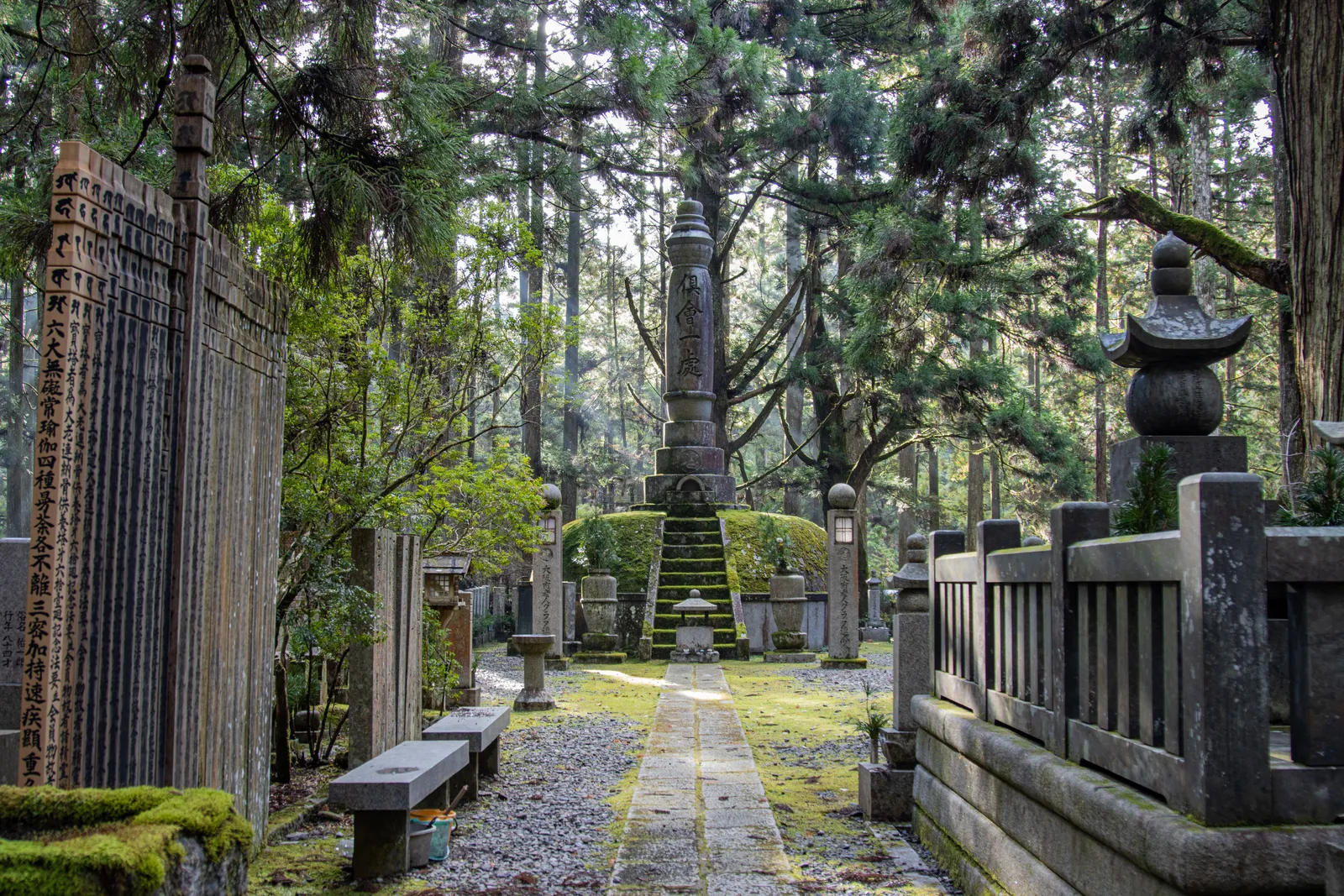
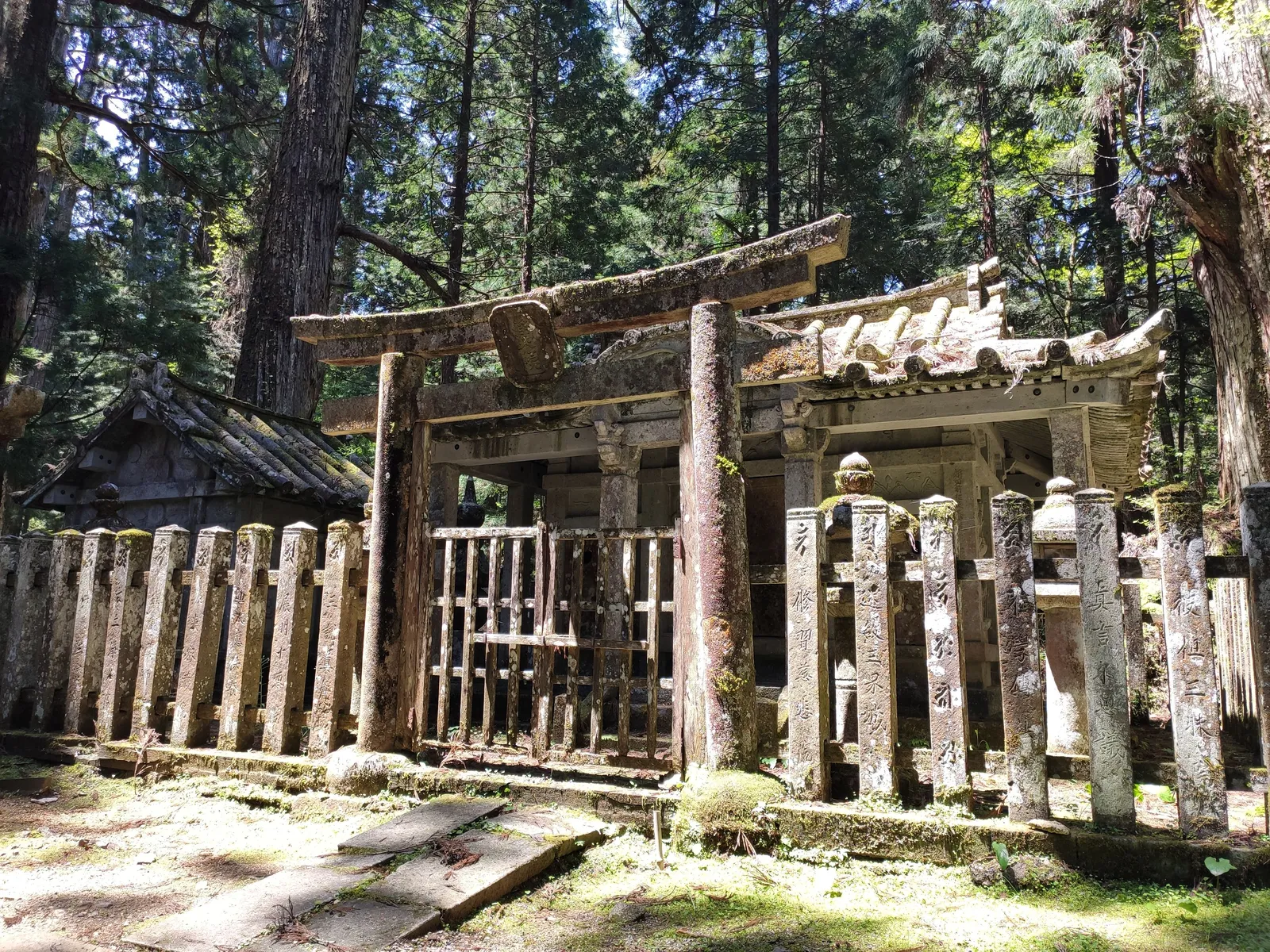
Okunoin is the largest cemetery in Japan, a roughly two kilometre path through old growth cedar forest leading to the mausoleum of Kobo Daishi, who is believed by followers to remain in eternal meditation rather than having died, and it is unlike any other cemetery most visitors will have walked through.
More than two hundred thousand gravestones and memorials line the path, ranging from centuries old moss covered markers to modern memorials put up by present day companies for their deceased employees.
The forest itself is remarkable, some of the cedar trees genuinely ancient, and the scale of the place only becomes apparent once you are well into the walk.
An evening guided walk, when the stone lanterns along the path are lit and much of the modern town noise disappears, is considerably more atmospheric than a daytime visit alone, and is worth booking through your shukubo if it is offered.
Photography is restricted close to the mausoleum, out of respect for the site’s ongoing religious function, so it is worth reading the signage rather than assuming the usual rules apply everywhere.
Getting there and practical notes
Koyasan sits on a mountain plateau with no direct road access, and the standard route in is a genuine part of the experience rather than a chore to get past.
The Nankai railway runs from Namba station in Osaka to Gokurakubashi at the base of the mountain, followed by a cable car up the steep final stretch to Koyasan station and a local bus for the last leg into the town centre.
A combined discount ticket, covering the train, cable car and unlimited bus travel within Koyasan, is usually the sensible choice and worth asking about at the Nankai ticket counter in Namba. Check current timetables before you travel, since the cable car and its connecting trains do not run especially often.
Layer up regardless of season, since the altitude makes Koyasan noticeably colder than Osaka or Kyoto, and temple rooms are not always heated to the standard a modern hotel would offer. Bring cash too, since some temples and smaller shops are not fully set up for cards.
A day trip is possible but genuinely limits the experience, since the evening lantern walk, the shukubo dinner and the morning prayer service are all things a day visitor misses. The main sights also close relatively early, and the town settles for the night well before the hour a city traveller might expect.
Where this fits in a Japan trip
Koyasan is best treated as one night away from the main circuit, most easily reached from an Osaka or Kyoto base rather than attempted as a rushed side trip.
For another mountain day trip with a different, more secular kind of grandeur, our guide to Nikko covers the shrines and the lake beyond Tokyo.
For the temple circuit inside Kyoto itself, our guide to Kyoto’s temples and Fushimi Inari covers where to go and when.
And if a night without a bath sounds like the wrong trade for a trip to Japan, our guide to onsen covers where to find the hot water that Koyasan does not really offer.
The short version
Book a shukubo well ahead, particularly if you are travelling in spring or autumn, and choose one within easy walking distance of Okunoin so you can visit it twice, once in daylight and once on the evening lantern walk. Take the Nankai railway and cable car from Osaka rather than trying to drive, pack for genuine mountain cold whatever the season, and treat the shojin ryori dinner as part of the point rather than a limitation on your evening. One night here, done properly, tends to stay with people longer than several nights in a conventional hotel elsewhere on the trip.