You have cleared immigration, collected the bags, and now Tokyo is waiting somewhere beyond the arrivals hall. Which train, which ticket, which platform? The honest answer depends on one thing you already know, which airport you landed at, and one thing you should decide now, where you are sleeping tonight. Haneda sits practically inside the city; Narita sits a full prefecture away. Both are connected by some of the best airport transit on earth, and this guide sorts the options so you pick in thirty seconds and spend zero of your first hour in Japan staring at a ticket machine.
First, know your airport
Haneda (HND) lies on Tokyo Bay, about 15 kilometers from the center; on a good connection you can be on the Yamanote loop line within 20 minutes of boarding a train. Narita (NRT) is about 60 kilometers out in Chiba prefecture, and even the fastest train takes the better part of an hour. Neither is a problem, Narita’s expresses are comfortable and punctual to the second, but the difference shapes both your wallet and your energy on arrival day. If you are still choosing flights and the prices are close, take Haneda and enjoy the found hour.
Whichever airport you land at, do two things in the arrivals hall: get yen from a 7-Eleven or Japan Post ATM, and pick up a Suica or Pasmo IC card (or add one to your phone wallet). The card covers every option below except the reserved-seat expresses, and it will run your whole trip, as our getting around Japan guide explains.
From Narita: three good answers
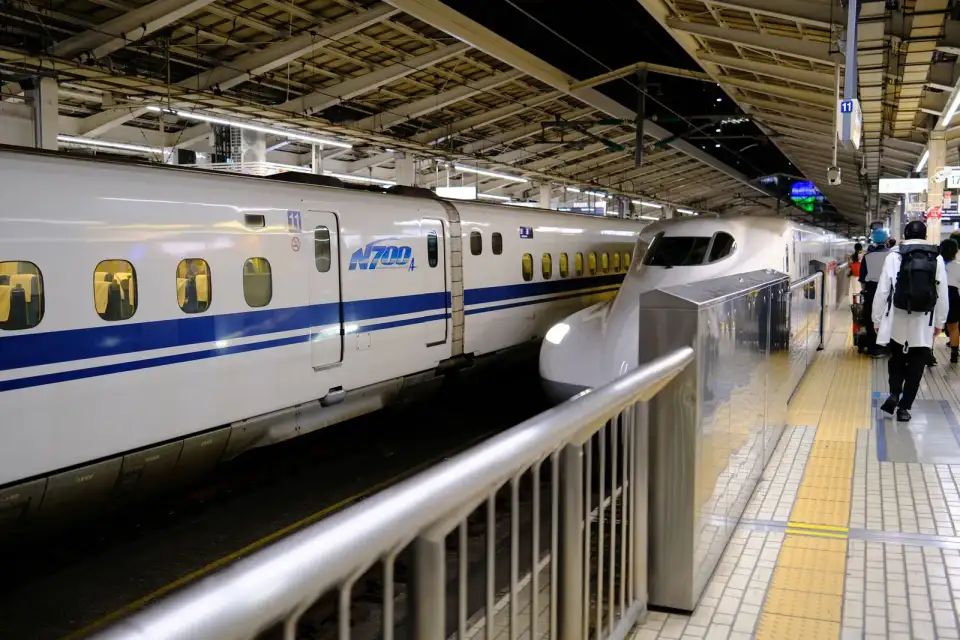
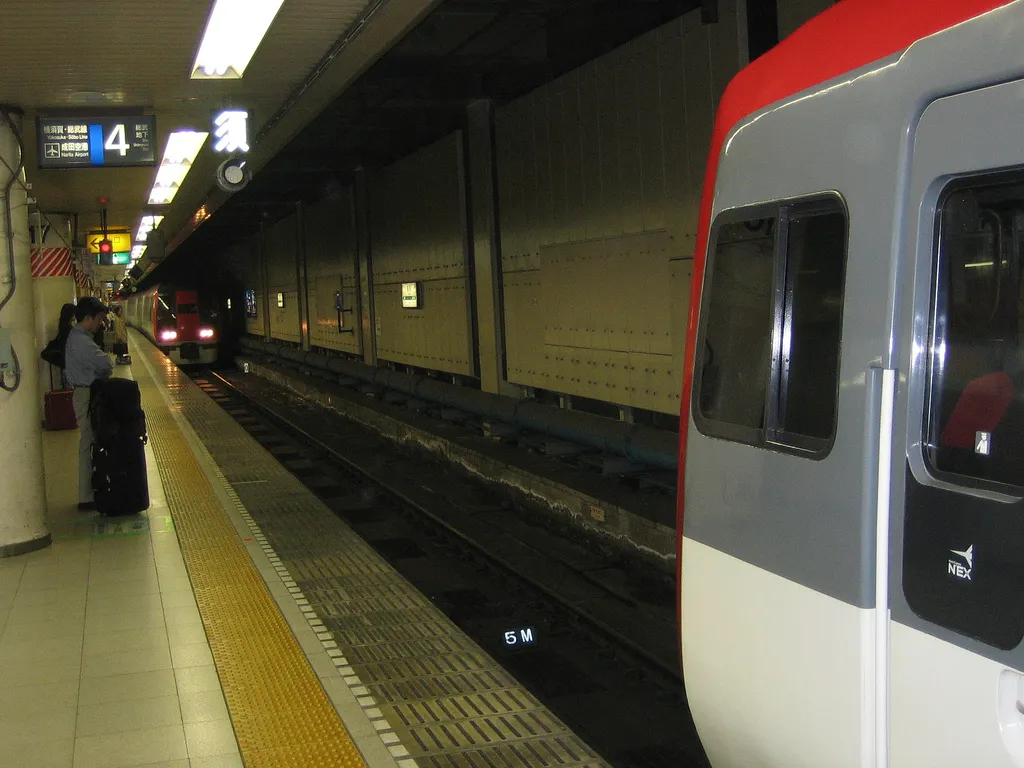
The Narita Express, or N’EX, is JR’s reserved-seat airport train, and the best choice if your hotel is on the west side of the city. It runs direct to Tokyo Station in about 55 minutes, then continues to Shibuya and Shinjuku, roughly 80 minutes from the airport, with generous luggage racks and guaranteed seats. The regular fare to Tokyo Station is around 3,070 yen, with Shinagawa, Shibuya and Shinjuku a little higher. JR also sells a discounted round-trip ticket for foreign passport holders, currently around 4,070 yen for the return journey, which is the single easiest saving on this list if you are coming back the same way. If you are staying near Tokyo Station, Ginza, Shibuya or Shinjuku, as many first-timers are after reading our where to stay in Tokyo guide, N’EX delivers you with no transfers at all.
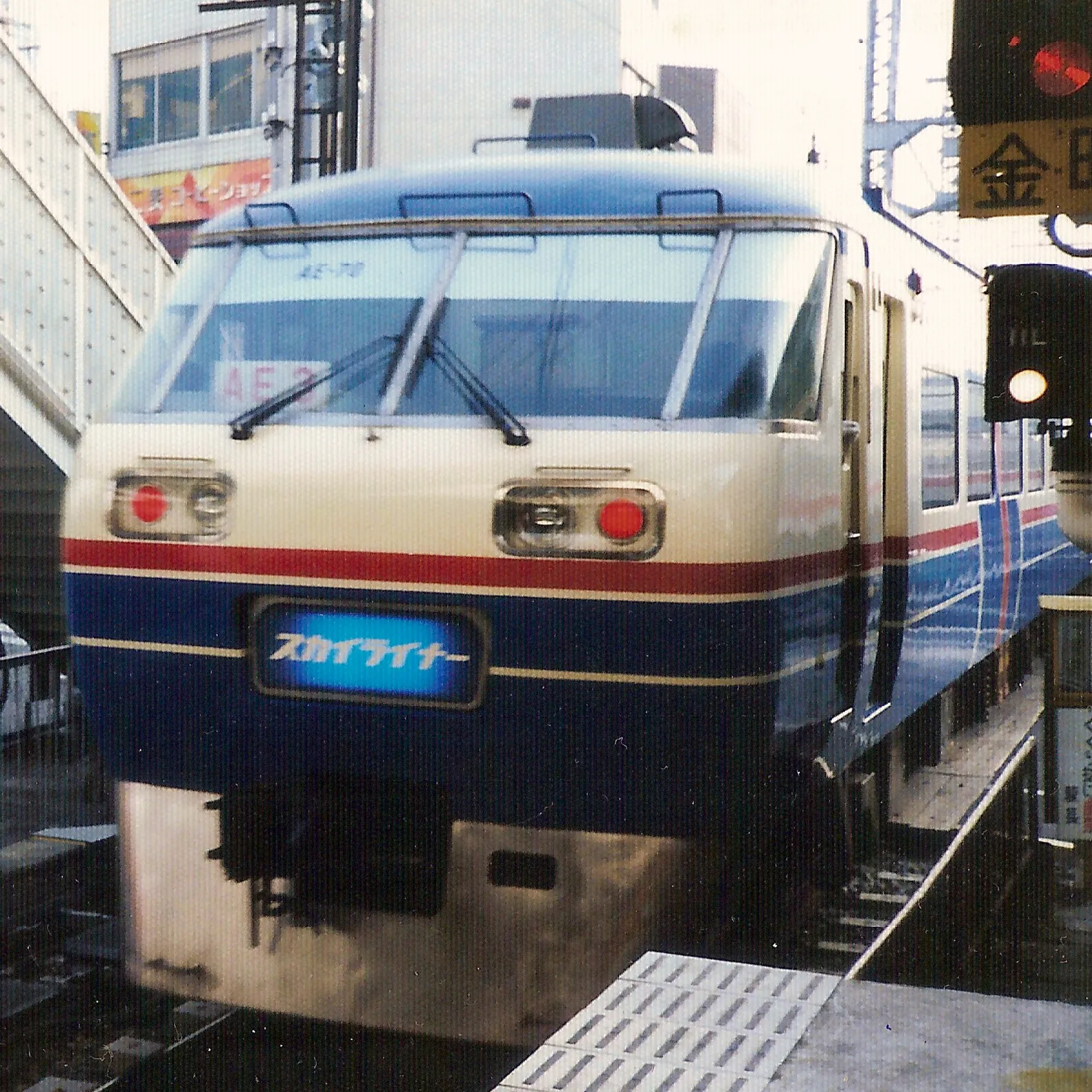
The Keisei Skyliner is the speed champion, a sleek private express that reaches Nippori in about 36 minutes and Ueno in about 41, for around 2,580 yen bought at the station. Nippori and Ueno sit on the east side of the Yamanote line, so the Skyliner wins outright if you are staying in Ueno or Asakusa, and it is the fastest start for anywhere reachable with one easy transfer. Buy online in advance, where the fare drops to roughly 2,300 yen, and walk straight to the platform.
The buses are the budget pick. The Airport Bus TYO-NRT runs from Narita to Tokyo Station and Ginza in roughly 65 to 90 minutes, traffic depending, for around 1,500 yen, with luggage stowed underneath. Access Narita and similar services cover the same ground. There is also the humble Keisei limited express, the no-frills commuter train, a little over 1,000 yen and 80 minutes to Ueno, fine with a backpack, less fun with two suitcases in rush hour.
From Haneda: you are almost there already
Haneda’s two rail links both work beautifully, and the choice is simply which one points at your hotel.
The Tokyo Monorail glides from all Haneda terminals along the bay to Hamamatsucho in about 20 minutes, for around 520 yen. Hamamatsucho is a Yamanote line station, so from there the loop delivers you to Tokyo Station, Ueno, Shibuya or Shinjuku in minutes. The ride itself, skimming over the water past container ports and the bay, is a gentle first hello to Tokyo.
The Keikyu line runs from Haneda to Shinagawa in about 15 minutes for around 330 yen, and many trains continue straight through onto the Asakusa subway line, which means a one-seat ride toward Ginza and Asakusa. Shinagawa is also a Yamanote and shinkansen station, so Keikyu is the move if you are heading south or onward to Kyoto the same day.
Limousine buses from both airports deserve a word: they cost more than trains from Haneda, around 1,000 to 1,400 yen depending on route, but they stop directly at major hotels in Shinjuku, Shibuya and elsewhere, which with jet lag and heavy bags can be worth every yen. Late at night, Haneda taxis into central Tokyo run a tolerable 6,000 to 10,000 yen; from Narita a taxi is a 20,000-yen-plus decision best avoided.
| Route | Time | Cost (approx.) | Best for |
|---|---|---|---|
| NRT: N’EX | 55 to 80 min | From about 3,070 yen | Tokyo Station, Shibuya, Shinjuku, no transfers |
| NRT: Keisei Skyliner | 36 to 41 min | About 2,580 yen, less online | Ueno, Asakusa, fastest into the city |
| NRT: Airport bus | 65 to 90 min | About 1,500 yen | Budget trips, Tokyo Station and Ginza |
| HND: Tokyo Monorail | 20 min | About 520 yen | Yamanote line via Hamamatsucho |
| HND: Keikyu line | 15 min | About 330 yen | Shinagawa, direct subway to Asakusa |
| HND: Limousine bus | 30 to 60 min | 1,000 to 1,400 yen | Door-to-hotel with heavy luggage |
Fares change with periodic revisions, so treat these as a planning guide and check the operator’s own site when you book.
Tickets, timing and small tricks
The reserved expresses, N’EX and Skyliner, need a proper ticket: buy at the clearly marked airport counters, the machines, or online before you fly, which saves both money and a queue. Everything else, Monorail, Keikyu, regular Keisei, buses with a tap terminal, takes your IC card. Trains from both airports run from around 5am until roughly 11pm to midnight, so check the last departures against a late landing, and remember the reverse trip on departure day: Tokyo traffic makes trains the safe choice for catching a flight.
One more arrival-day kindness to yourself: do not plan anything ambitious. Check in, wander your neighborhood, eat something wonderful within two blocks of the hotel, and save the city for tomorrow, when our Tokyo guide and a full night’s sleep will serve you far better.
Once you are in the city
Two things belong on your phone before the transfer rather than after.
The emergency numbers, which cost nothing to save and are the one thing you cannot look up comfortably in the moment; our guide to emergency numbers in Japan lists them.
A view of the wider trip, if this is your first time in the region and you are still shaping the itinerary; our comparison of Japan and South Korea covers how the two countries differ on cost, ease and what a fortnight actually sees.
The short version
From Haneda, take the Monorail to Hamamatsucho or Keikyu to Shinagawa, tap an IC card, and you are in the city before your jet lag notices. From Narita, pick by destination: N’EX direct to Tokyo Station, Shibuya or Shinjuku, the Skyliner for the fast run to Ueno and the east side, or the 1,500 yen bus when the budget is speaking. Buy express tickets online ahead, keep an eye on last-train times, and if you are landing at midnight or hauling a family’s worth of luggage, book a transfer before you fly. See our first-timer guide for everything that comes after the train doors close.