The Japan Rail Pass used to be an automatic recommendation. It is not any more. The price rose sharply and the break-even point moved with it, which means a great deal of advice online is confidently out of date and a lot of visitors are buying a pass that costs them money. The good news is that the question has a definite answer for your specific trip, and working it out takes about ten minutes.
What changed
The price went up substantially, in a single revision rather than gradually.
The break-even point moved with it. Journeys that used to add up to a pass no longer do.
A lot of published advice predates the change, including guides, videos and forum posts that still describe the pass as a straightforward saving.
Nothing else changed about what the pass covers. The coverage, the trains and the rules are broadly as they were. It is purely an arithmetic problem, and the arithmetic now falls differently.
There is one more update with a date on it. From 1 October 2026 the price at overseas sales agents rises again: the 7-day ordinary pass goes from 50,000 to 53,000 yen, the 14-day from 80,000 to 84,000 and the 21-day from 100,000 to 105,000. JR’s own official online reservation service is holding its current prices for now, and buying an exchange order by 30 September locks in today’s agency price even for a trip in early 2027. If your dates are flexible, that deadline is worth knowing about.
How to do the sum
This is the whole method and it is not complicated.
List your long-distance journeys. Only the intercity ones; local travel is a different budget and is covered by an IC card.
Price each one individually using a fare-checking site, which will give you the reserved-seat fare for the route.
Add them up.
Compare with the current pass price for the duration that covers your trip.
Decide with a margin. If the individual fares are comfortably above the pass, buy it. If it is close, do not, because a pass also restricts which trains you may take and that has a cost in convenience.
Which trips still justify it
Long, wide-ranging routes. Several regions in one trip, with repeated long journeys, is where the pass still wins clearly.
Trips with a there-and-back long haul, where a single return journey on the fastest lines already approaches the pass price.
Itineraries with a lot of unplanned movement, where the freedom to jump on a train without buying a ticket has real value.
Trips that do not justify it, and this is now most first visits: Tokyo, Kyoto and Osaka with a couple of day trips, where the total intercity travel is one or two journeys.
What the pass does not cover
Worth knowing before assuming it solves transport entirely.
The fastest category of bullet train on some routes is excluded, which means occasionally taking a slower service.
Private railways are not covered, and in several regions the private lines are the convenient ones.
City subways are not covered, which is a large share of your daily travel in Tokyo and Osaka.
Local buses mostly are not covered.
That last group is exactly what an IC card handles, and it is a separate and much cheaper piece of the puzzle; our guide to Suica and Japan’s IC cards covers how that works and the shortage that complicated it.

Buying and using it
If the sum comes out in favour:
Buy before or after arrival, both of which are now possible, with different processes and occasionally different prices.
Activate it on the day your travelling starts, not the day you land, since the clock runs on consecutive days.
Reserve seats, which is free with the pass and worth doing on busy routes and around holidays.
Carry it, since it is checked, and losing it is not recoverable.
The alternative, which is simpler than it sounds
Skipping the pass does not mean complexity.
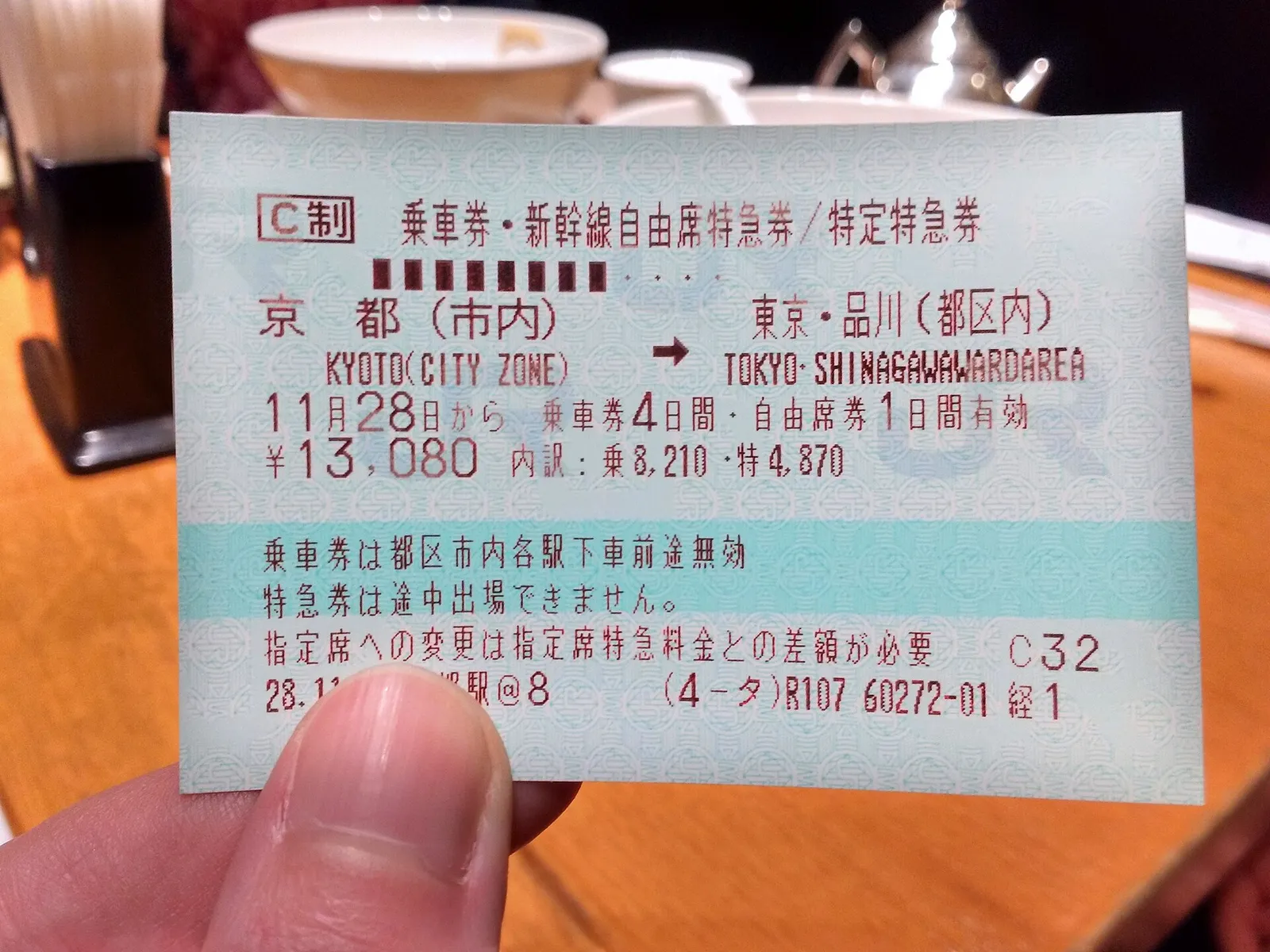
Buy long-distance tickets as you go, at machines or counters, in a few minutes.
Reserve ahead only for peak dates and holiday periods.
Use an IC card for everything local, tapping in and out.
For most two-city first trips this is both cheaper and more flexible, and the flexibility is worth more than people expect once they discover that a pass gently pushes them towards JR routes that are not always the best ones.
For the wider transport picture, including the private lines, the buses, domestic flights and where each makes sense, our guide to getting around Japan covers the whole system. And the first journey of the trip, from the airport into Tokyo, has its own set of options and its own pass question.
And if the national pass does not pay on your route, it is not the only one: our guide to the regional rail passes covers the cheaper, narrower options that frequently fit a trip better.
The short version
Do not buy the rail pass on reputation, because the price rose and a lot of published advice has not caught up. List your intended long-distance journeys, price them individually, add them up and compare with the current pass price, and only buy if the gap is comfortable. Check the regional passes, which almost nobody does and which frequently win for a trip in one area. And whatever you decide about long distance, you still want an IC card for everything local.