Most visitors picture karaoke as a bar with a stage and a room full of strangers watching a performance. That is close to the opposite of what happens in Japan, where you rent a private room by the hour with your own group, the door closes, and nobody outside it hears a note. That one fact reshapes the whole evening: how you pay, how you behave, which songs you pick, and why people who swear they cannot sing end up staying for a second hour. Our guide to Tokyo after dark mentions karaoke boxes as one stop among many; this one walks through an actual session from the front door to the bill.
The room, not the stage
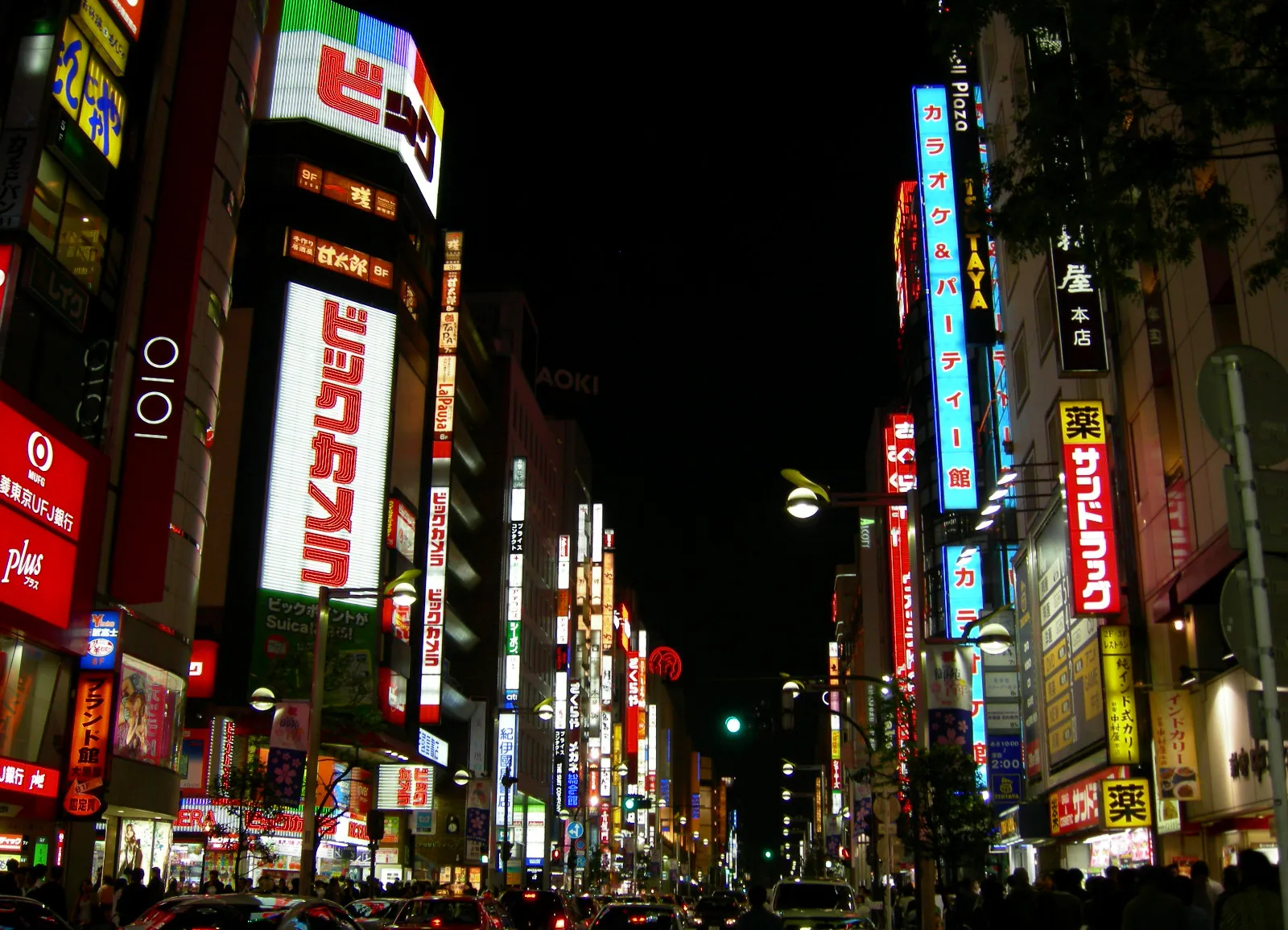
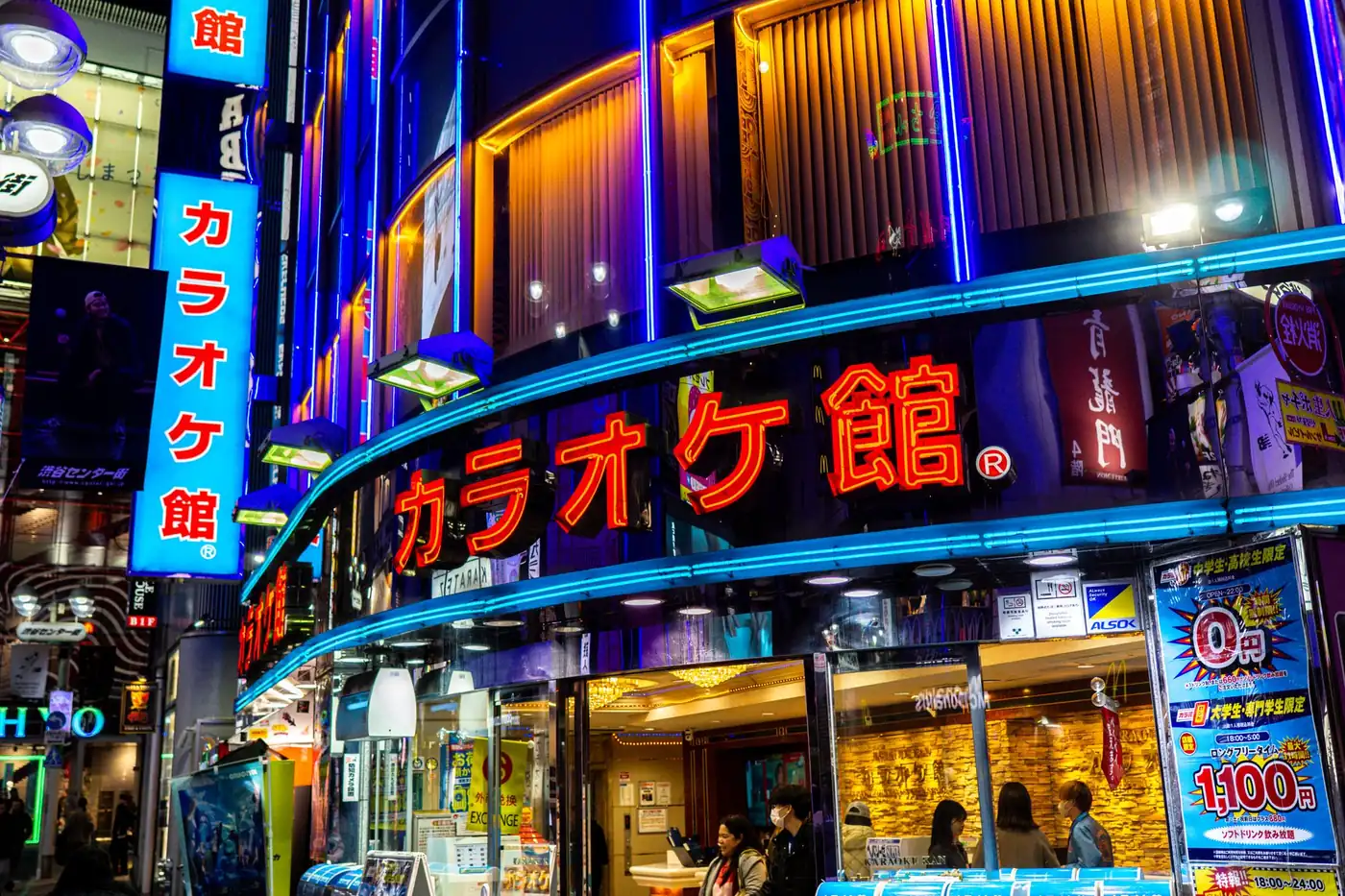
A Japanese karaoke venue is usually a whole building rather than a single room, several floors of small private rooms, often right next to a train station and easy to spot once you know what the signage looks like. You are shown into a room sized for your group and closed off from everyone else in the building: a large screen, a sofa, two microphones, a tablet for choosing songs, and a house phone for ordering drinks and food that get carried straight to the door. You control the volume, the lighting and the order of the songs, and there is no audience beyond the people you walked in with. That is the whole design: a rented room, not a performance.
Getting a room: what happens at the counter
The only part that needs attention is the front desk, and after that everything runs on its own. Staff ask how many people are in the group and how long you want the room for, usually offering a choice between paying by the block of time or a longer flat rate deal covering several hours at once. You decide whether to add a drinks package, get handed a room number, and head up. Ordering happens through the tablet or the house phone, and a server brings everything to the door. A call or a message on the screen gives a warning a few minutes before the booked time runs out, leaving a moment to decide whether to extend. Payment happens at the front desk on the way out, not in the room, once the microphones are back on the rack.
What it actually costs
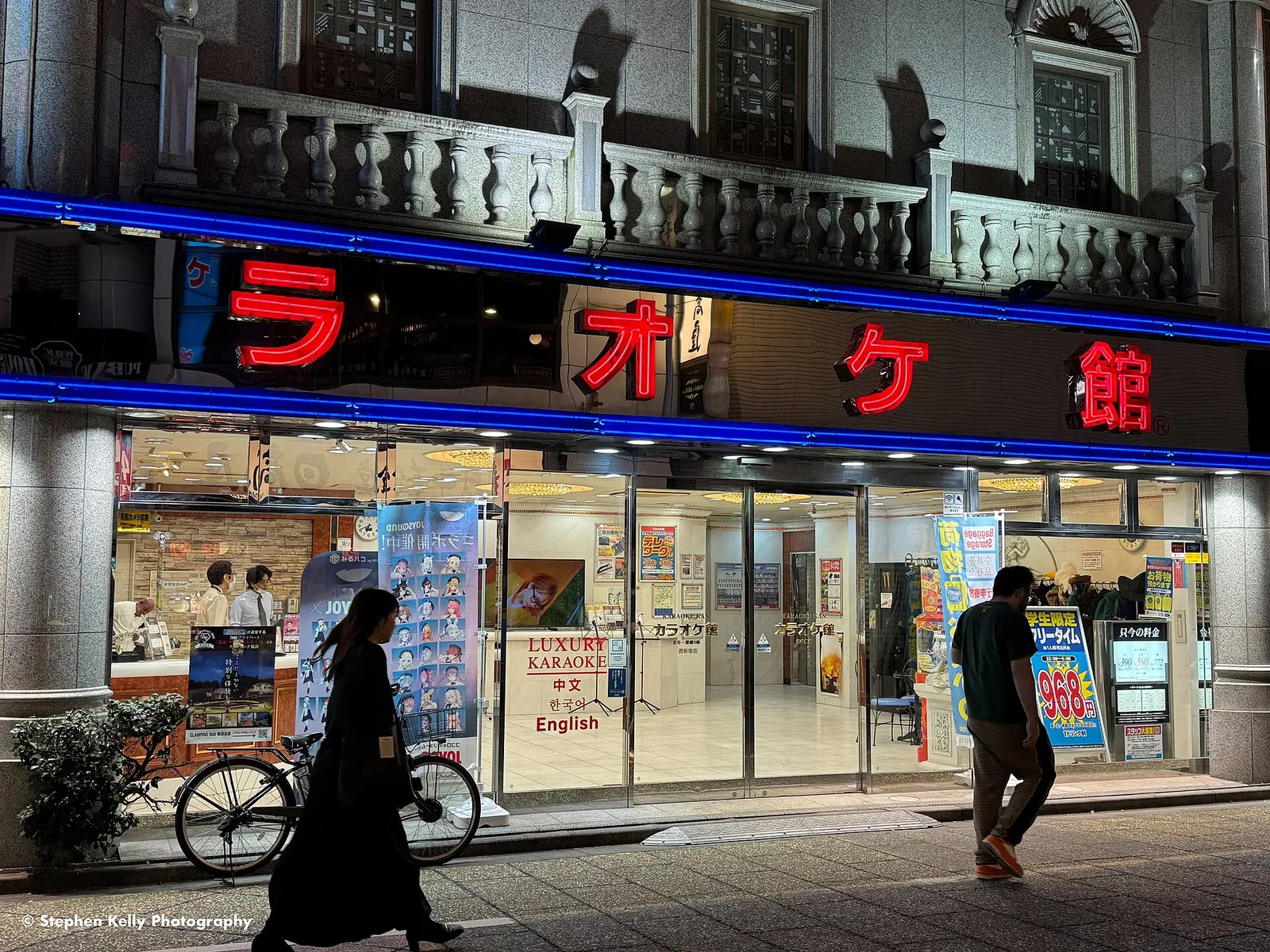
Karaoke is genuinely one of the cheaper nights out in Japan, but the numbers move around too much for one figure to be useful. The base charge is per person, by the half hour or the hour, and it runs cheaper in the daytime than the evening, cheaper on a weekday than a weekend, and differently again from one chain and one city to the next. As a very rough sense of scale, an afternoon hour can cost only a few hundred yen a head, climbing several times higher on a Saturday night, so treat any number here, including this one, as a starting point to confirm at the counter.
Most groups add nomihodai, an all you can drink package for the length of the booking, for a modest amount on top of the room charge, and it is usually worth it if more than a round each is likely. Late at night, many places switch to a free time deal instead, a long block at a flat rate rather than paying by the hour, which is how plenty of people end up spending the hours after the last train in a karaoke room rather than a taxi. Ask what is on offer that night rather than assuming, since the deals change by time and by branch.
Finding songs you can actually sing
The tablet in the room is the entire song catalogue, and at the major chains its interface can usually be switched to English in a couple of taps. Search by artist or song title typed in the Latin alphabet, add it to the queue, and keep browsing while someone else sings. You can see what is coming up next and reorder it, so nobody waits twenty minutes for a turn that never arrives. The English catalogue is enormous and covers decades of familiar hits, so finding songs you already know is rarely the problem. Worth trying at least once is a Japanese song, an anime opening or a well known pop hit, since the biggest ones display the lyrics in Latin letters as well as Japanese script, so it is possible to follow along without speaking a word of the language.
The etiquette, and it is friendlier than you think
Japanese public life runs on quiet restraint, and karaoke is one of the few places where that reserve visibly drops the moment the door closes. Nobody is grading the performance, nobody is waiting for a turn to end so they can go next, and singing badly is completely unremarkable. The easiest way in for anyone self conscious is to share a microphone on a song everyone knows, so the first turn is never one person alone. It also helps to shift the pitch up or down on the remote until a song sits inside a comfortable range, and being the one who keeps queueing up songs for others is a fine role for someone who would rather not sing at all. For the wider rules that shape behaviour in Japan outside a closed door, our guide to Japanese etiquette covers the rest of it.
The chains, and why nobody blinks if you go alone
The big three found almost everywhere are Big Echo, Karaoke Kan and Joysound, each a separate company running the same basic format with its own decor, room sizes and song machine, so trying more than one over a trip is worth doing rather than wasting an evening. All three sit near major stations, so planning ahead is rarely necessary, though a large group on a Saturday night in a district like Shinjuku or Shibuya may face a short wait. Some venues also restrict under eighteens being there without an adult late at night, so a mixed age group should ask at the counter before booking.
Going by yourself is entirely normal and has its own name, hitokara, and some chains build smaller rooms for solo use. There is no social cost to walking in alone and working through a private set list with nobody to please but yourself. It is, in its own way, the same evening as Osaka nightlife around Namba and Dotonbori further west, another city that treats a karaoke room as a normal way to end a night rather than a novelty.
Karaoke in Japan rewards showing up without much of a plan. Pick a chain near wherever the evening already is, tell the desk how many people and how long, and let the tablet and the drinks menu handle the rest. It works as the loud finish to a night that started somewhere quieter, and it works just as well as the whole evening on its own.