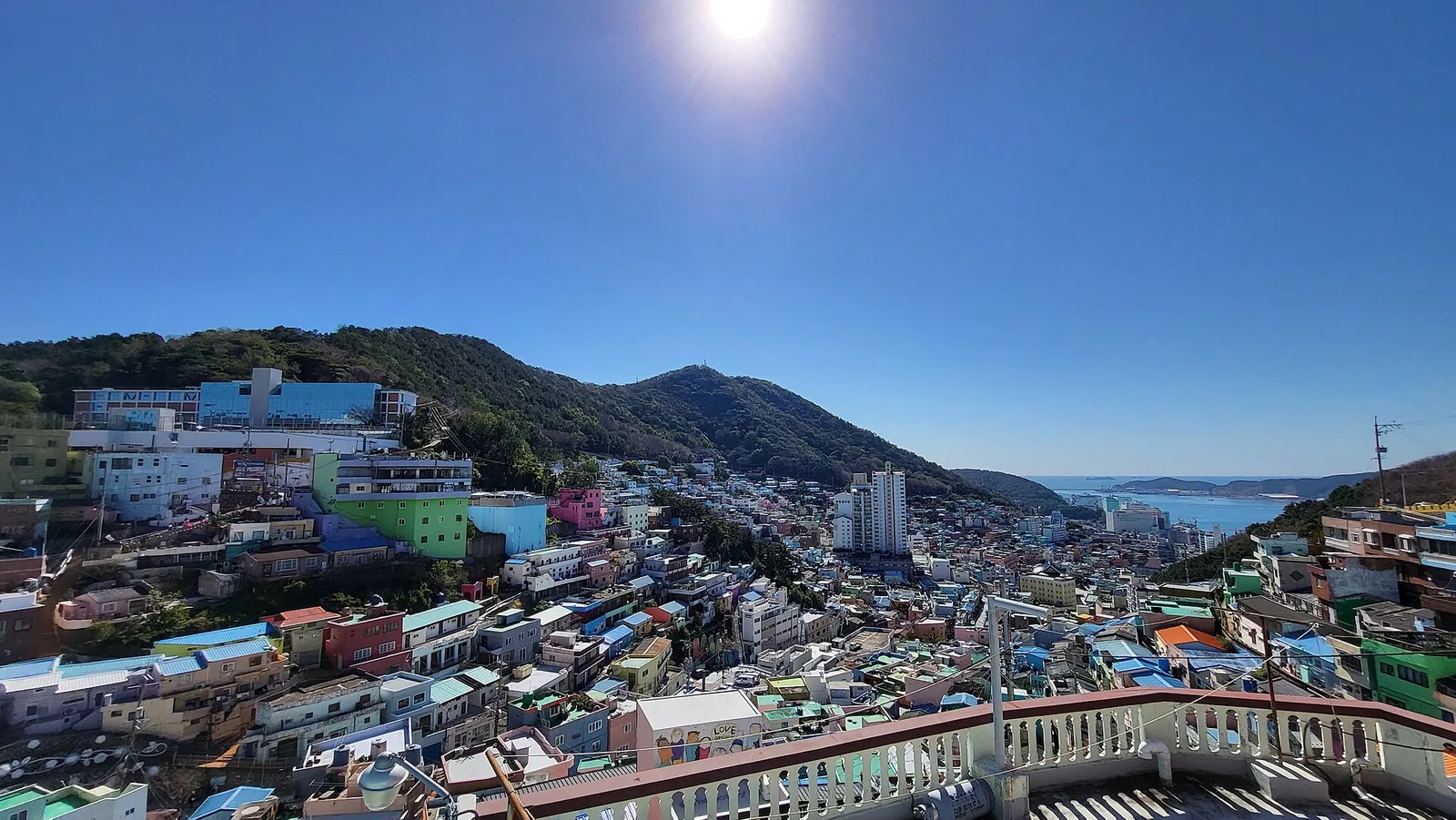
Seoul and Tokyo are around two hours apart by air and share a time zone, so anyone already making the long flight to East Asia reasonably asks why they should pick only one. Two weeks is the minimum for a proper taste of both, and it works on one condition: you do not try to see everything. Seoul and Busan on one side, the classic Japan route on the other, and a single crossing in between. If you are still deciding whether to combine them at all, our comparison of Japan or South Korea covers that question in full.
In short: Give Korea five to six days and Japan eight to nine. Start in Seoul, take the KTX to Busan, cross to Fukuoka on the overnight ferry, then ride the shinkansen east to finish in Tokyo. Book one ticket into Seoul and home from Tokyo, and check each country’s entry rules separately for your own passport.
Two weeks, two countries: the split that works
The simple rule is five to six days in Korea and eight to nine in Japan. Japan’s three anchors, Tokyo, Kyoto and Osaka, take a week by themselves. Seoul fills four full days without rushing, and Busan adds a day or two of beaches, markets and harbour.
| Version | Korea | Japan | Best for |
|---|---|---|---|
| The classic | Seoul and Busan, 6 days | Fukuoka, Osaka, Kyoto and Tokyo, 8 days | Travellers who want the ferry and both of Korea’s big cities |
| Seoul only | Seoul, 4 days | Osaka, Kyoto and Tokyo, 10 days | Trips where Japan is the main event and Korea is the bonus |
| Korea-heavy | Seoul and Busan, 7 days | Osaka and Kyoto, 7 days | Travellers who already know Tokyo and want to return to Kansai |
The common mistake is adding one more city in each country. Every move between cities costs half a day, and every move between countries costs most of a day once you add an airport or a port, security and immigration. Over two weeks, six bases is the ceiling.
Which way round: Korea first, and why
In most cases it is better to start in Korea and finish in Japan. The sailing from Busan to Fukuoka runs overnight, so it saves a hotel night and lands you in Japan in the morning, while the opposite direction is a daytime sailing that uses up a day. Seoul is compact and easy to find your feet in, Tokyo is a closing chapter that is hard to top, and once you are in Japan the shinkansen carries you east without doubling back.
The reverse is better when the fare that way is clearly lower, or when the season decides. Cherry blossom and autumn colour do not peak on the same days in both countries, so if the season matters more on one side, put that country in the right week and check the forecast for each city.
The route, day by day
This is the skeleton of the classic version over 14 days. You can shift days between cities to suit your taste.
| Day | Where | What you do |
|---|---|---|
| 1 | Seoul | Land at Incheon, transfer into the city, easy first evening in your neighbourhood |
| 2 to 4 | Seoul | Palaces and hanok lanes, markets, and one day trip out of the city |
| 5 | Seoul to Busan | Morning KTX high-speed train, evening by the beach |
| 6 | Busan | Markets and the harbour, then board the overnight ferry in the evening |
| 7 | Fukuoka | Disembark at Hakata port in the morning and spend the day eating your way round the city |
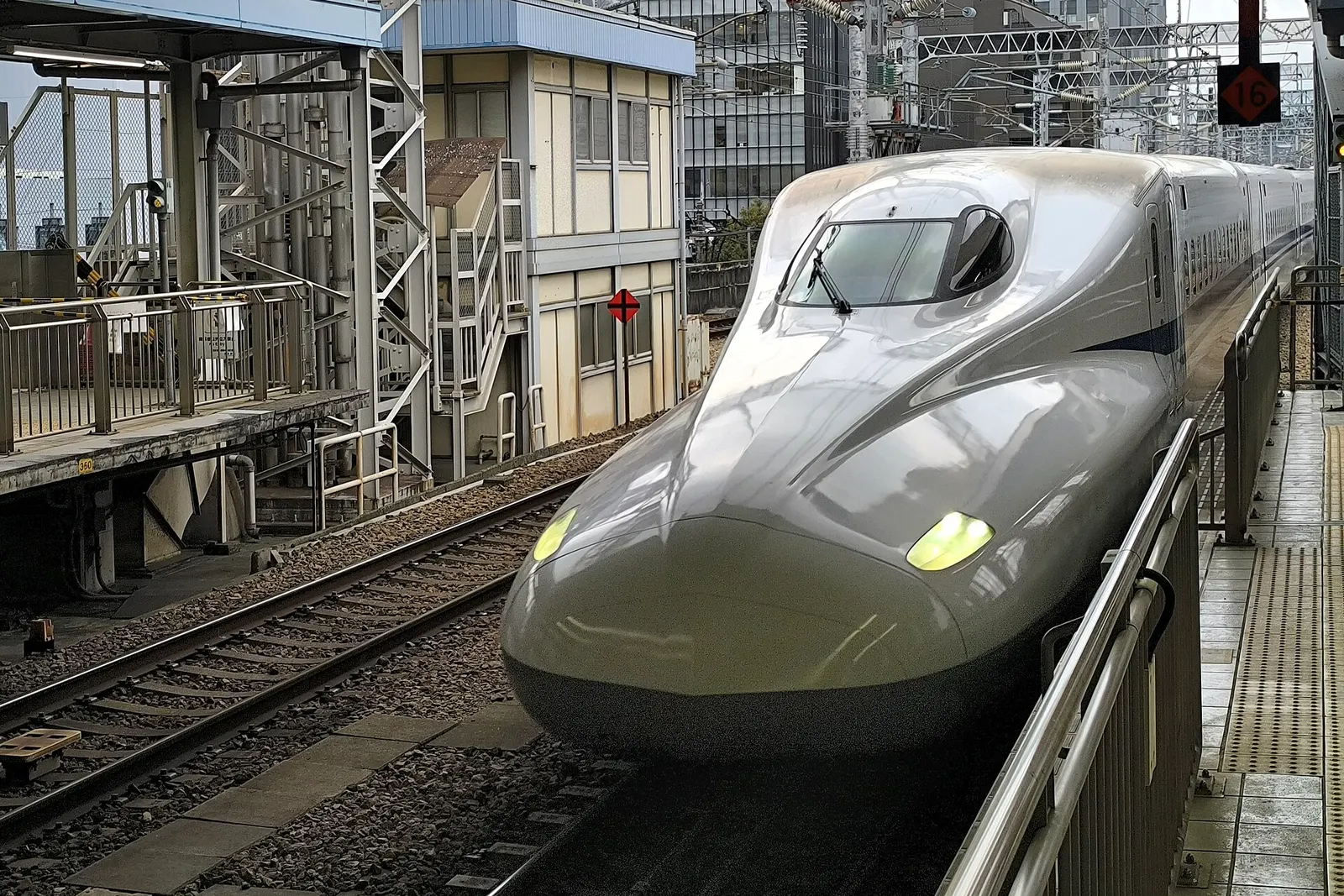
| 8 | Fukuoka to Osaka | Shinkansen east, with an optional stop in Hiroshima |
| 9 to 10 | Osaka and Kyoto | One day in each city, from a single base |
| 11 | Kyoto to Tokyo | Morning shinkansen, afternoon in the city |
| 12 to 13 | Tokyo | Neighbourhoods, food and one day trip out of the city |
| 14 | Tokyo | Fly home |
The no-ferry version: skip Busan and fly from Seoul straight to Osaka, which also removes Fukuoka, and give the freed days to Kyoto and Tokyo. To see how the Japanese half stretches with more time, our realistic two-week Japan itinerary is worth borrowing from.
Crossing between the countries: short flight or overnight ferry
By air. Full-service and low-cost airlines from both countries fly between Tokyo or Osaka and Seoul or Busan, and short hops link Fukuoka and Busan too. The most convenient pairing is Haneda and Gimpo, both close to their city centres, unlike Narita and Incheon. Fares swing sharply by season and day of the week, so compare before you book.
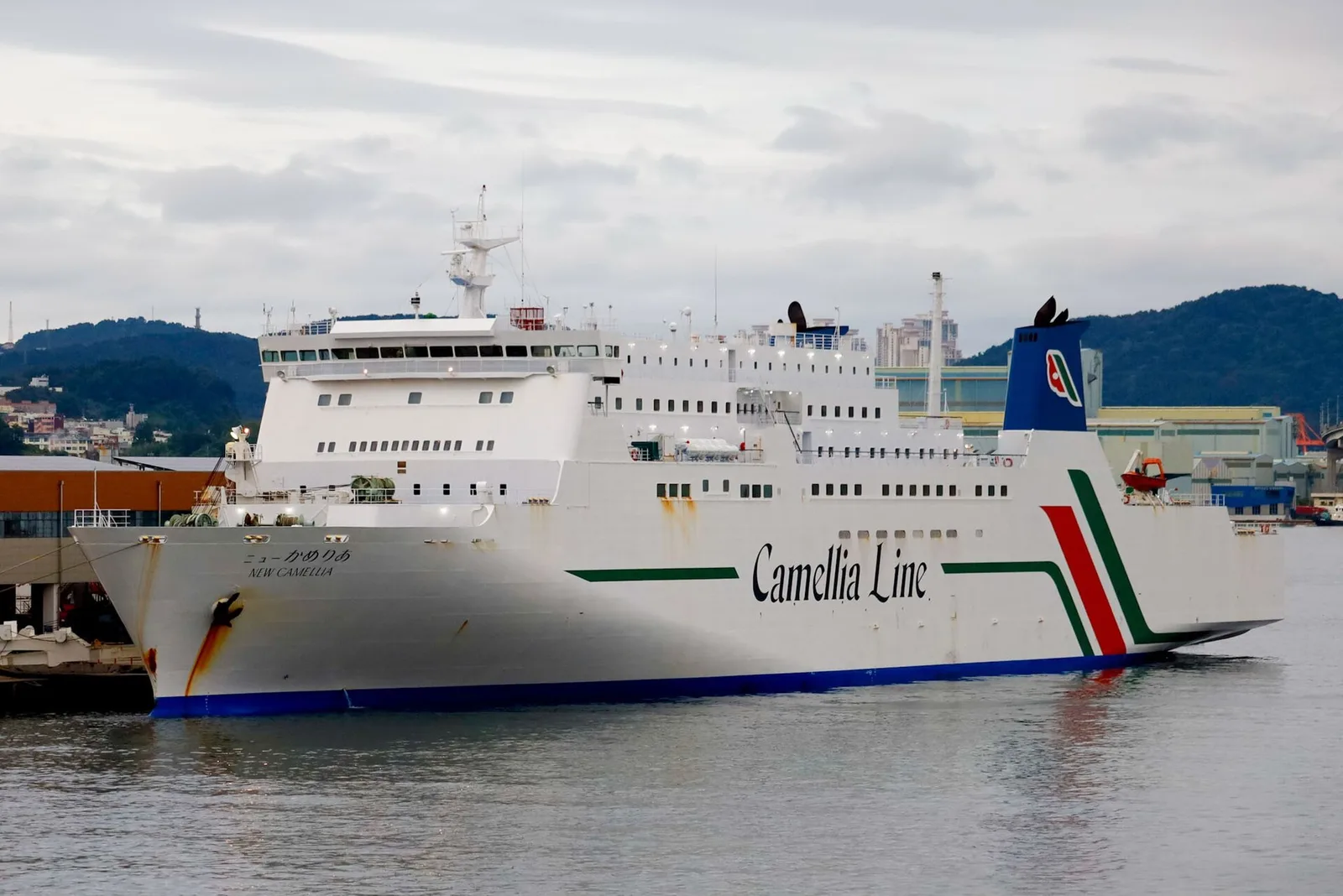
By sea. Camellia Line sails its New Camellia ferry between Busan port and Hakata port in Fukuoka. The sailing from Busan leaves in the evening and you disembark in Japan the next morning, then clear immigration and customs at the port. The regular sailing the other way runs in the daytime and takes around six hours. Some days have no sailing, so check the timetable on the official Camellia Line website before you fix the order of your days, and check there how to book, since the company has posted notices about its online booking service.
What about the fast boat? JR Kyushu’s Queen Beetle hydrofoil no longer runs on the route. JR Kyushu announced its withdrawal from passenger shipping in December 2024 and sold the vessel in 2025, so an older guide that still recommends it has simply not been updated.
Flights home: into one city, out of another
Book an open-jaw or multi-city ticket: into Seoul and home from Tokyo, or the reverse, on one reservation, so you never backtrack and a missed connection is the airline’s problem rather than yours.
One ticket, two countriesCompare multi-city flights into Seoul and home from TokyoEntry rules: what to sort before each border
| Country | Visa for a holiday (US, UK, EU, Canada, Australia) | What to complete in advance | Where to check |
|---|---|---|---|
| Japan | Not needed, stays of up to 90 days | Visit Japan Web, free and optional | Japan’s Ministry of Foreign Affairs visa pages |
| South Korea | Not needed for a short visit | K-ETA unless your passport is exempt, otherwise an arrival card | k-eta.go.kr and e-arrivalcard.go.kr |
Japan. Passports from the United States, the United Kingdom, every EU member state, Canada and Australia are admitted visa-free as temporary visitors, for stays of up to 90 days. Fill in Visit Japan Web, the free official site, for immigration and customs QR codes, and if you arrive by ferry, check there what applies at your port. Our guide to Japan’s visa and entry rules walks through the forms and the questions officers ask.
South Korea. No visa is needed for a short holiday on these passports, but there is a separate step. K-ETA, Korea’s online travel authorisation, applies to visa-free visitors unless their nationality is on a temporary exemption list. That list includes the United States, Canada, the United Kingdom, Australia and many EU countries, and the Korean Ministry of Justice extended the exemption to 31 December 2026, Korean time. It has been extended more than once, but an extension is never automatic, so for travel from 2027 onwards, check your own passport on k-eta.go.kr before you book. Travellers who enter without a K-ETA complete an arrival card, which can be done free online at e-arrivalcard.go.kr in the 72 hours before landing. Use only the official sites, since lookalikes charge for free forms.
Money, data, plugs and Sundays
Two currencies, two transit cards. Japan uses yen and Korea uses won. For transport, get a stored-value card in each: T-money in Korea, usually topped up in cash at convenience stores and station machines, and an IC card such as Suica in Japan, which also works in Apple Wallet on an iPhone. Cards are accepted almost everywhere in Seoul, while Japan still has small restaurants and shrines that take cash only.
Data and navigation. A regional eSIM covering both countries saves switching halfway, but confirm it really includes both. In Korea, Google Maps is weak on walking and driving directions, so download Naver Map or KakaoMap before you land.
Plugs. Korea uses the round two-pin European sockets (types C and F) at 220 volts, while Japan uses flat two-pin sockets (type A) at 100 volts. North American plugs fit Japan but need an adapter in Korea, European plugs fit Korea but not Japan, and UK and Australian plugs need an adapter in both. Check the voltage label on anything that is not a phone or laptop charger.
Sundays and Christmas. Both Seoul and Tokyo have churches with English-language services if you want to keep a Sunday routine on the road. Over the festive season the two sides differ: Christmas Day is a public holiday in Korea but an ordinary working day in Japan, where Christmas Eve is more a night out for couples. Japan’s big holiday is New Year, when many businesses close for several days, so plan around it if your dates touch the turn of the year.