Tohoku is the northern third of Honshu, it starts about ninety minutes from Tokyo on the shinkansen, and foreign visitors barely go. That is the whole pitch. The same money buys a better ryokan, the temples have nobody on the steps, the autumn colour arrives before it reaches Kyoto and stays longer, and in winter the snow is measured in metres. Five days is enough for the eastern half of it as a line north, and everything here is reachable on the train with one or two local buses. Read our autumn colour guide if that is your season and the rail pass sums, because this route covers a lot of shinkansen kilometres.
Itinerary at a glance
| Day | Base | The signature experience |
|---|---|---|
| 1 | Sendai | Grilled beef tongue and the Date mausoleum |
| 2 | Matsushima | The pine islands from the water |
| 3 | Ginzan Onsen | A wooden bathhouse street under gas lamps |
| 4 | Yamadera | A thousand steps up a mountain temple |
| 5 | Hirosaki or Geibikei | A castle in the orchards, or a boat in a gorge |
Day 1: Sendai
Sendai is the region’s only large city and a comfortable place to land. It is a modern rebuild with wide tree lined avenues, and the two things to do are close together. Zuihoden is the mausoleum of Date Masamune, the one eyed warlord who founded the city, a small lacquered and gilded building set among cedars on a hillside, and it is far more decorated than the plain temples further south. The castle site above the river is mostly gone, but the view over the city from it is the reason to go up.
The real reason to be here is dinner. Sendai invented gyutan, thick cut beef tongue grilled over charcoal and served with barley rice and oxtail soup, and the specialist restaurants that do nothing else are all over the centre. It is a set meal rather than a dish, and it is the single best value good meal in the region.
Food: gyutan, obviously, and zunda, a sweet green paste of mashed edamame that goes on mochi and into milkshakes and tastes better than the description. The signature experience: a charcoal grilled gyutan set at a counter. Optional tour: none needed; the city is straightforward on foot and by loop bus.
Day 2: Matsushima
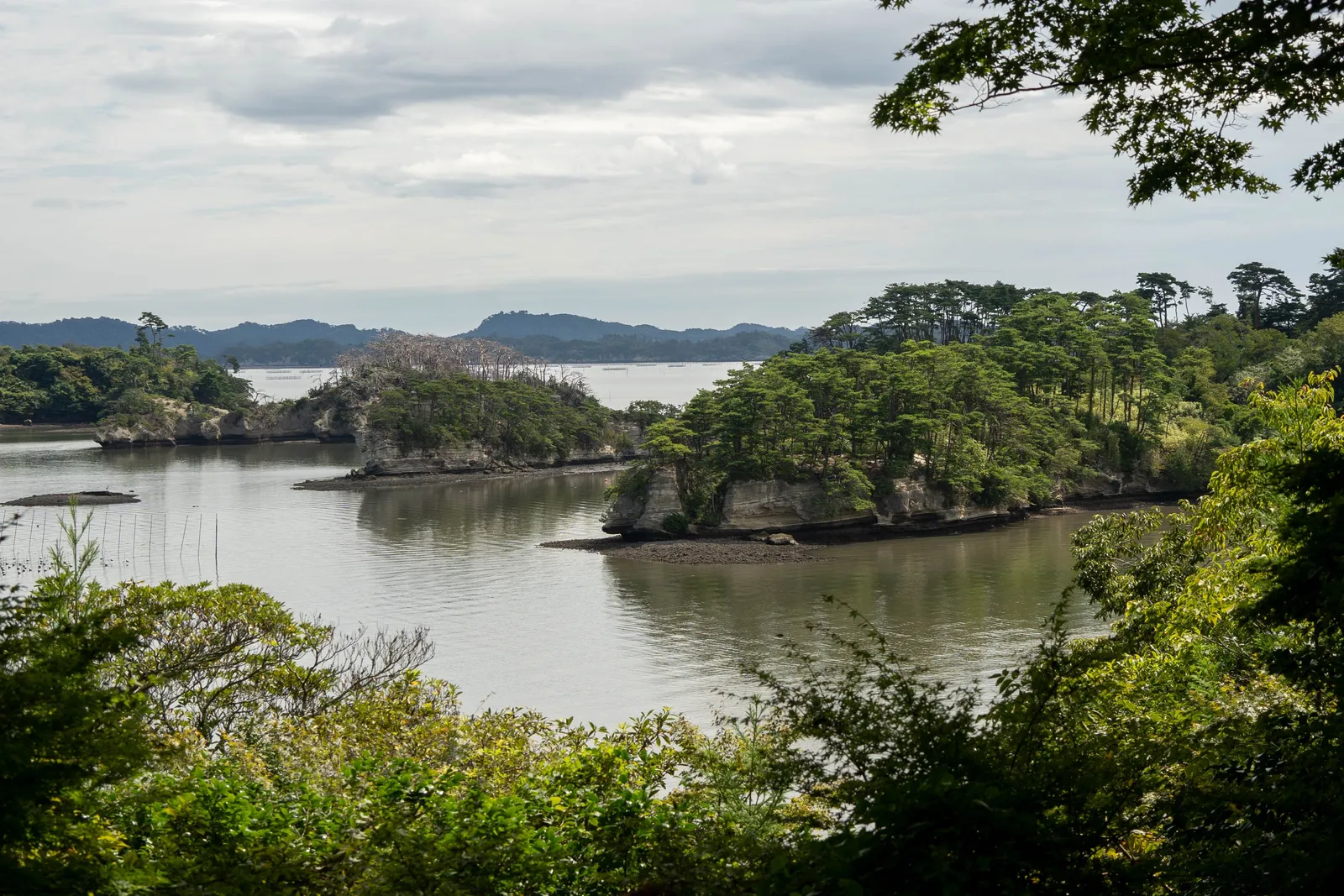
Half an hour up the coast, Matsushima bay is scattered with a few hundred small pine covered islands, and it has been on the list of the country’s three great views for centuries. The way to see it is from the water: sightseeing boats run circuits of the bay and take about fifty minutes, threading between islands with holes worn through them by the sea.
On land, Zuiganji is the temple to see, a Zen complex with rooms of painted screens and caves cut into the rock beside the approach, and Godaido, a small hall on an islet reached by a bridge with gaps in the planks that make you look down. Entsuin next door has a moss garden and a rose garden that are at their best in autumn. It is a half day, which leaves the afternoon for the train inland.
Food: oysters, which the bay is known for, grilled at stalls near the pier in season. The signature experience: the boat circuit, particularly in the late afternoon light. Optional tour: the boats run frequently and need no booking outside holidays.
Day 3: Ginzan Onsen
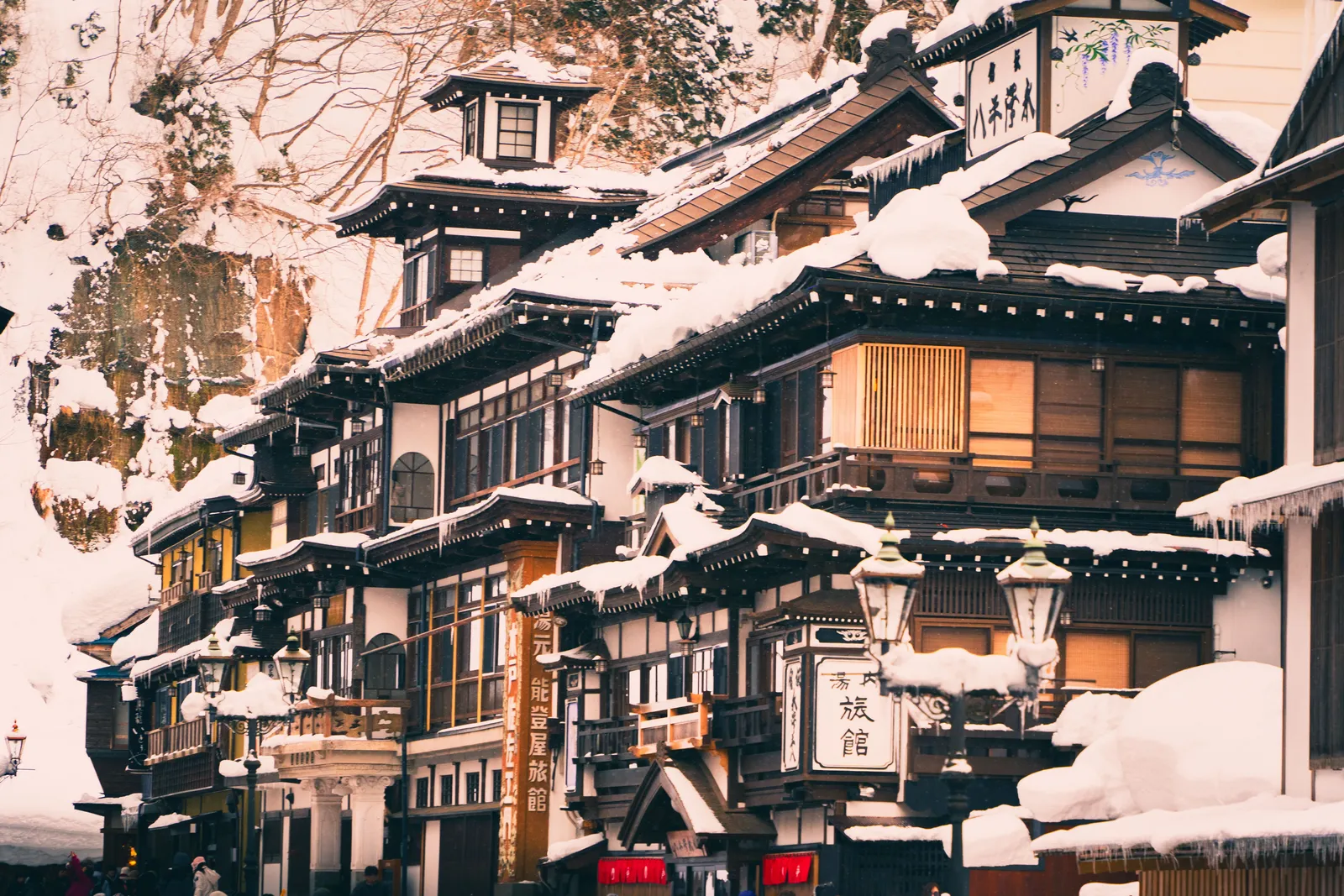
Ginzan is a former silver mining valley that turned into a hot spring town, and it is one of the most photographed streets in Japan: three and four storey wooden ryokan facing each other across a river, gas lamps along the walkways, and in winter a metre of snow on every roof. Cars stop at the top of the valley, so you walk in, which is why the street looks the way it does.
Staying the night is the entire point. Day visitors see it in daylight; guests see it after the lamps come on, when the street empties and the snow is falling, and there is nothing else quite like it in the country. Rooms are limited and book out months ahead for winter weekends. If you cannot get one, there are public baths for day use, and the walk up the valley to the waterfall behind the town takes half an hour.
Food: the ryokan dinner, and on the street, curry bread fried to order and soba made in the town. The signature experience: the wooden street under the gas lamps in the snow. Optional tour: buses run from Oishida station on the shinkansen line, and in deep winter that is the only sensible approach.
Day 4: Yamadera
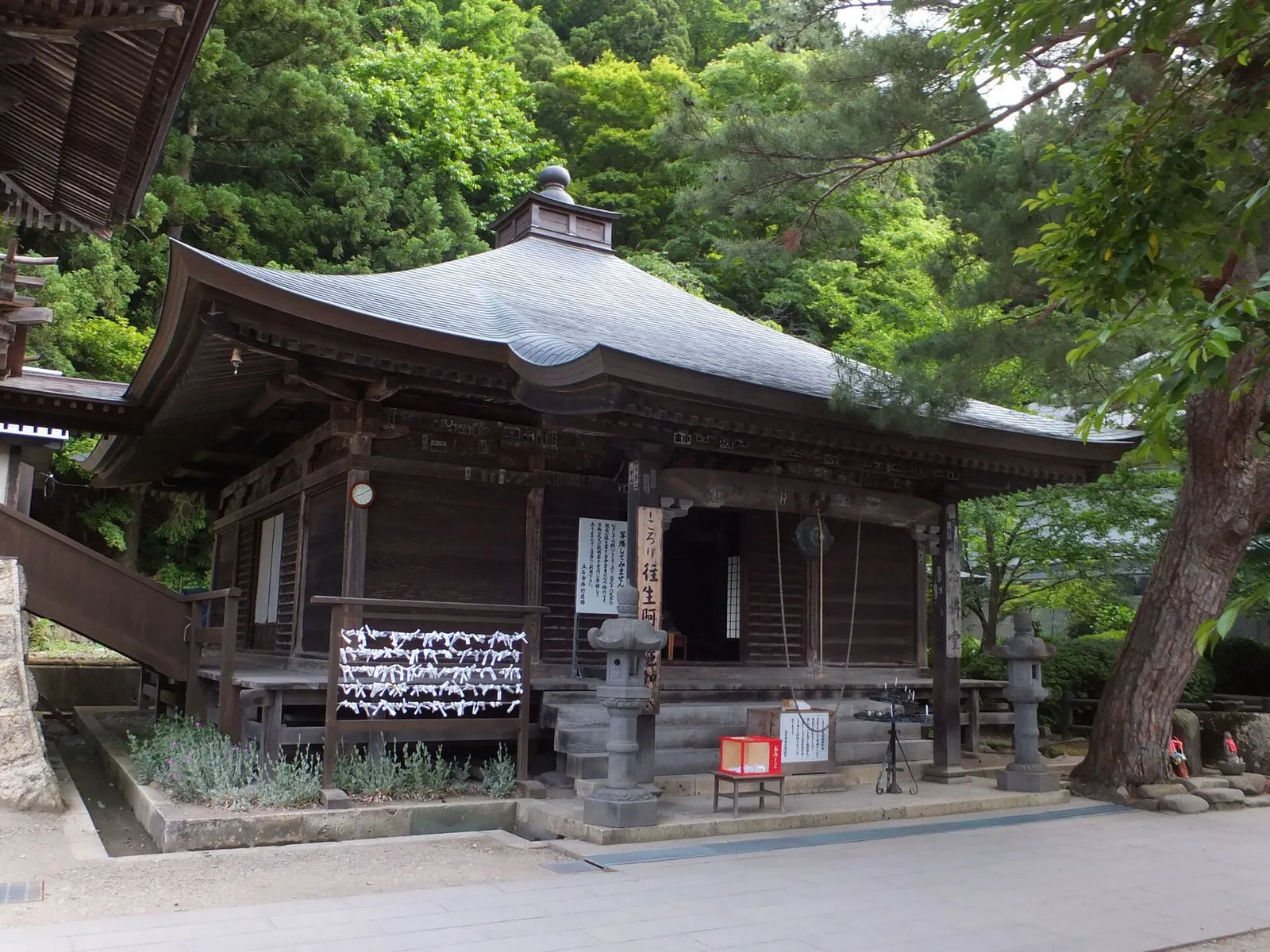
Yamadera means mountain temple and that is exactly what it is: a temple complex spread up a wooded rock face above a valley, reached by around a thousand stone steps through cedars, with halls and small shrines tucked into the rock the whole way up. The poet Basho stopped here and wrote the haiku about cicada voices soaking into the stone, and there is a stone marking the spot.
The climb takes most people between forty minutes and an hour, and the payoff is the Godaido observation deck built out from the cliff over the valley. Go early. In autumn the maples below the temple turn and the whole thing becomes the postcard; in winter the steps are icy and cleared, but proper shoes matter. The town at the bottom is small and does one thing well, which is soba.
Food: cold soba with mountain vegetables, and the local konjac on a stick sold at the bottom of the steps. The signature experience: the cliff deck at the top, looking back down the valley. Optional tour: none; this is a walk with steps and a ticket booth.
Day 5: North to Hirosaki, or east to the gorge
The last day forks. North, Hirosaki has a castle keep in a large park, an orchard region that supplies much of the country’s apples, and a set of preserved western style buildings from the Meiji era. In late April and early May the park is one of the most spectacular cherry blossom sites in Japan, with petals covering the moat entirely, and it peaks well after Tokyo and Kyoto have finished.
East, Geibikei is the quieter choice: a gorge on the Satetsu river where a boatman poles a flat bottomed boat upstream between limestone walls for an hour, ties up so you can walk to the cliff face, and sings on the way back. It is slow, old fashioned and completely charming. Either way, the shinkansen from Morioka or Sendai puts you back in Tokyo in a few hours.
Food: in Hirosaki, apples in every form including a pie industry; near Geibikei, wanko soba if you want the local eating challenge. The signature experience: the boatman’s song on the way back down the gorge. Optional tour: the gorge boats stop running in bad weather and in the coldest part of winter run with a heated boat, which is its own experience.
Practical tips
- The Tohoku shinkansen makes this route work: Sendai is roughly ninety minutes from Tokyo, and the branch lines and buses do the rest.
- Ginzan Onsen in winter needs booking months ahead, and the last bus in is early. Do not plan to arrive late.
- Autumn colour reaches Tohoku from mid October, weeks before Kyoto, and the cherry blossom arrives weeks after Tokyo. Both are reasons to come here rather than compete for the same weeks further south.
- Snow here is serious. In winter, allow for delayed local trains and take boots that grip; our seasonal guide covers the trade offs.
- English is thinner on the ground than in the big cities, which is part of the appeal and worth a translation app.
- For the etiquette that a ryokan and a public bath assume you know, the ryokan guide and onsen guide cover it.