Japan runs on two forms of accommodation that barely exist elsewhere in this shape: the business hotel and the capsule hotel. Both are frequently described in travel writing as either charmingly futuristic or unbearably claustrophobic, and neither description helps you decide. What follows is what each one physically contains, what the rules are, and which situations each actually suits, because the honest answer is that one of them is a base and the other is a bed.
What a business hotel actually is
A business hotel is a private room built for a Japanese salaryman on a one night work trip, which shapes everything about it.
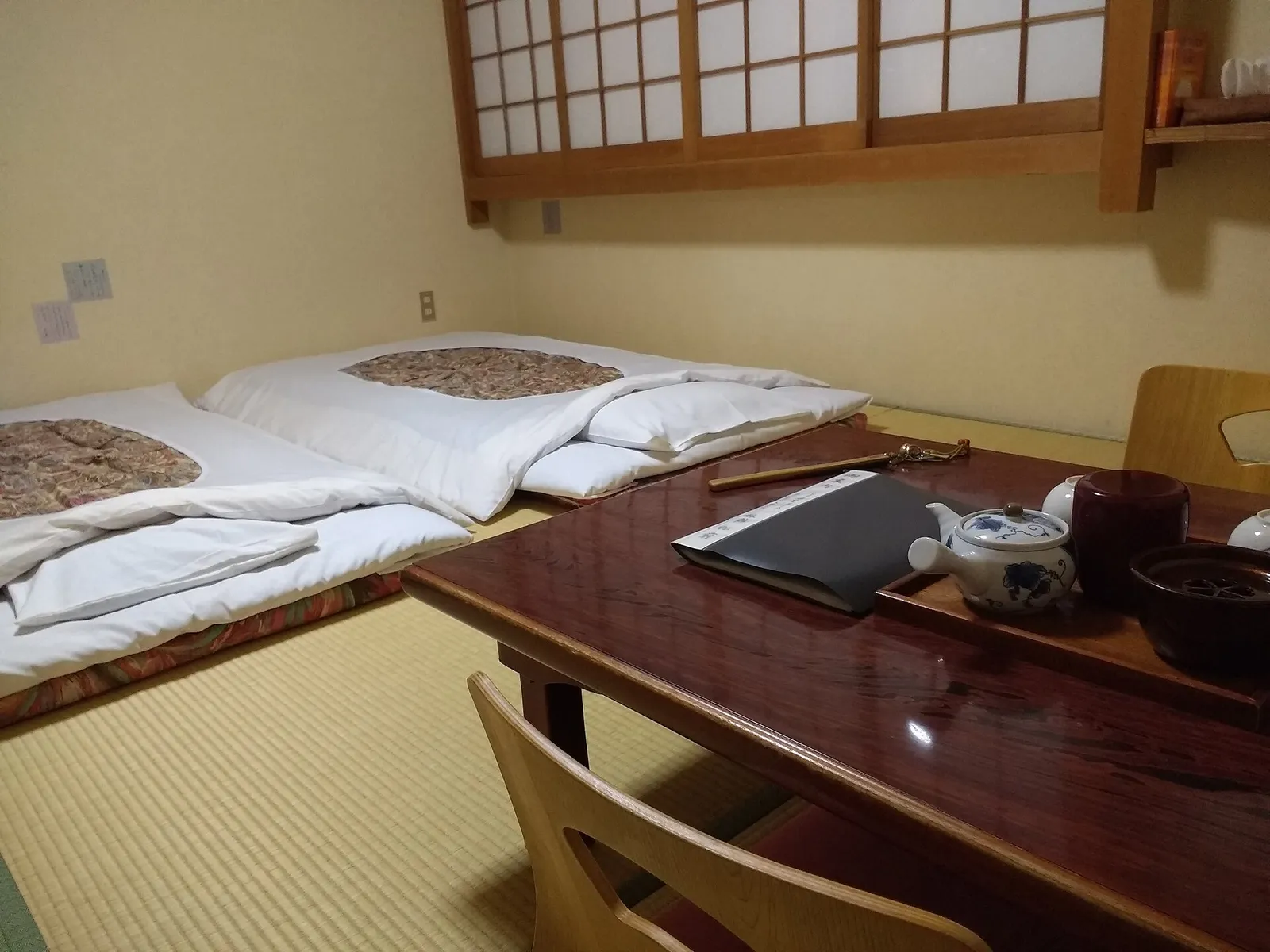
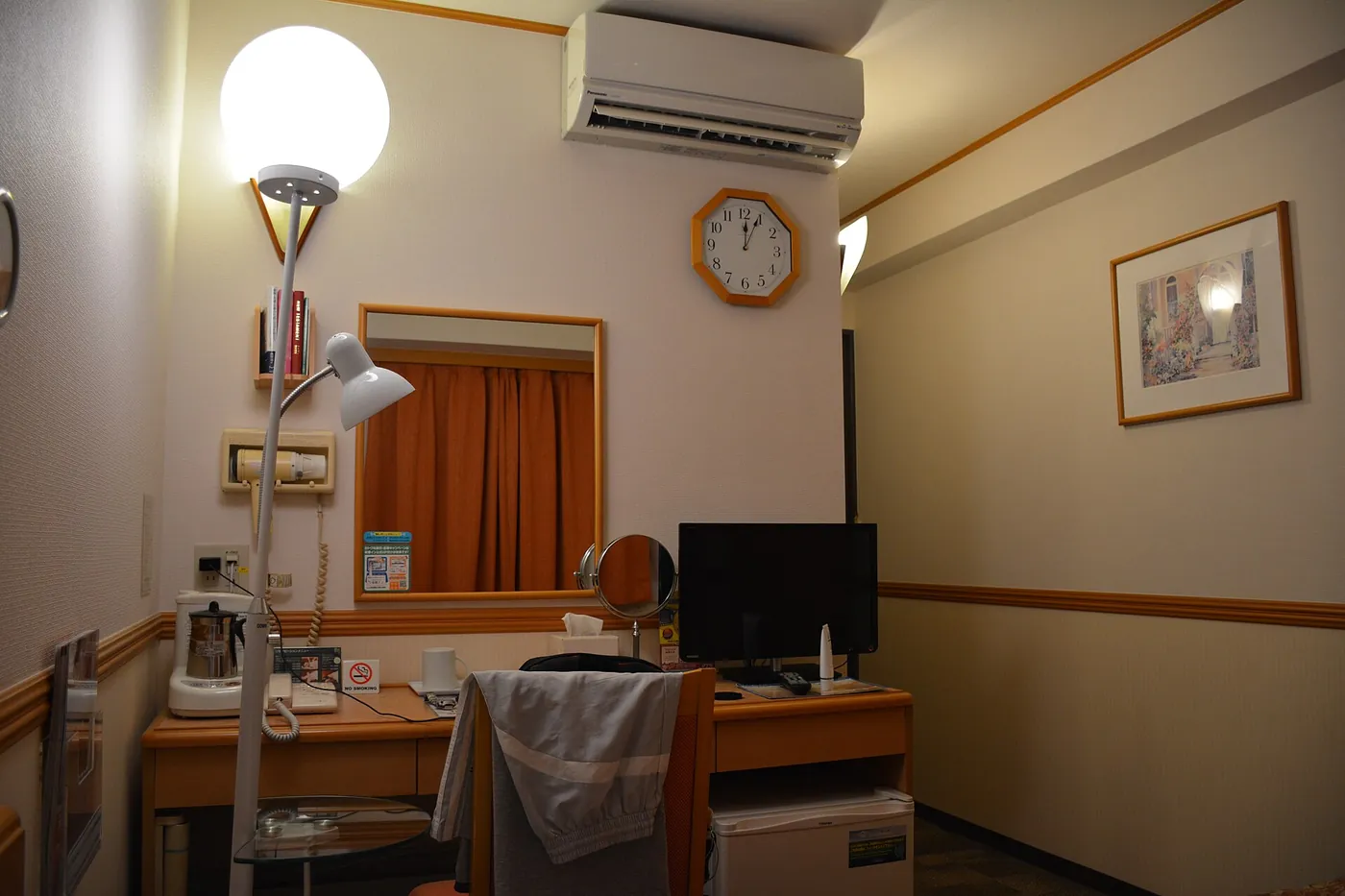
The room is small, often somewhere in the low teens of square metres, with a bed, a narrow desk, a kettle and not much floor left over.
The bathroom is a unit bath, a single moulded plastic module containing a short deep tub, a shower and a toilet, installed as one piece rather than tiled in place.
Amenities are standardised and generous: toothbrushes, razors, slippers, a yukata style robe, and often a self service counter in the lobby where you take what you need.
Location is the actual product. Business hotels cluster around stations because that is what their intended guest needs, and it is why they work so well for travellers too.
You can lock the door, leave a suitcase open on the floor, and come and go without thinking about anyone else. That is the whole case for them, and on a trip of any length it is a strong one.
What a capsule hotel actually is
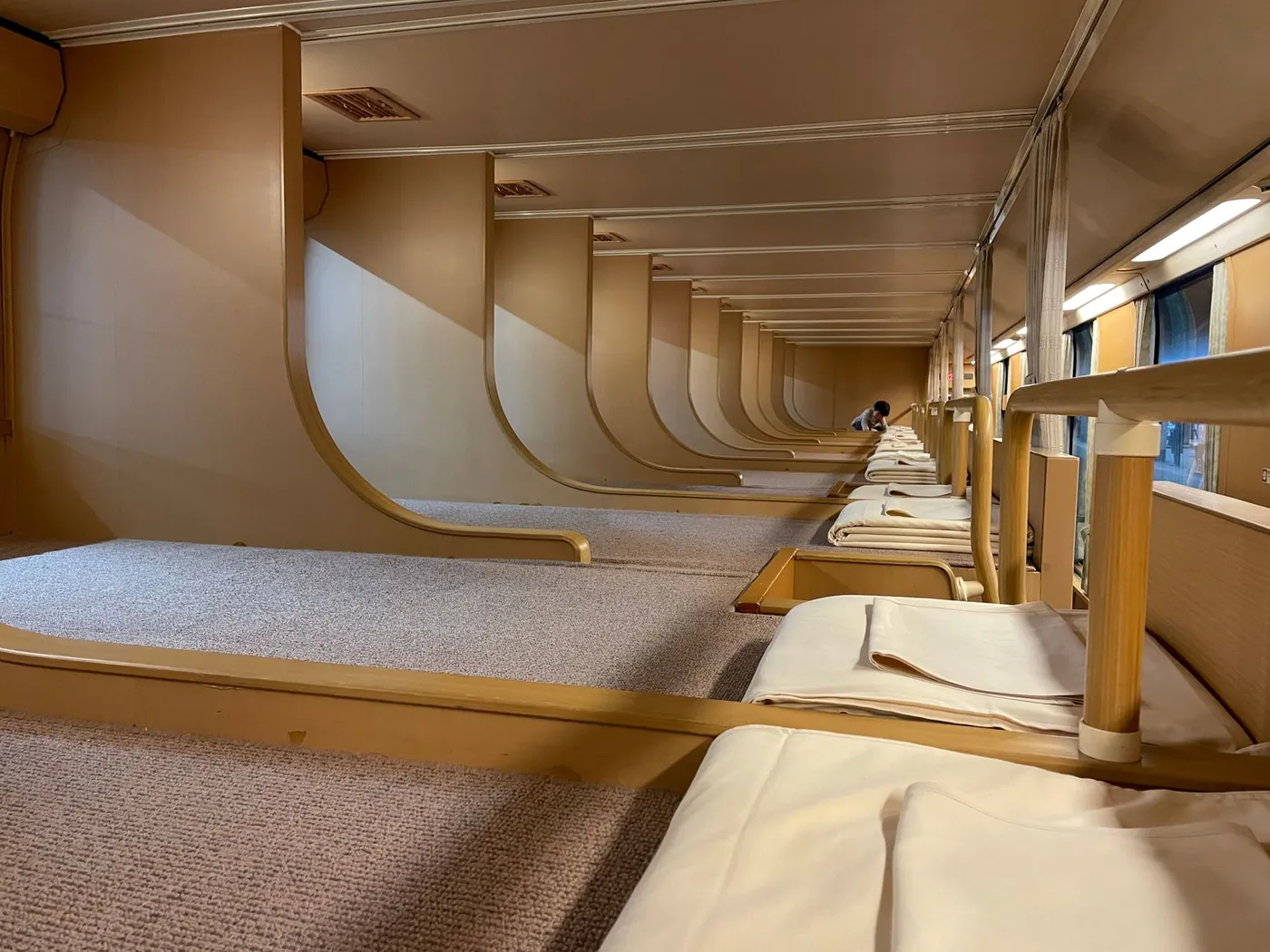
A capsule hotel gives you an enclosed sleeping pod on a shared floor, and everything else happens communally.
The pod is roughly the footprint of a single bed, with enough headroom to sit up but not to stand, closed with a blind, a screen or a rigid shutter rather than a lockable door.
Inside there is usually a mattress, a light, a power socket and sometimes a small screen, and in the better chains a surprisingly good mattress.
Bathing, changing and relaxing happen in shared rooms, typically including a communal bath in the style of a public sento, plus a lounge with vending machines.
Newer chains have narrowed the gap considerably, with proper soundproofing and design that owes more to a hotel than a hostel, at prices closer to a cheap private room.
The rules that catch visitors out
This is where booking blind goes wrong, and none of it is standardised nationally.
Gender separation is common. Most capsule hotels run single gender floors reached by a keycard controlled lift, or are single gender throughout, so couples and mixed groups are frequently split up.
Tattoo policies vary by property. Where there is a shared bath run on public bath lines, visible tattoos are often refused, and since the bath may be the only place to wash, that is a real problem rather than a minor one. Newer chains aimed at international guests are frequently relaxed about it.
Luggage does not come into the pod. You use a locker or a luggage room, and large checked cases are not always accommodated, so confirm before you book.
Curfews and re-entry rules differ. Some properties lock up or close the bath overnight, others run around the clock. Quiet hours in the sleeping area from roughly ten or eleven at night are close to universal.
Nothing above is a national rule. Read the property’s own page rather than the booking platform summary, which routinely omits all of it.
Compare Japanese hotel rooms before peak seasonWell located business hotels sell out early in spring and autumn, and rates climb with themWhat they cost, and when the bargain stops
Neither category has fixed pricing, and both have moved upwards in recent years alongside general Japanese hotel rates.
Capsules sit at the bottom of the private accommodation range, above a hostel dorm bed and below a business hotel room, though the newest design led pods have crept into business hotel territory.
Business hotels occupy a broad middle band, with the big domestic chains clustering fairly tightly and the difference being location rather than standard.
Both rise steeply in peak windows, particularly cherry blossom season, the autumn leaf weeks and the domestic holiday periods, when a capsule can cost what a private room did a month earlier.
Accommodation taxes apply in several cities and are charged per person, per night, on top of the rate, which affects a two person capsule booking more than you might expect.
For how these fit into a whole trip’s spending, our breakdown of Japan travel costs puts accommodation next to transport and food.
Etiquette in a shared sleeping floor
The rules are unwritten and universally observed, which is a bad combination for a visitor who has not been told them.
Speak quietly or not at all on the sleeping floor, at any hour, and take phone calls to the lounge.
Do not eat in the pod. Smells and crumbs travel in an enclosed space, and there is a designated area for it.
Wash properly before entering the communal bath, seated at the taps, and get in clean. The same rules apply as at any Japanese bath, and our etiquette guide covers them in full.
Handle the shutter or blind slowly, since a snapped screen at two in the morning is the single most common complaint about capsule stays.
Which to pick
Take a business hotel for anything longer than a night, for anything involving a suitcase you need access to, and for any trip where you want to shower without planning it.
Take a capsule for a single night between cities, for the night before an early flight, for a solo trip where the saving buys you something better later, and once simply for the experience of it.
Take neither for the night you actually want to remember. A traditional inn is a different product entirely, and our ryokan guide explains what the higher nightly figure buys and why it is worth doing once.
The honest summary is that Japan’s budget accommodation is unusually good at the thing it was designed for and unusually bad at everything else. Book it for what it is, check the specific property’s rules before you arrive, and it will do exactly what you needed.