Japan produces some of the best vegetable cooking in the world and is one of the harder countries in which to eat as a vegetarian. Both statements are true, and the reason for the second is a single ingredient that appears almost everywhere and is invisible on the plate. Understanding it is most of the battle.
The dashi problem
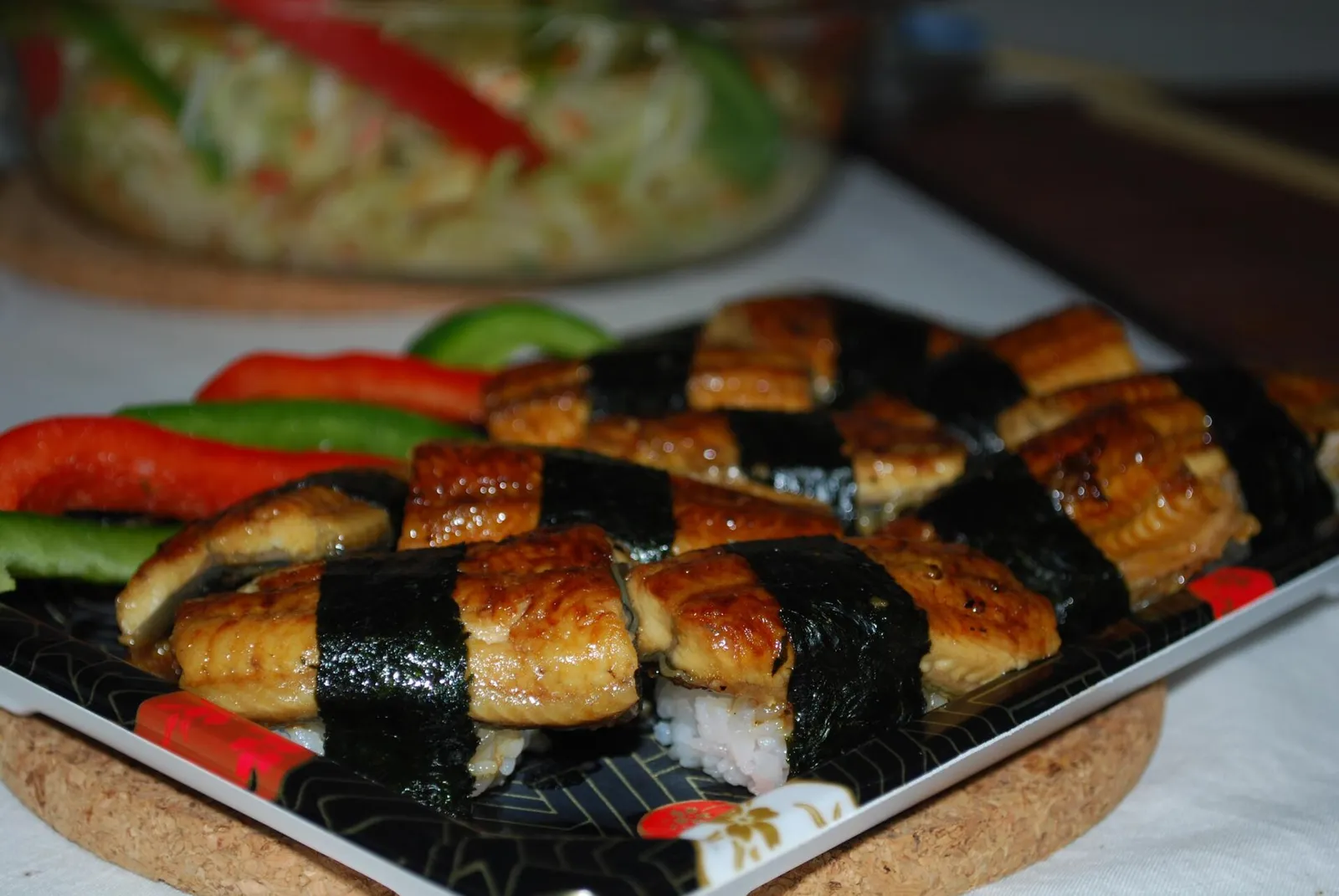
Dashi is the foundational stock of Japanese cooking, and the standard version is made from katsuobushi, dried and fermented bonito. That means it contains fish.
It is in miso soup. It is in the broth of noodle dishes. It is in simmered vegetable dishes, in many dipping sauces, in savoury egg custard, and in a great deal of food that contains no visible animal product whatsoever. A bowl of clear broth with vegetables in it is very often a fish stock.
This is why the usual traveller’s strategy of avoiding obvious meat fails here. The obvious things are easy. It is the innocuous ones that catch people, and a dish being plant-based by appearance says nothing about the stock it was cooked in.
There is a vegan alternative that Japanese cooking uses freely: kombu dashi, made from kelp, often with dried shiitake. Where a kitchen uses it, the food is genuinely vegan. The question to ask is not whether a dish has fish in it but what the stock is made from.
Shojin ryori: the tradition that solves it
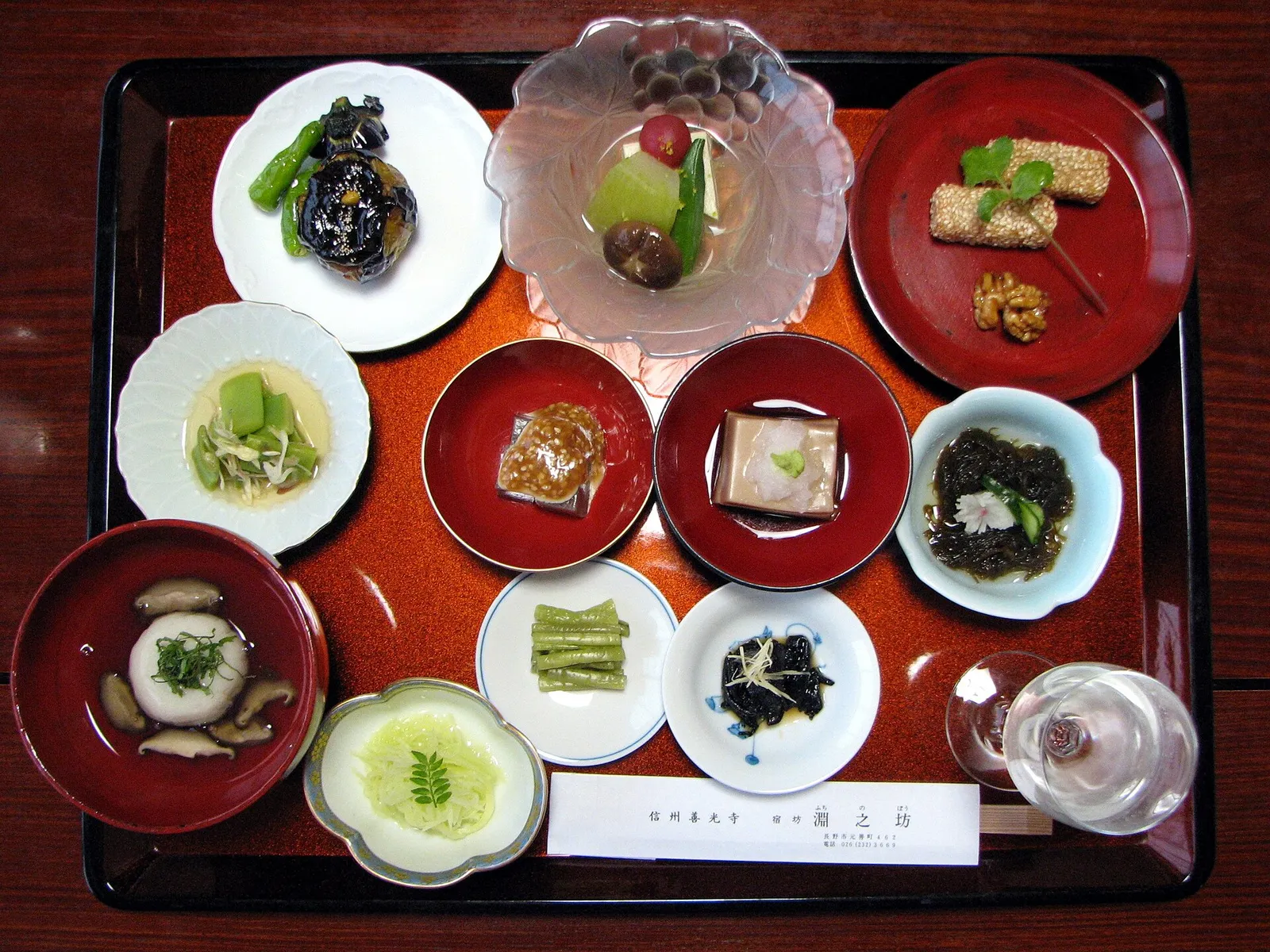
Japan has a centuries-old vegan cuisine of its own. Shojin ryori is Buddhist temple cooking, developed in monasteries, made without meat or fish and, in the strict form, without garlic and onion either. It uses kombu and shiitake for depth rather than bonito.
It is not a modern accommodation. It is a refined cuisine in its own right, built around tofu in many forms, seasonal vegetables, sesame and pickles, served as a set of small dishes on lacquerware. Mount Koya, the temple settlement in the Kansai mountains, is the best-known place to eat it, frequently as part of an overnight temple stay, and specialist restaurants serve it in Kyoto and Tokyo.
If you eat one memorable meal on this trip, make it this one. Our food guide covers where it sits in the wider culinary landscape.
Ramen, and the city exception
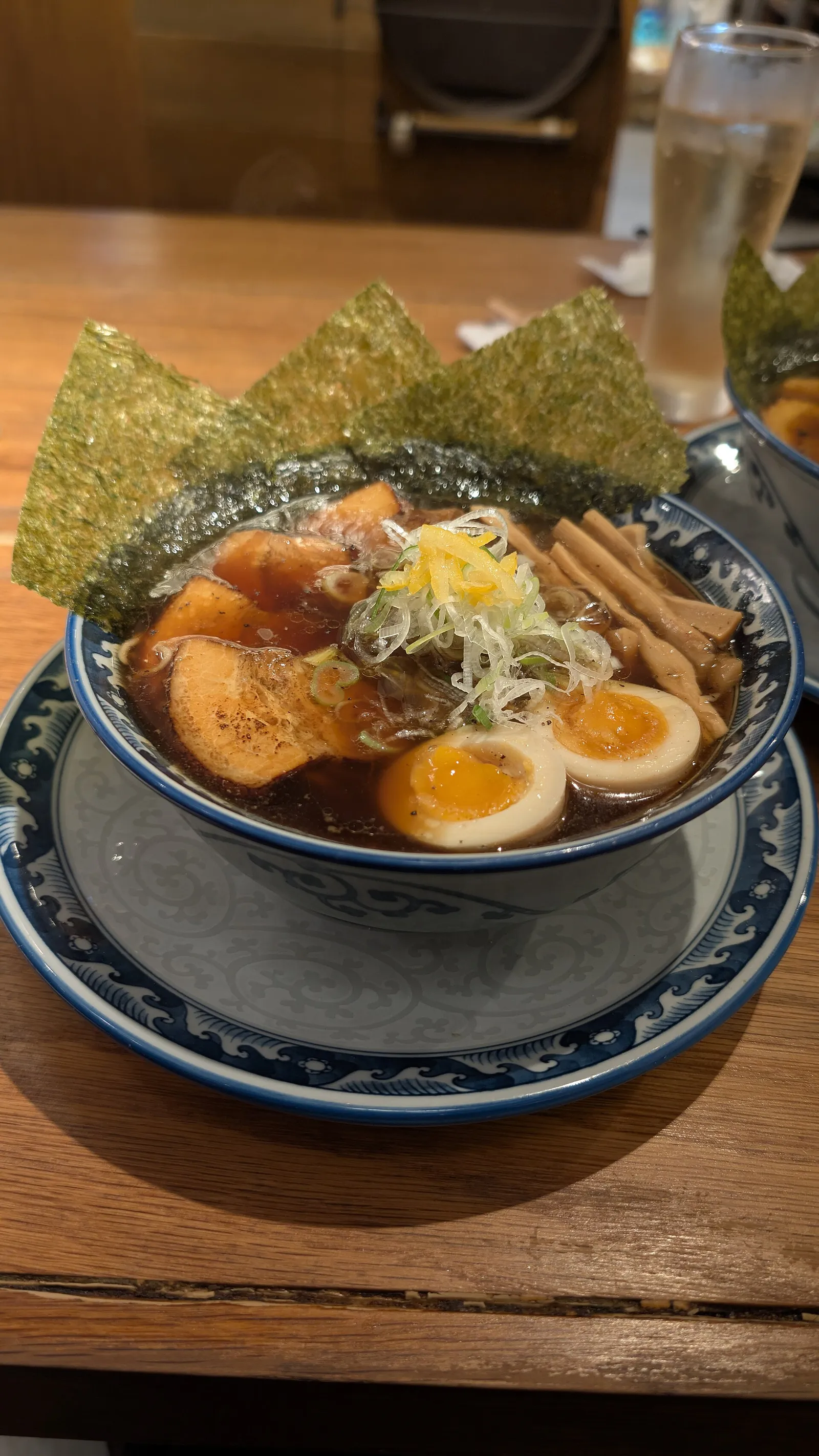
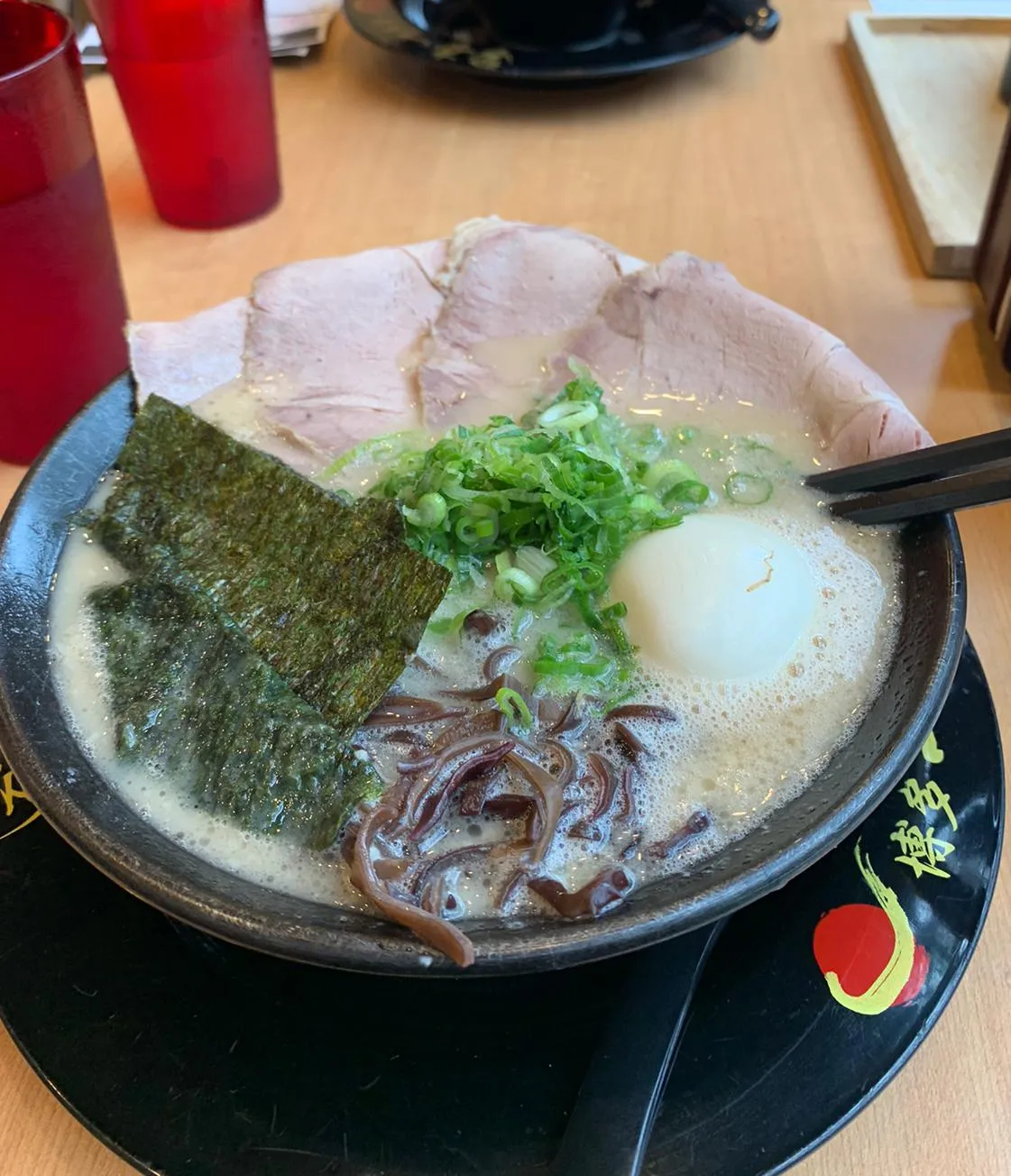
Traditional ramen is not vegetarian and never has been. The broths are built on pork bones, chicken, or both, and the accepted versions of the dish assume it.
What has changed is that dedicated vegan ramen shops now exist in Tokyo, Kyoto and the other large cities, working from vegetable and kombu bases, and the good ones are a serious take on the dish rather than an apologetic substitute. Our ramen guide covers the styles; this is a genuine additional branch of them.
The limitation is geographic. These are city businesses. Outside the large urban centres they are rare, and assuming you will find one in a small town is how a day ends with convenience store onigiri.
A food tour that knows the question to askGuided eating with someone who can ask about the stock in Japanese removes most of the difficulty at onceConvenience stores, and their limits
The convenience stores are a genuine resource and our guide to them covers how central they are to daily life here. For this purpose the reliable items are:
- Onigiri with pickled plum, kombu seaweed or similar plant fillings
- Plain rice, plain bread, fruit and nuts
- Salads, though the dressing needs checking
- Some noodle salads, with the same caveat about the sauce
The complication is that many apparently plain items contain fish-derived seasoning, and packaging is in Japanese. If you are strict rather than flexible, plan on checking labels with a translation app rather than judging by appearance. If you are flexible about trace ingredients, the stores will keep you fed anywhere in the country at any hour.
What to say
Announcing a dietary category rarely works well, and not because of unhelpfulness. The concept does not map cleanly onto Japanese food culture, and vegetarian is frequently understood as excluding meat while permitting fish.
Ask about ingredients instead. Enquiring specifically whether a dish contains meat, then whether it contains fish, then whether the stock is made from fish, one question at a time, produces far more reliable answers than stating a diet.
Better still, carry a written card in Japanese listing what you cannot eat, including dashi and bonito explicitly. Handing that to a member of staff is the single most effective thing you can do, and it removes the ambiguity that spoken exchanges tend to leave behind.
The reliable fallbacks
When it is not working, three things almost always do. Indian restaurants are widespread in Japanese cities and are the most dependable option anywhere, because vegetarian cooking is native to that kitchen. Tofu specialists exist as a restaurant category in their own right, particularly in Kyoto. And department store food halls carry enough range that something will fit.
None of this should put anyone off. Japan is worth the effort, the vegetable cooking at its best is extraordinary, and the difficulty is a matter of knowing one specific thing rather than of scarcity.