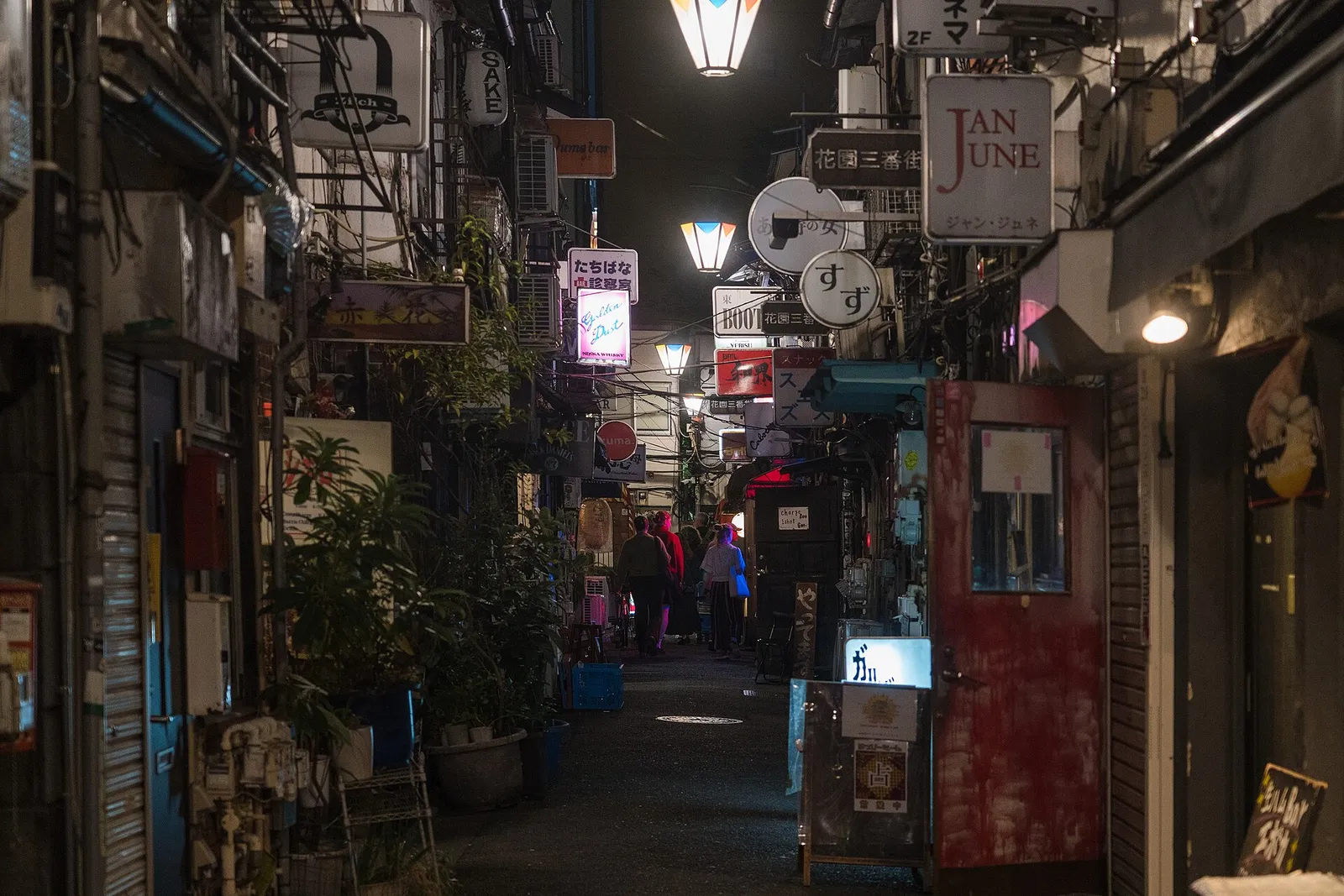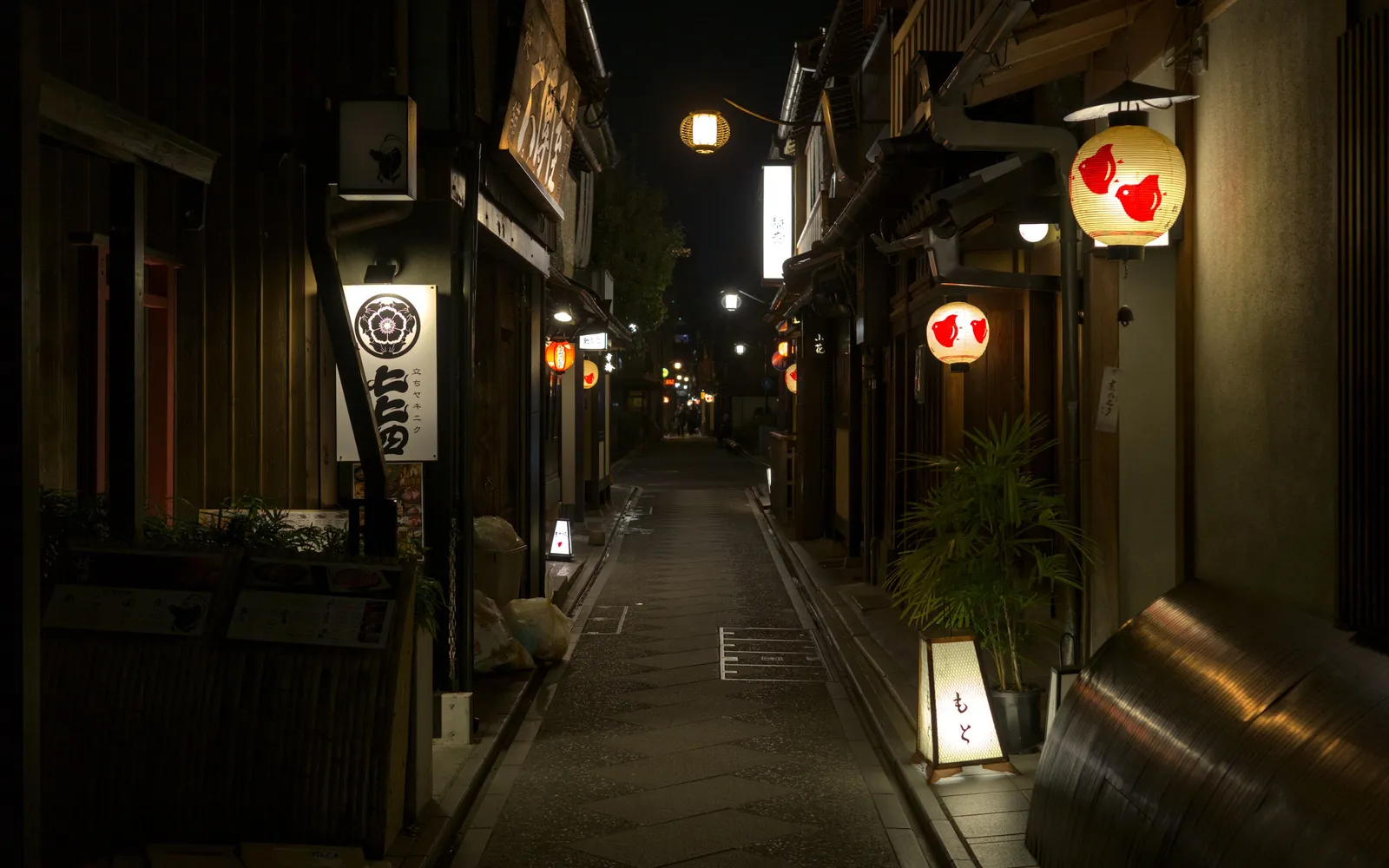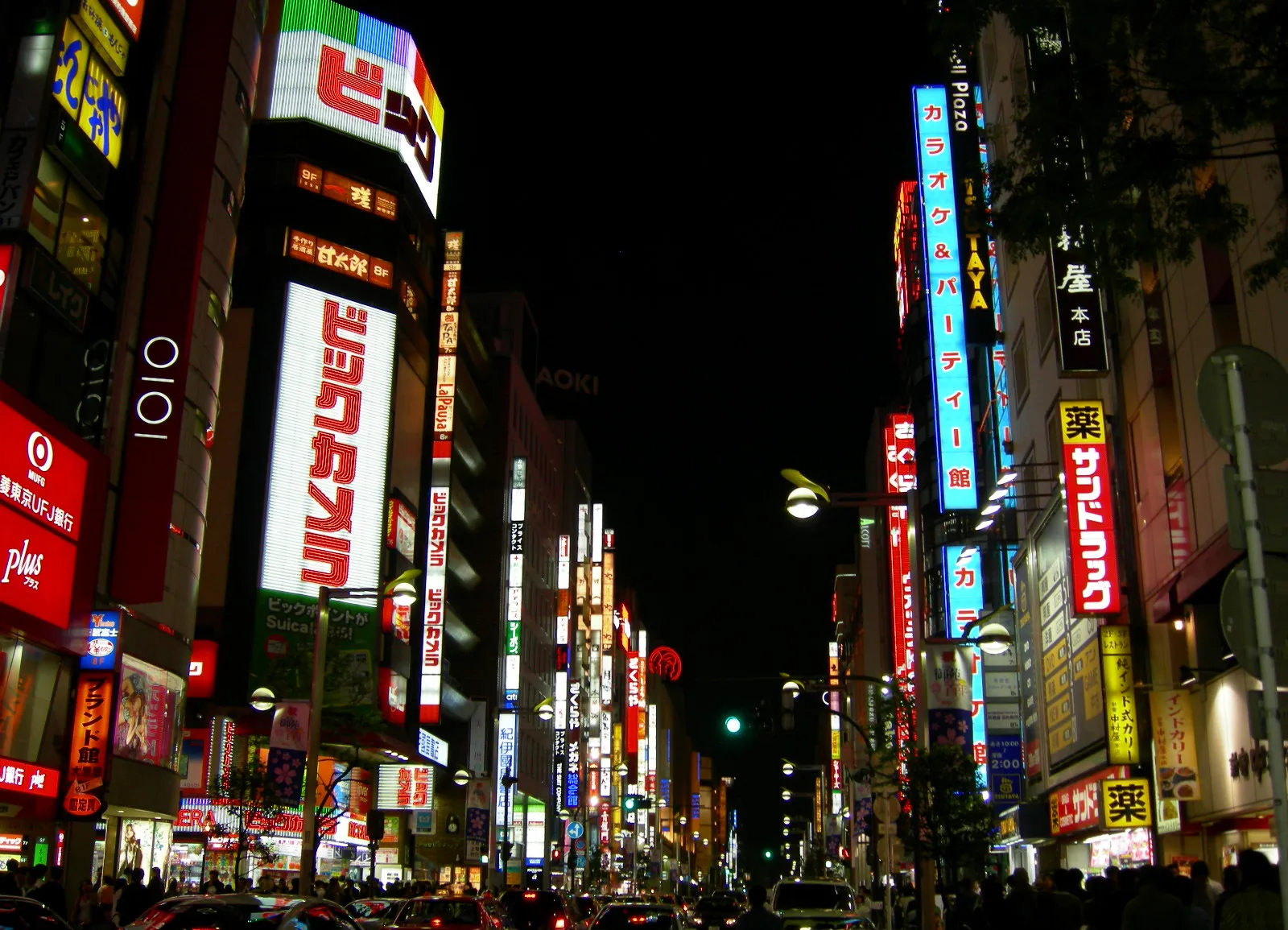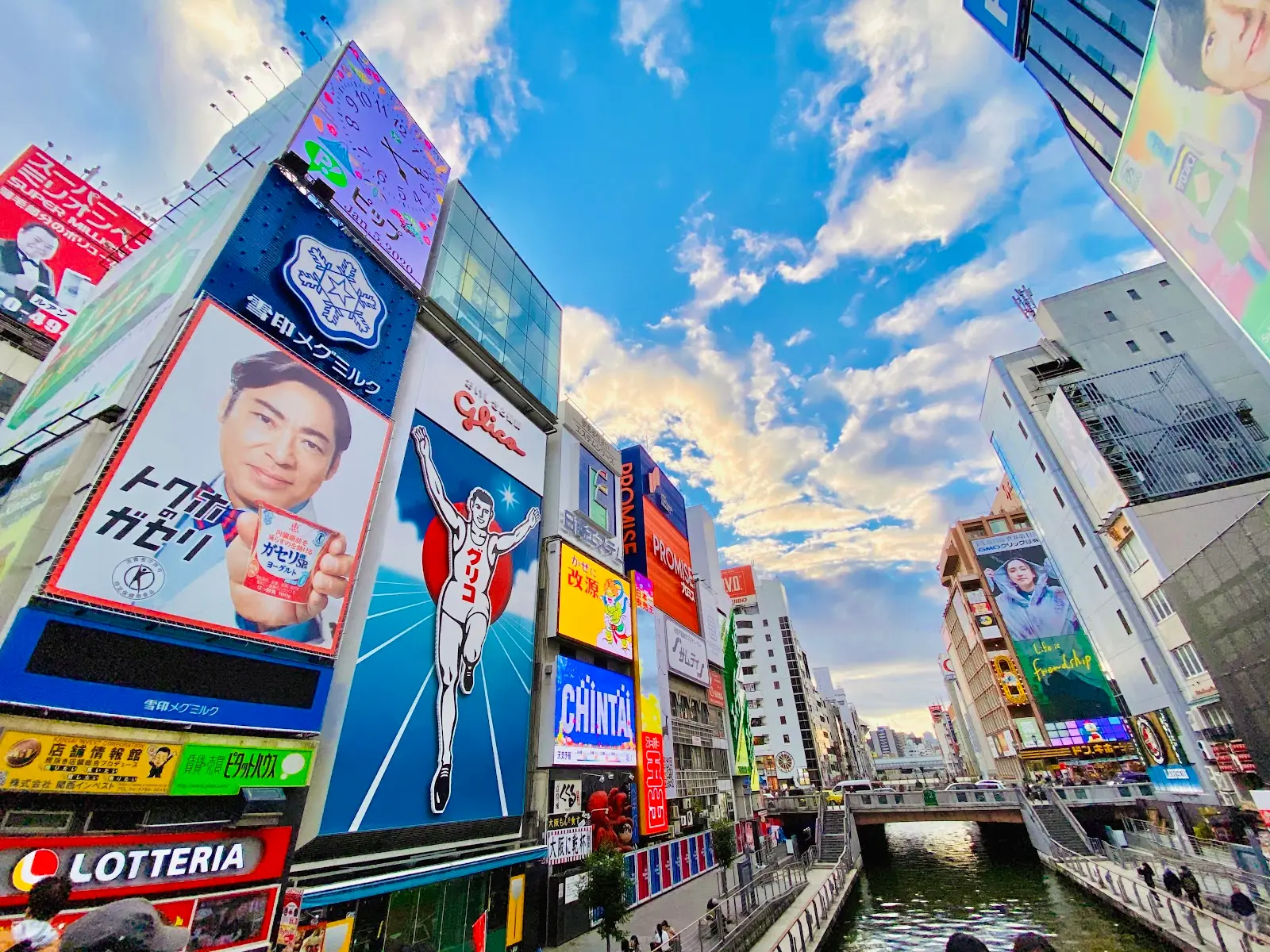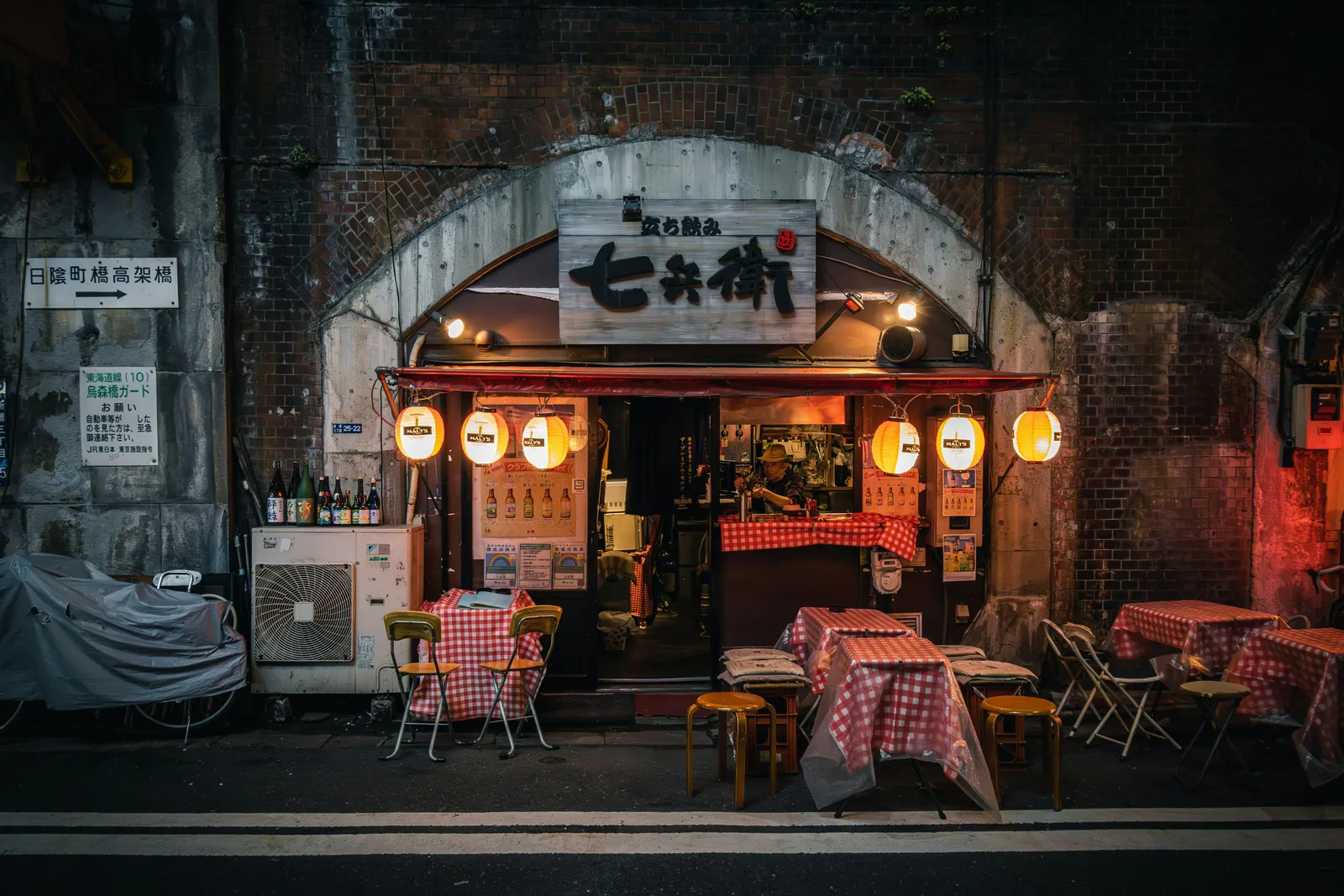
The izakaya is the most common way visitors first meet Japanese nightlife, and it is also the format most likely to leave someone quietly confused. You sit down, a dish arrives that nobody ordered, the menu is a wall of vertical text, everyone else seems to be ordering in waves rather than at once, and the bill turns out to be paid somewhere other than the table. None of it is difficult once explained. Here is the whole evening, in order.
What an izakaya actually is
An izakaya is a drinking establishment that takes its food seriously, rather than a restaurant that also sells beer.
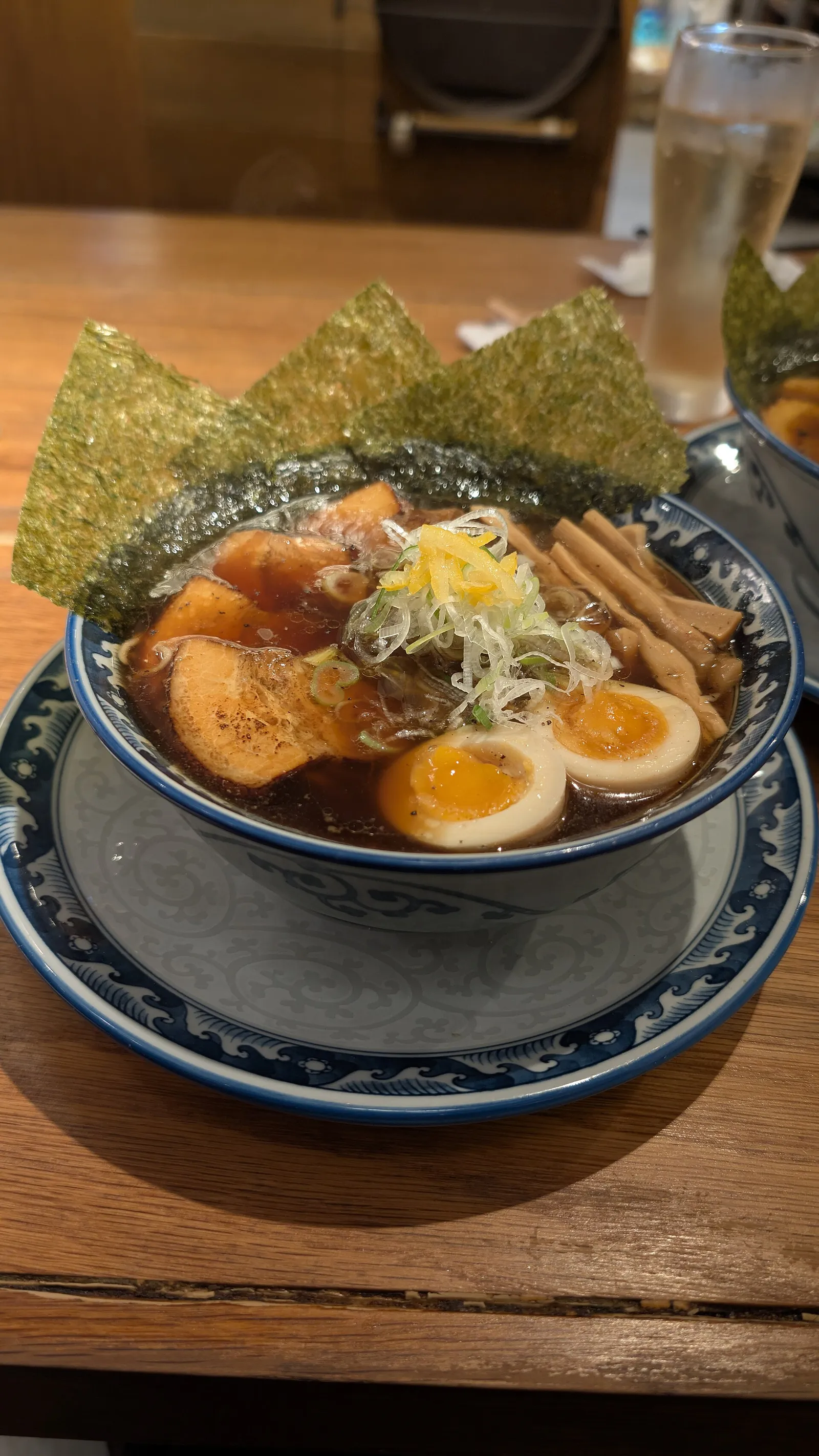
Food comes in small shared plates, ordered progressively over the evening as you drink, so nobody commits to a full meal at the start.
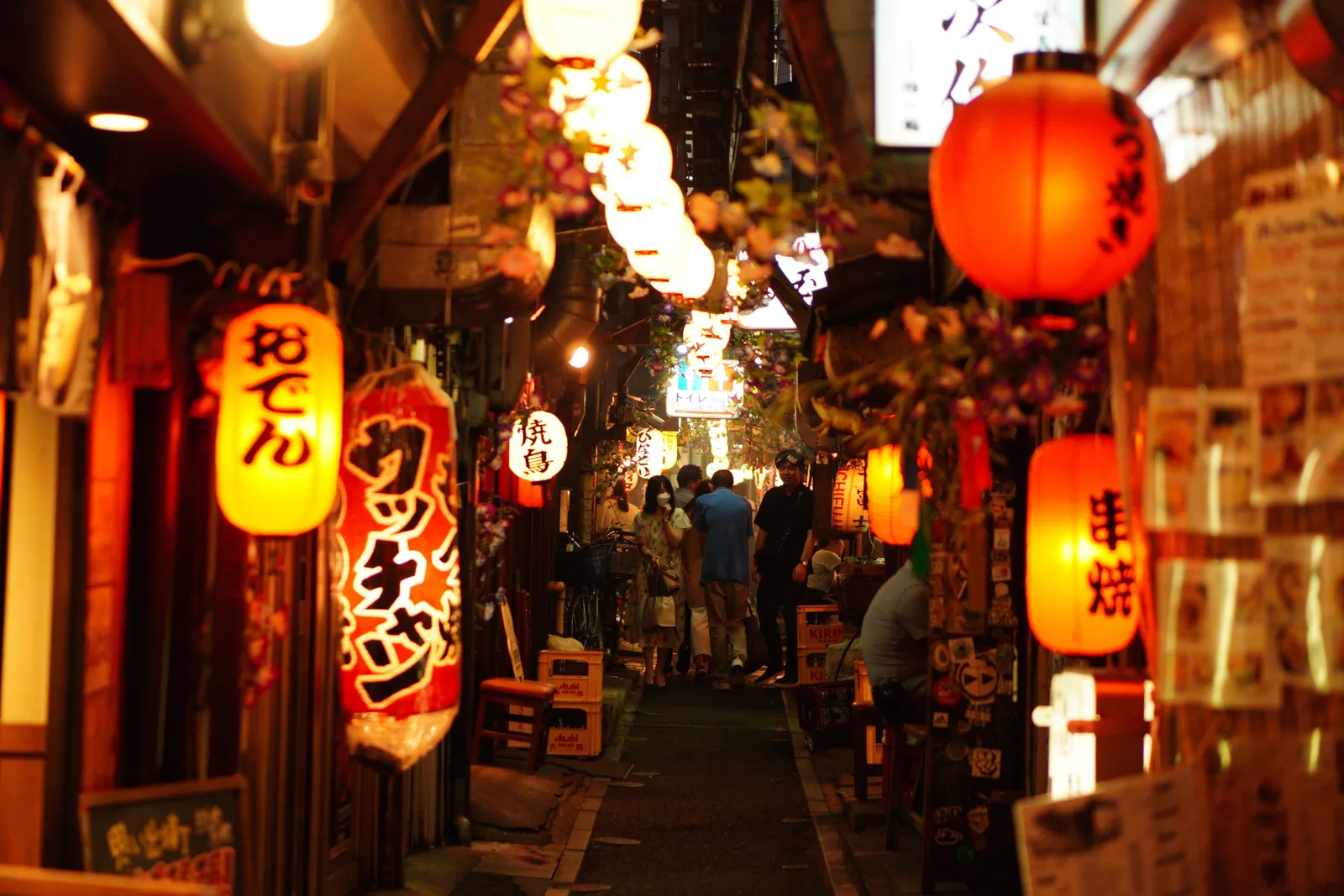
The range is enormous. A standing counter under a railway arch, a smoky yakitori grill with eight seats, and a seven storey chain with touchscreens at every table are all izakaya.
Specialists exist within the category, including yakitori shops built around grilled chicken skewers, kushikatsu places around fried skewers, and seafood focused counters.
Nothing is formal. Loud is normal, and the noise level is a reasonable proxy for how much a place is enjoying itself.
Getting a table and the first ten minutes
Say how many of you there are at the door, usually just by holding up fingers, and expect to be asked whether you want a table, a counter seat or a private booth.
Many places have a time limit, commonly two hours at busy times, and it will be mentioned as you sit down. It is not rudeness, it is how a small room survives.
A hot towel arrives for your hands. Use it for hands only, and leave it folded on the table.
Drinks are ordered before food, near universally, and the phrase for a first round of beer is one of the few bits of Japanese genuinely worth learning.
Then the otoshi arrives, which is where most visitors get their first surprise.
The otoshi, explained properly
Shortly after you sit down, a small dish appears that nobody ordered: some simmered vegetables, a little marinated seafood, a bowl of something seasonal. This is the otoshi, also called tsukidashi, and it carries a per person charge that works as a cover or seating fee.
It is common but genuinely not universal. The amount varies by venue and is typically a few hundred yen per person, rising in smarter establishments, and it is often not printed anywhere obvious. Some large chains advertise that they do not charge it at all.
Two things worth understanding. First, it is not a scam and it is not a tip: tipping does not exist in Japan, and the otoshi is roughly how a small room with attentive table service covers its overheads. Second, some places will let you decline it and many will not, because the dish is already made. If it matters to you, ask when you sit down rather than when the bill arrives.
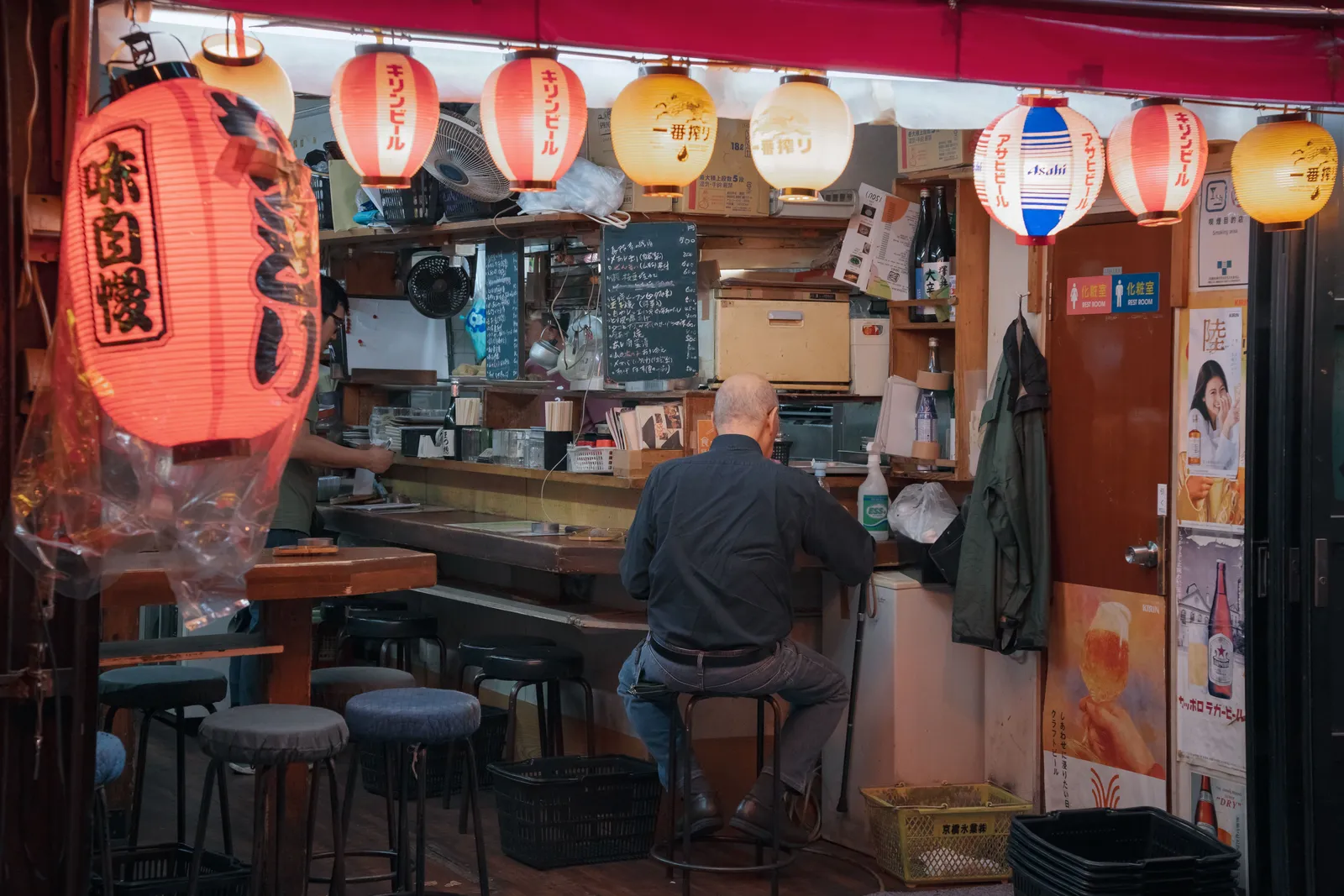
Ordering food and drink without the language
Point at the picture menu. Most izakaya in the main districts of large cities have one, and there is no embarrassment in using it.
Touchscreen ordering is widespread at chains, usually with an English toggle, and it removes the language question entirely.
Order two or three things at a time, not everything at once. The kitchen sends dishes as they are ready and the pacing is part of the format.
Grilled skewers are ordered by the piece, often with a minimum of two, so a listed price is frequently per skewer rather than per plate.
Say what you cannot eat early. Dashi stock made with fish is in a great deal of Japanese cooking, including dishes that look plainly vegetarian, so our Japanese food guide is worth reading before you arrive if you have restrictions.
Try a guided izakaya or food alley walk on your first nightA local guide gets you into the small counters that are hardest to enter aloneNomihodai, and whether it is worth it
Nomihodai means all you can drink for a fixed price per person within a set window. It is offered almost everywhere and is genuinely good value for a group that drinks steadily, and poor value for anyone who does not.
Time limits are typically around ninety minutes or two hours, set by the venue, with last orders called some way before the end rather than at the end.
The whole table usually has to take it, since venues rarely allow individual opt in, which matters if one of you is not drinking.
Food is often required alongside it, either as a minimum order or bundled into a set course, and the price you see advertised may be the drinks portion only.
One drink at a time is the standard rule: finish what you have before the next is brought.
The drinks list is restricted to a defined set, so a specific whisky or a good sake will usually sit outside the deal. Prices and terms are set individually by each venue, so read them before agreeing.
Etiquette, age rules and paying
The legal drinking age is twenty, which is higher than in most of Europe, Canada and Australia, and identification is genuinely checked in busy districts. It did not change when Japan lowered the age of adulthood to eighteen in 2022.
Pour for other people, not for yourself, and let someone else fill your glass. Our etiquette guide covers the wider table conventions.
Nobody tips. Payment is normally made at a till by the door, so take your bill with you when you leave, and carry cash, since small independents still do not all take cards.
Being turned away happens occasionally, usually at tiny counters that cannot manage an order they do not understand, and it is not worth reading much into.
For where to actually go once you know how the room works, our Tokyo nightlife guide covers the drinking districts and which of them suit a first night out.