Most first trips to Japan run Tokyo to Kyoto and stop there, which leaves out the part of the country that locals talk about when they want to get away: the Seto Inland Sea, a wide sheltered water dotted with hundreds of islands, with Hiroshima at its western end. Five days here gives you the museum that everyone should see once, an island shrine built out over the tide, two islands that became contemporary art galleries, a bicycle route that crosses the sea on suspension bridges, and a canal town that survived the twentieth century almost untouched. Read our Hiroshima and Miyajima guide first, and work out whether a rail pass earns its money before you book anything, because this route is entirely doable on trains and ferries.
The order matters more than usual on this one. Day one is emotionally heavy, and it belongs first, while you are fresh and before the trip settles into a rhythm.
Itinerary at a glance
| Day | Base | The signature experience |
|---|---|---|
| 1 | Hiroshima | The Peace Memorial Museum and the walk to the Dome |
| 2 | Hiroshima | Miyajima at high tide, then the climb up Misen |
| 3 | Uno, Naoshima or Takamatsu | An island museum built into a hillside |
| 4 | Onomichi | The first bridges of the Shimanami cycle route |
| 5 | Kurashiki | The Bikan canal quarter before the coaches arrive |
Day 1: Hiroshima and the Peace Park
Give the whole morning to the Peace Memorial Museum and do not try to fit anything demanding around it. The exhibition is quiet, specific and built around personal objects rather than statistics, and most people come out needing to sit down for a while. The park outside runs along the river to the A-Bomb Dome, the skeleton of the exhibition hall left standing exactly as it was, and the walk between the two is part of the experience rather than a transfer between sights. The children’s monument, hung with thousands of folded paper cranes sent from schools around the world, is on the way.
Spend the afternoon on the ordinary city, because that contrast is the point. Hiroshima is green, calm and easy to walk, with a rebuilt castle in a moat and Shukkeien, a compact garden of small bridges and ponds designed to be seen in miniature. The evening belongs to Hiroshima-style okonomiyaki, which is not the Osaka version: the batter, cabbage, pork and a full nest of fried noodles are layered rather than mixed, cooked on a hotplate in front of you and slid onto the counter for you to eat off the griddle with a small metal spatula.
Food: Hiroshima okonomiyaki in a building where floor after floor is nothing but okonomiyaki counters, each run by a different family, is the local ritual worth an evening. The signature experience: the museum in the morning and the walk out to the Dome afterwards, which lands differently in that order. Optional tour: a guided walk of the Peace Park adds the context that the signage keeps deliberately brief, and several survivor testimony sessions are offered in English.
Day 2: Miyajima and Mount Misen
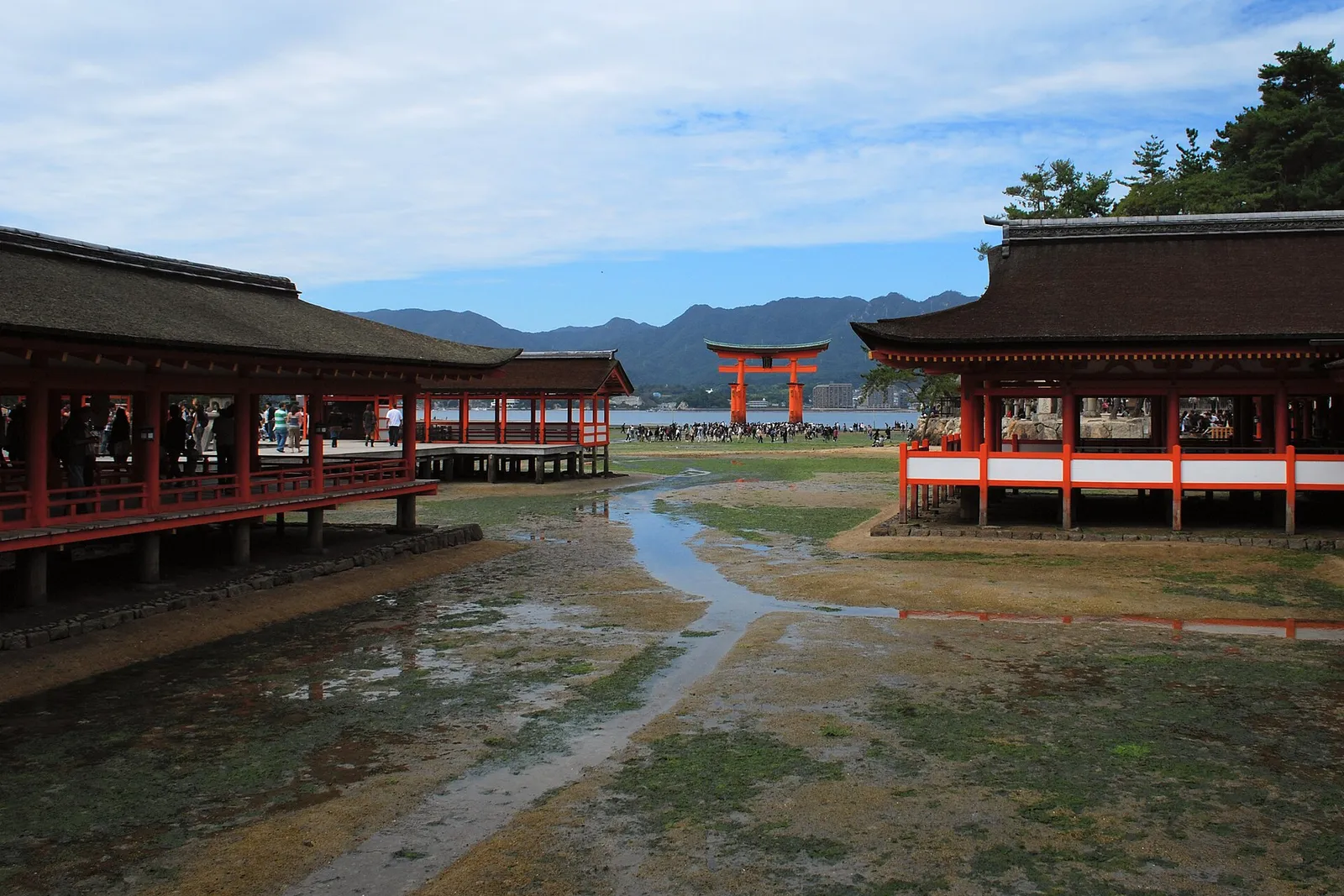
Miyajima is a short train ride west and then a ferry, and the timing of your day is set by the tide rather than by opening hours. At high water the great vermilion torii appears to stand in the sea; at low water you can walk out to its base across wet sand, which is a completely different and equally good photograph. Tide tables are published well in advance, so it is worth deciding which version you want before you go. The shrine itself is built on stilts over the shallows and the corridors flood and drain twice a day.
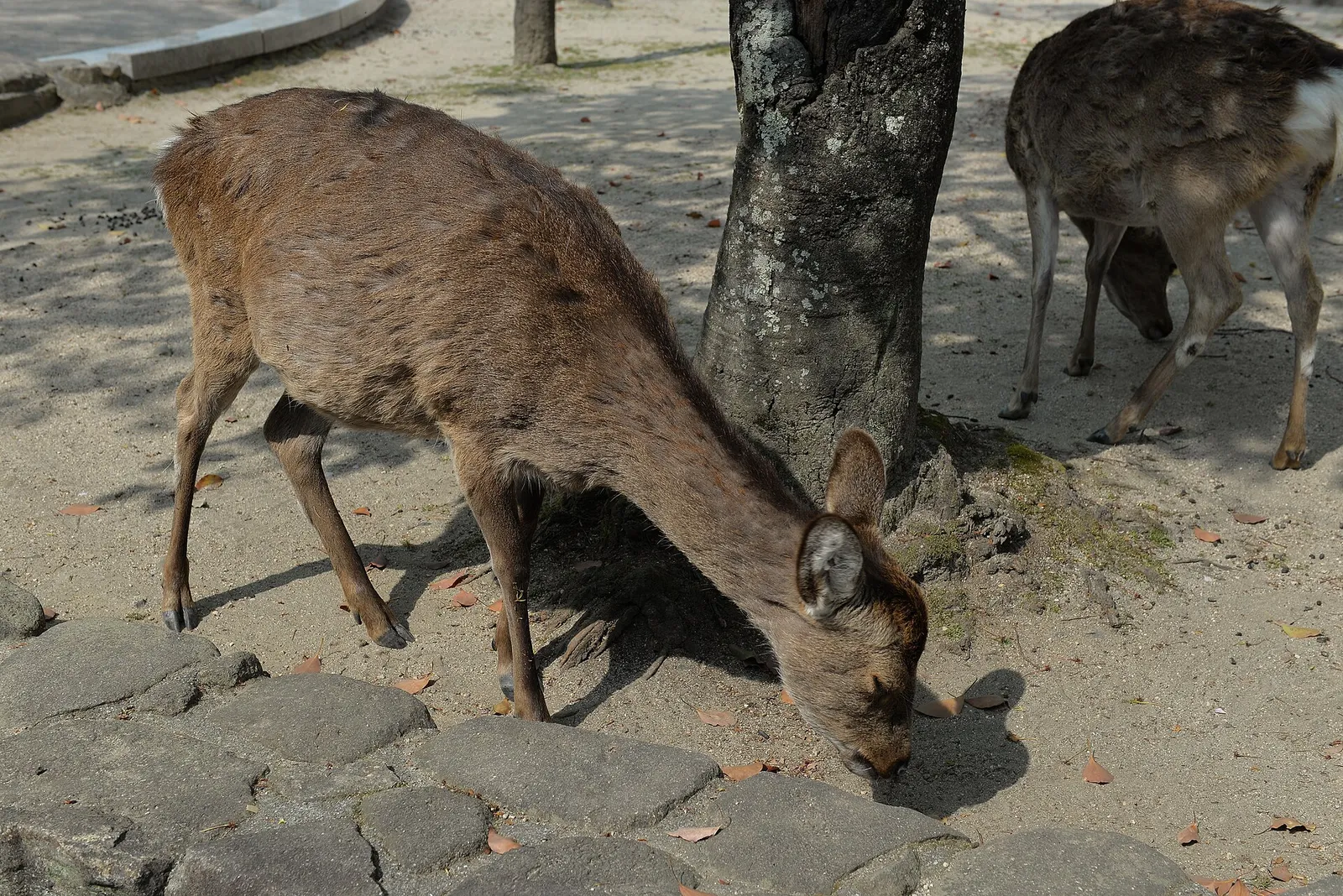
Behind the village the island rises into forest, and the ropeway up Mount Misen takes most of the climb out of the equation, leaving a stony final stretch to the summit and a view across the whole Inland Sea. Deer wander the village and the paths and are entirely unbothered by people, which is charming until one takes your map. In autumn the maple valley below the ropeway station turns properly red, and the island’s baked sweet, momiji manju, is a maple-leaf-shaped cake with a filling that ranges from red bean to custard and chocolate.
Food: grilled oysters from a stall on the main street and momiji manju eaten warm from the tray, plus anago, grilled conger eel over rice, which is the island’s more substantial local dish. The signature experience: standing at the torii at the tide you chose, and then getting above it all on Misen. Optional tour: a guided kayak trip that paddles out towards the gate offers a view of it from the water that the ferry route does not.
Day 3: The art islands
Move east and out into the sea itself. Naoshima is a small island that a foundation turned into a permanent contemporary art site, and the result is unlike any gallery district: a museum sunk into a hillside so that daylight reaches the works through openings in the concrete, a bathhouse you can actually bathe in that is itself an artwork, empty houses in the old village converted into single installations, and a large spotted pumpkin sitting on a pier. Teshima, next door, has a museum that is essentially a curved concrete shell with water welling up through the floor.
Two practical things shape this day. Ferries reach the islands from Uno on the Okayama side and from Takamatsu on Shikoku, and the crossings are short but not frequent, so the boat times are the frame you plan inside rather than a detail. And the major museums each close one day a week, commonly Monday, with the flagship museum on Naoshima requiring a timed entry slot that is worth reserving as far ahead as you can. Bicycles are the sensible way to move around the island, with electric assist available and worth it for the hills.
Food: the island cafes are small and close early, so eat when you see somewhere open rather than saving it for later. The signature experience: standing in a room lit only by an opening in the ceiling in the hillside museum, which is the single thing people remember from this trip. Optional tour: a guided island day from Okayama or Takamatsu handles the ferries and the reservations, which removes the two things most likely to go wrong.
Day 4: Onomichi and the Shimanami bridges
Onomichi is a hillside port town of narrow lanes, cats, temples and a ropeway to a viewpoint over the water, and it is the mainland end of the Shimanami Kaido, a cycle route that hops across six islands to Shikoku on a chain of long suspension bridges with dedicated bike lanes. You do not need to ride the whole thing. Rental shops let you take a bike one way and drop it at a station further along, so a half day gets you over the first two or three bridges and back on a ferry or a local train, with the sea underneath you and freighters passing below the spans.
The town itself deserves the rest of the day. Onomichi ramen is a soy-based broth with small pieces of pork back fat floating on top, the temple walk threads up and down the slope past a dozen small halls, and the old shopping arcade along the waterfront has been slowly filling with independent coffee roasters and bicycle-friendly cafes.
Food: Onomichi ramen, and anything with lemon on it, since the islands here grow a lot of citrus and put it in everything from ramen to soft ice cream. The signature experience: riding over the first big bridge, where the lane is separated from traffic and the sea is a long way down on both sides. Optional tour: guided cycle trips run the full crossing to Imabari with a support vehicle, which is the comfortable way to attempt the whole route in a day.

Day 5: Kurashiki and the way out
Finish at Kurashiki, whose Bikan quarter is a preserved canal district of white-walled storehouses, willows and stone bridges that has survived largely intact. It is small enough to walk in an hour and pleasant enough to spend a morning in, and the Ohara Museum of Art there was the first collection of Western art in Japan, which means a wing of European painting in a Japanese merchant town. Go early: the quarter is genuinely beautiful before the tour groups arrive and merely busy afterwards.
From Kurashiki, Okayama station is close, and from there you are on the main shinkansen line in either direction. If you have a few hours to spare in Okayama itself, Korakuen is one of the three gardens the country considers its finest, with the black castle sitting just across the river from it.
Food: the canal quarter cafes do a good version of the local Okayama peach and muscat grape desserts in season, and the mackerel and barazushi rice dishes are the older local specialties. The signature experience: the canal at opening time with almost nobody on it. Optional tour: a short punt along the canal in one of the flat boats gives you the quarter from water level, and tickets are limited in number each day.
Practical tips
- This whole route runs on trains and ferries, so read how the rail network fits together and get an IC card sorted before you start, since it covers the local lines and most of the ferry terminals.
- Check the tide table for Miyajima before you fix the order of days one and two, because the shrine looks like a different place at each end of the cycle.
- Reserve the timed entry for the main Naoshima museum as far ahead as possible, and check the weekly closing day for each island museum, since they do not all close on the same day.
- Weather on the Inland Sea is mild but the ferries do get cancelled in strong wind, so keep the island day away from the end of your trip if you have a flight to catch.
- For when to come, our seasonal guide covers the trade-offs; the maples on Miyajima and the citrus harvest on the Shimanami islands both fall in autumn.