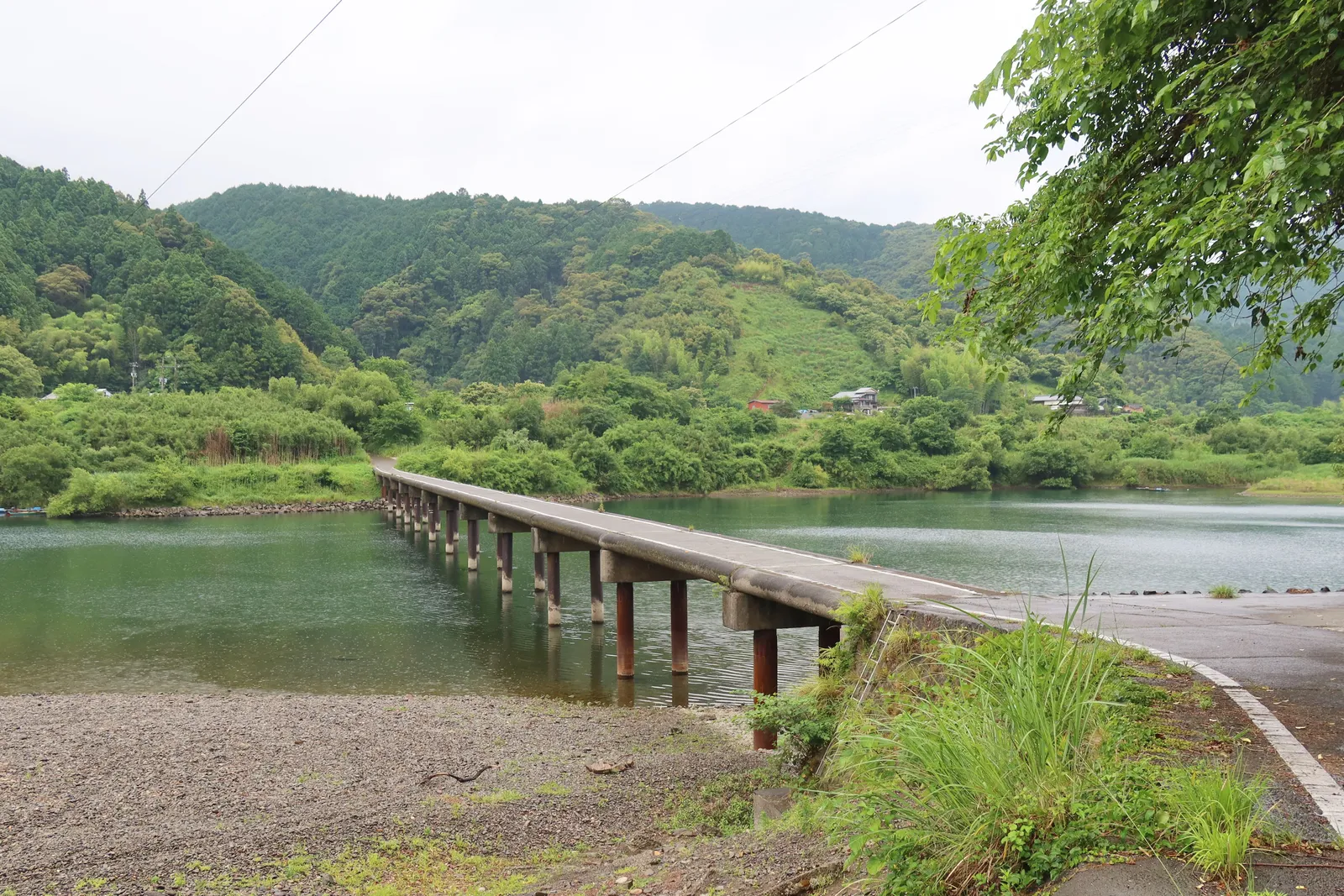
Shikoku is the smallest of the four main islands and the one that gets left off itineraries, which is why it still feels like the countryside rather than a version of it. It has the best garden in the country by several accounts, a valley of vine bridges deep enough that a defeated clan hid there for generations, a bathhouse that has been in use for well over a thousand years, and a pilgrimage of eighty eight temples that people still walk in white with a staff. Five days does a loop of the north and west on trains and a bus or two. Read our getting around guide first, because the local lines here are slower and less frequent than anywhere you have travelled in Japan.
Itinerary at a glance
| Day | Base | The signature experience |
|---|---|---|
| 1 | Takamatsu | Ritsurin garden, and udon made in front of you |
| 2 | Kotohira | The staircase to Konpira san |
| 3 | Iya valley | Crossing a bridge made of vines |
| 4 | Matsuyama | The original castle keep above the city |
| 5 | Matsuyama | Dogo Onsen and a temple on the pilgrimage |
Day 1: Takamatsu and Ritsurin
Come over the bridges from Honshu or fly in. Ritsurin is the reason to start here: a garden of six ponds and thirteen landscaped hills laid out over more than a century, with a wooded mountain behind it borrowed as the backdrop, and it is routinely rated above the three that officially top the national list. Give it two hours minimum, take the flat bottomed boat across the south pond, and drink matcha in the tea house on the island in the middle.
The rest of the day is noodles. This is Kagawa, which produces sanuki udon, thick chewy wheat noodles served in ways that range from a hot bowl to a self service counter where you boil your own portion in a basket, add broth from a tap and pick up tempura on a tray. The self service shops are the local ritual and cost very little. Some of the best are in villages outside the city and there are bus tours that do nothing else.
Food: sanuki udon, ideally twice, and Kagawa’s chicken on the bone grilled with pepper and garlic. The signature experience: the tea house on the island at Ritsurin with the borrowed mountain behind the pond. Optional tour: an udon taxi or bus tour reaches the country shops that have no public transport, which is where the good ones are.
Day 2: Kotohira
An hour by train, Kotohira exists for its shrine. Konpira san is dedicated to seafarers and sits up the side of a mountain, which means a staircase: seven hundred and eighty five steps to the main hall, and one thousand three hundred and sixty eight if you continue to the inner shrine. The approach is lined with shops selling walking sticks, sweets and the local sake, and there are palanquin carriers for part of the climb for anyone who needs them.
The main hall has a wide terrace with a view over the Sanuki plain and a wall of donated ship models and photographs of vessels, which is the shrine’s purpose made visible. Below, the town has an old wooden kabuki theatre, Kanamaru za, the oldest surviving one in the country, which you can walk through backstage including the trapdoors and the revolving stage worked by hand from below.
Food: more udon, and sanuki wine or the local sake at the top of the steps. The signature experience: the kabuki theatre backstage, which almost nobody bothers with and is the best hour in the town. Optional tour: none; the steps are self explanatory and the shops on the way up are half the fun.
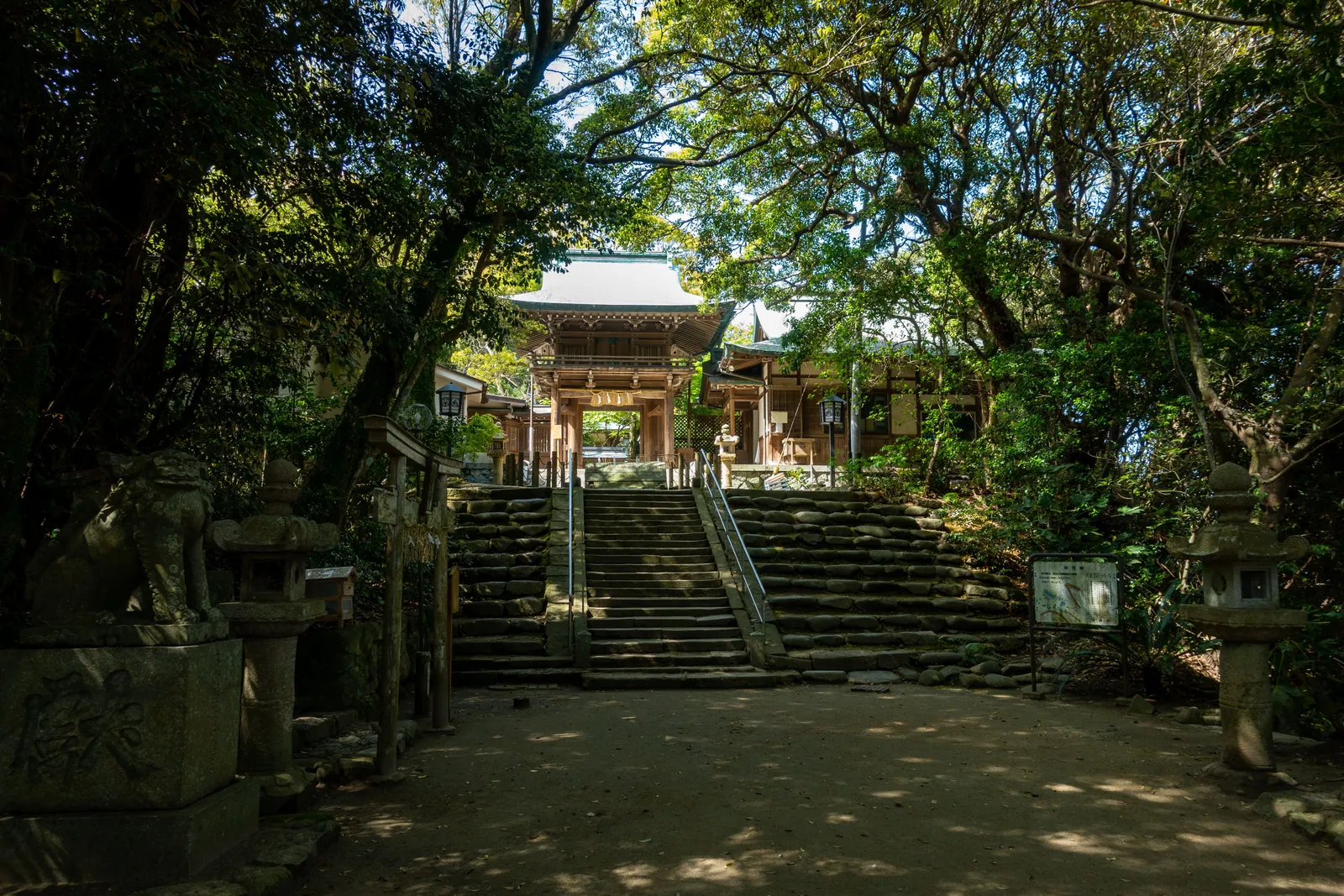
Day 3: The Iya valley
Into the middle of the island. The Iya valley is a deep gorge system that was famously remote, and the vine bridges are what everyone comes for: a footbridge woven from mountain vines strung across the river, rebuilt every few years, with gaps between the planks wide enough to see the water a long way below. It sways. There are three left, one easy to reach and two much deeper into the valley.
Around it there is more than the bridge. The Oboke gorge has sightseeing boats through the rock walls, the peeing boy statue stands on a ledge over a drop that explains itself, and Nagoro, the village where a resident has made hundreds of life sized cloth dolls and placed them around the houses as the population dwindled, is genuinely haunting rather than kitsch. Roads here are narrow and slow, and a car or a tour makes the day.
Food: iya soba, coarse and short, and amego river fish grilled on a skewer over an open hearth. The signature experience: the first three steps onto the vine bridge, when you find out how much it moves. Optional tour: a valley day tour from Takamatsu or an overnight in a thatched house are both good; the buses alone will not cover this in a day.
Day 4: Matsuyama and the castle
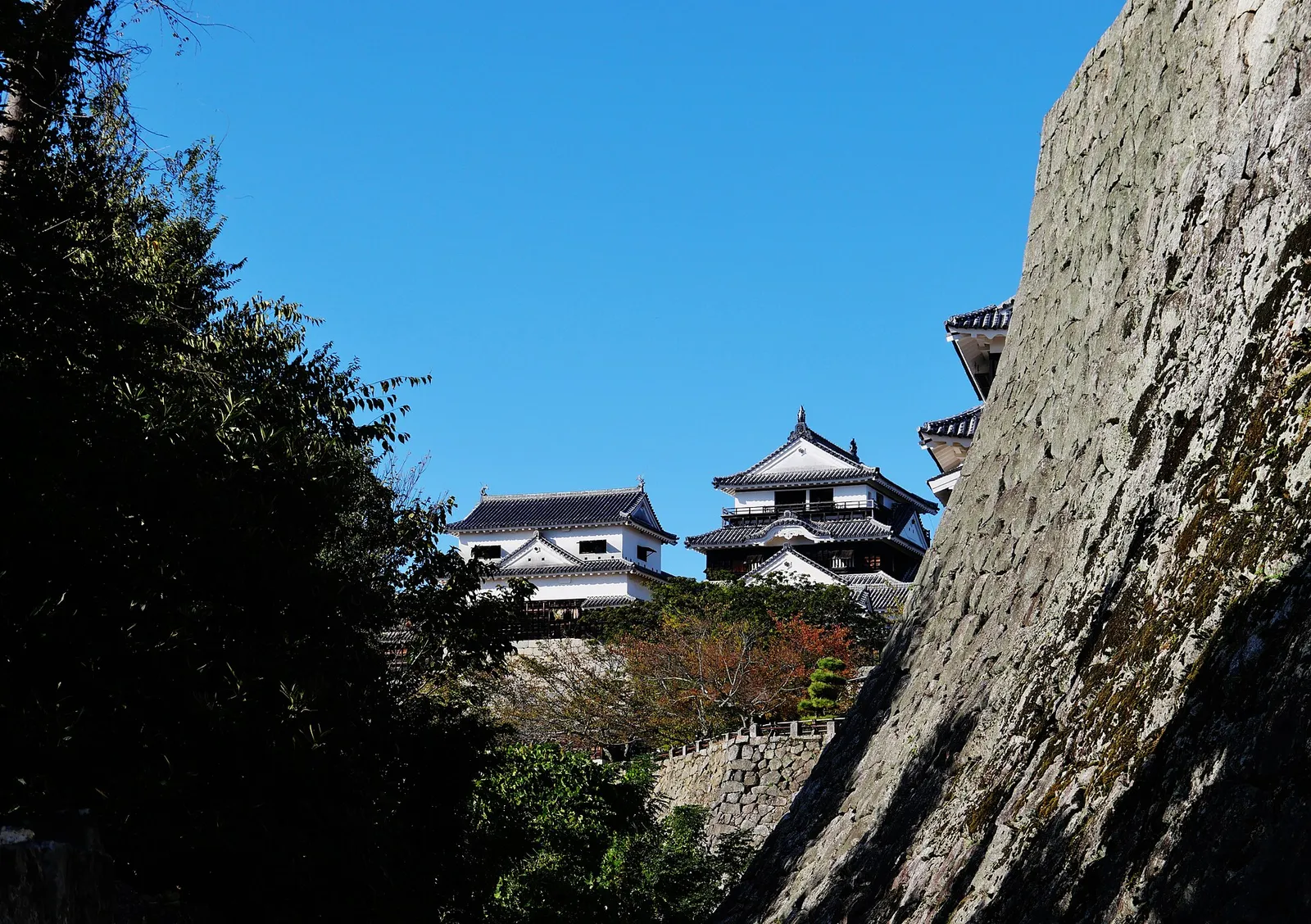
Cross west. Matsuyama is the largest city on the island and its castle is one of the twelve in the country with an original keep rather than a concrete reconstruction, which you feel immediately in the steep wooden stairs, the low beams and the arrow slits. It stands on a hill in the middle of town, reached by a ropeway, a chairlift or a walk up, and the complex has more surviving gates and turrets than most.
The city below has trams, including a replica steam train that runs the same rails, and a literary streak: the novelist Natsume Soseki taught here and set a famous book in the town, and the poet Masaoka Shiki was born here. What most visitors do with the afternoon, though, is go to the bathhouse, and that deserves a day of its own.
Food: taimeshi, sea bream with rice, done two ways in this region, and jakoten, a fried fish cake from the coast south of here. The signature experience: the original keep and its wooden staircases. Optional tour: none needed; the tram network covers the city and the castle ropeway is signposted.
Day 5: Dogo Onsen and a temple
Dogo is said to be the oldest hot spring in Japan, with a mention in a chronicle over a thousand years old, and its main bathhouse is a three storey wooden building from the late nineteenth century with a heron on the roof. It has been under a phased restoration for several years with parts open and parts closed at different times, so check what is bathing and what is scaffolded before you plan the morning around it; the newer annexes nearby take the overflow and are excellent in their own right.
Finish on the pilgrimage. Ishiteji, a short walk from Dogo, is temple fifty one of the eighty eight, and it is a working pilgrimage temple with a cave passage, a three storey pagoda and pilgrims in white arriving through the gate all day. Walking even one stretch between temples gives you the idea: the route is marked, the walkers greet each other, and it has been in continuous use for centuries.
Food: botchan dango, three coloured dumplings named after the novel, and a bottle of the local mikan juice. The signature experience: a bath in the oldest hot spring in the country, followed by a temple full of people halfway round an eleven hundred kilometre walk. Optional tour: guided pilgrimage walks run from Matsuyama for anyone who wants the context rather than just the stamp book.
Practical tips
- Shikoku is reached by bridge from Honshu, by ferry, or by air into Takamatsu or Matsuyama. The bridges are also the Shimanami cycle route, which pairs well with this trip.
- Local trains and buses here are infrequent and stop early. Check the last departure before you commit to an afternoon somewhere remote.
- The Iya valley effectively needs a car or a tour. Roads are single track in places with mirrors on the bends.
- A regional Shikoku rail pass exists and is worth checking against your route; the national pass is usually overkill for five days here.
- Dogo Onsen’s main building has been undergoing restoration in phases, so confirm what is open rather than assuming.
- The pilgrimage is a live religious practice. Walkers in white are doing something, not dressing up, and the temples expect quiet.