Izu hangs south of Tokyo into the Pacific, it is where the city has gone for hot springs and sea air for a century, and almost no first time visitor sets foot on it. That is a gap worth exploiting: two hours on a train gets you a peninsula with volcanic coast, a wasabi growing industry in its river valleys, a treaty port with a strange American footnote, and hot spring towns at every price point. Five days does a loop down one coast and up through the middle. Read our onsen guide before the first bath and the ryokan guide if you are staying in a traditional inn, which here you should.
Itinerary at a glance
| Day | Base | The signature experience |
|---|---|---|
| 1 | Atami | A seafront bath and the hillside villa |
| 2 | Ito or Izu Kogen | The Jogasaki cliff walk and its suspension bridge |
| 3 | Shimoda | The harbour, Perry Road and a white sand beach |
| 4 | Kawazu | The seven waterfalls walk up the river |
| 5 | Shuzenji | Bamboo path, wasabi farms and a river bath |
Day 1: Atami
Atami is the first hot spring town on the line and it has had two lives: a resort at its height decades ago, then a decline, then a genuine revival driven by younger operators. The result is a seafront town with an old fashioned shopping arcade, a beach in the middle of it, and hot spring water piped into everything including foot baths on the street.
Two things lift a day here above a soak. Kiunkaku is a former villa turned guesthouse turned museum, a mix of Japanese and western rooms with a garden, and it shows exactly how the wealthy came here in the twenties. The MOA museum, up the hillside, has a hall of Japanese art, a set of long escalators cut through the rock to reach it, and a terrace with a view straight down the bay. In summer the town fires firework displays over the harbour on scattered evenings.
Food: the fish market food and himono, fish split and dried in the sea air, which is the local product and better than that description. The signature experience: the escalator tunnel and then the terrace at the MOA. Optional tour: none needed; the town is small and the buses are frequent.
Day 2: The Jogasaki coast
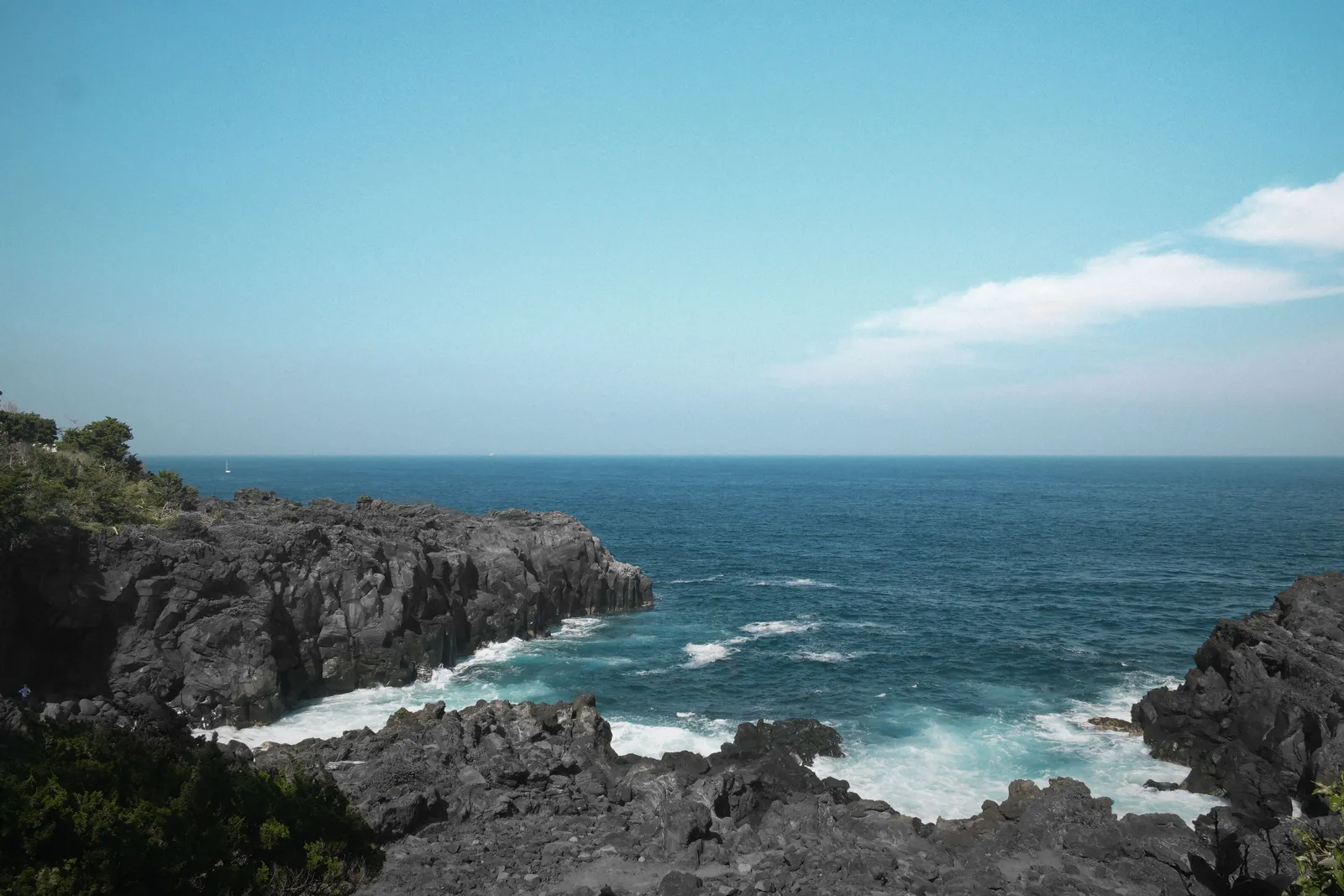
South of Ito, the Jogasaki coast is where a lava flow from Mount Omuro met the sea, and it has left a shoreline of black rock columns, inlets and cliffs with a walking trail along the top. The stretch everyone does runs past the Kadowaki lighthouse to a suspension footbridge strung across a narrow inlet with the sea moving underneath it. It takes an hour or two at an easy pace and the whole path is signposted.
Behind the coast, Mount Omuro is a perfectly cone shaped grass covered volcano with a chairlift to the rim and a walk of about twenty minutes around the crater edge, which is one of the strangest and most satisfying short walks in the region. It is closed for burning in February, when the whole cone is set alight in a controlled fire that has been done annually for centuries.
Food: grilled seafood at the fishing ports along the coast road, and the local mikan citrus in season. The signature experience: the suspension bridge with the swell coming into the inlet below. Optional tour: boat trips run along this coast in good weather and show the lava cliffs from the water.
Day 3: Shimoda
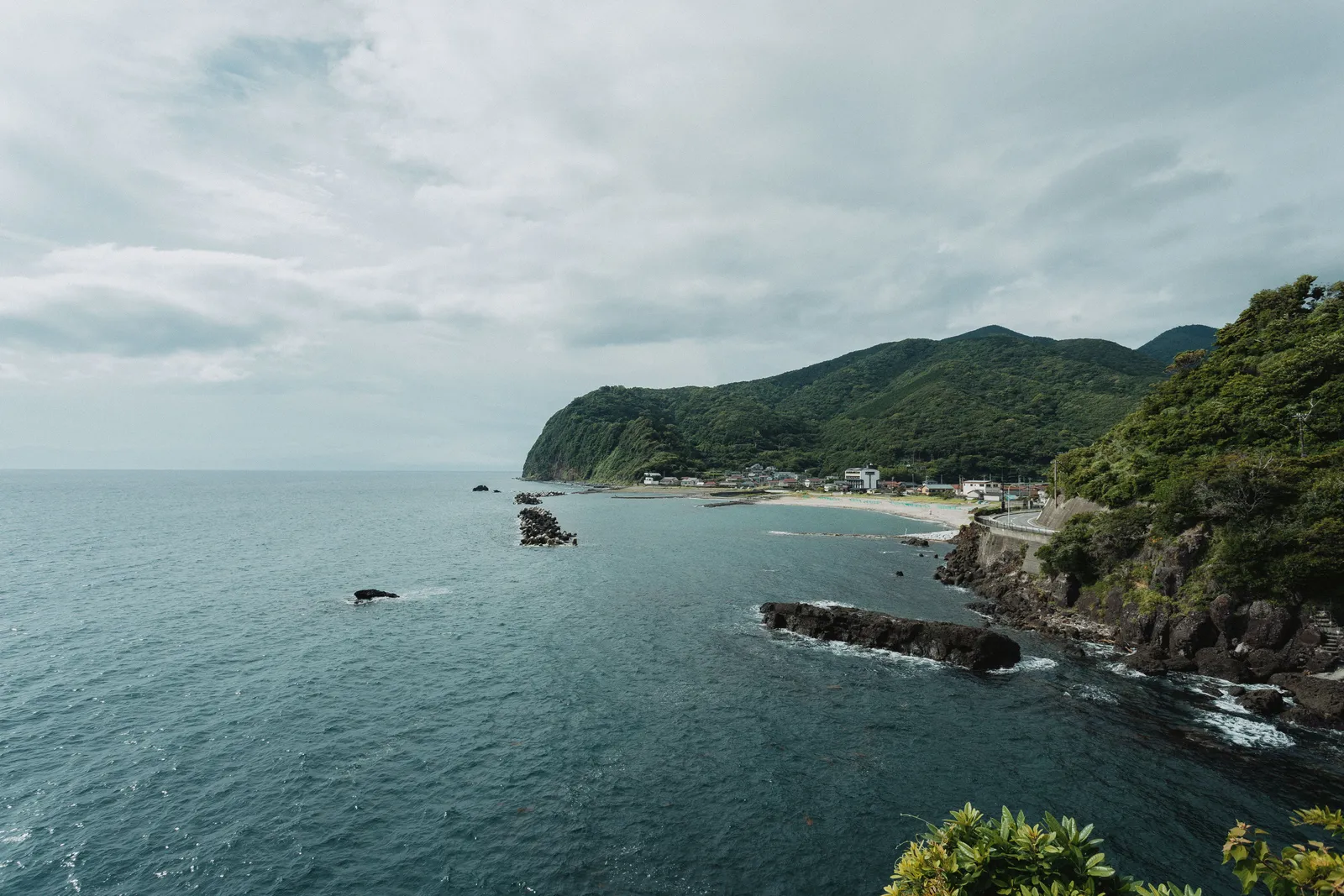
At the southern tip, Shimoda is where the American commodore Perry landed in the eighteen fifties and negotiated the treaty that helped force Japan open, and the town has kept the footnotes: the temple where the treaty was signed, a street of stone walled buildings called Perry Road running along a canal, and a small museum of the whole business. It is a genuinely odd history to encounter on a beach holiday and it takes about two hours.
The rest is coast. Shirahama, just north, is a white sand beach with a red torii on the rocks at one end, and it is the best swimming on the peninsula. The ropeway up Nesugatayama from beside the station gives you the harbour, the bay and the islands offshore in ten minutes. In the evening the harbour restaurants do whatever came in, and the town is small enough to walk end to end.
Food: kinmedai, the golden eye snapper this coast is known for, simmered in soy and sugar, which is the dish to order here rather than sashimi. The signature experience: Perry Road in the late afternoon, which looks like nowhere else in Japan. Optional tour: glass bottomed boat trips and the ropeway both run from the harbour area.
Day 4: Kawazu and the waterfalls
Kawazu, on the east coast, has two claims. The first is the seven waterfalls, a chain of falls on a river in a wooded valley behind the town, linked by a path with stairs, bridges and a couple of spots where you can get in the water. It is a two hour walk end to end and the buses run up the valley so you can walk one way. There are hot spring baths at the bottom.
The second is the cherry blossom. The Kawazu variety flowers in February, weeks before anything else in the country, and the trees along the river turn deep pink while the rest of Japan is still in winter, with a festival and stalls for the duration. If your dates fall then, this is one of the few places in the country where you can see blossom out of season; our blossom guide covers the timing everywhere else.
Food: wasabi ice cream at the waterfalls, which is better than it sounds, and river fish grilled on skewers. The signature experience: the walk between the falls with the river running beside the path. Optional tour: none; the path and the bus route are straightforward.
Day 5: Shuzenji and the wasabi valleys
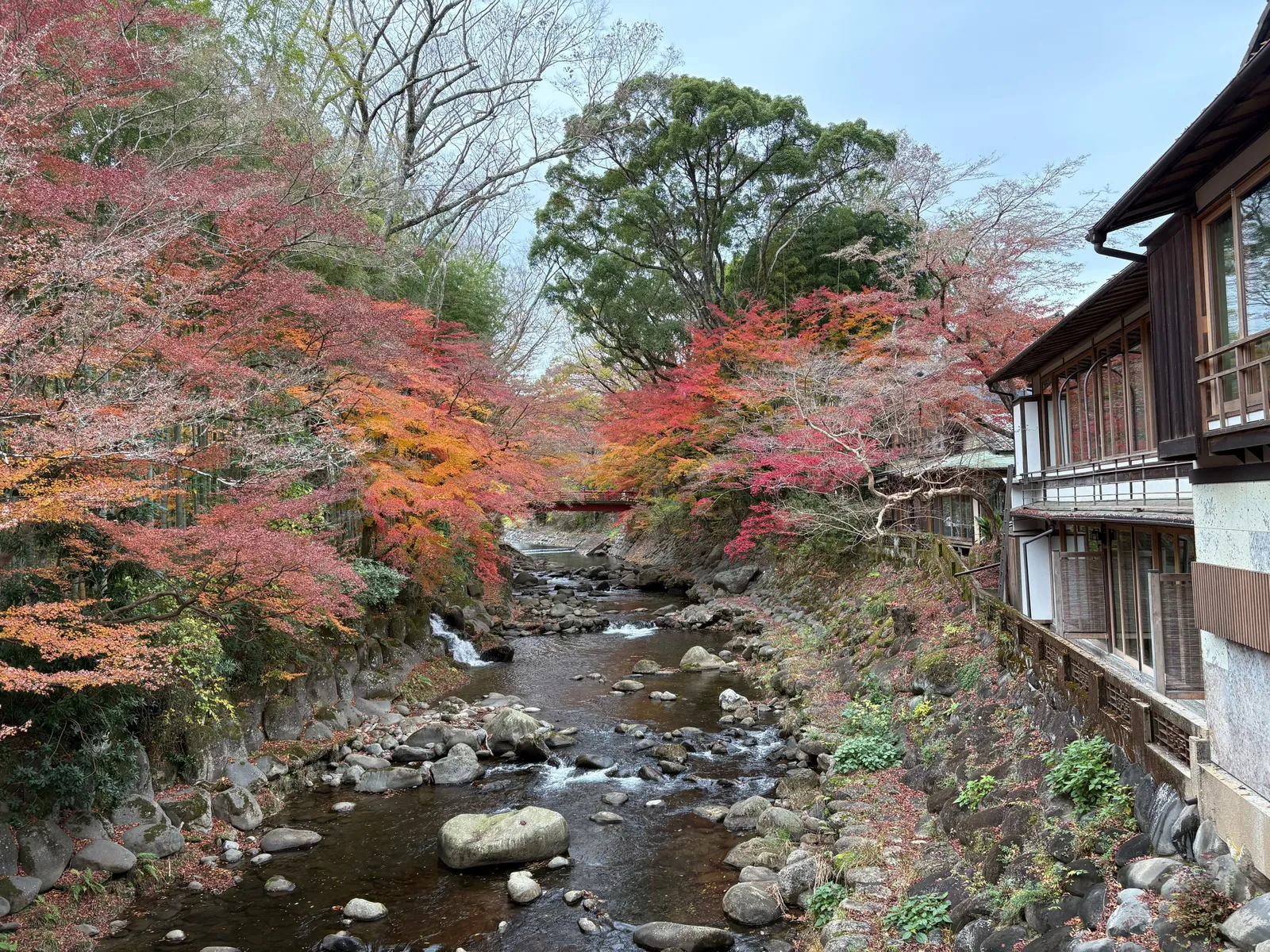
Cut inland for the last day. Shuzenji is the oldest hot spring town on the peninsula, built around a temple and a river, with a bamboo path along the water, red bridges, and a small open bath in the middle of the river itself that is now for looking at rather than using. It is compact, walkable and full of ryokan, and it is the right last night if you want one traditional inn on this trip.
The valleys around it are wasabi country. Real wasabi is grown in gravel beds fed by cold running spring water, it takes over a year to reach size, and the terraced beds up these streams are a landscape in their own right. Several farms let you visit, grate your own root on a sharkskin board and eat it fresh, which tastes nothing like the green paste that goes by the name elsewhere. From Shuzenji the train and the express put you back in Tokyo in around two hours.
Food: wasabi grated over rice with soy and bonito flakes, and soba with fresh wasabi rather than paste. The signature experience: grating your own root at a farm and tasting the difference. Optional tour: the wasabi farms in the Amagi area take visitors and some run short guided sessions; check which are open before driving out.
Practical tips
- The Odoriko limited express runs from Tokyo down the east coast and is the simplest way in; local trains cover the rest of that side.
- The west coast and the interior are much easier with a car. Buses exist but they are slow and infrequent.
- Weekends and holidays fill this peninsula, because it is Tokyo’s nearest coast. Book ryokan ahead for those, and consider midweek.
- Sea conditions close the coastal boat trips at short notice, so treat them as a bonus.
- February is the odd month here: blossom at Kawazu, the cone burning at Omuro, and cold clear days with Fuji visible across the bay.
- Tattoo rules vary between baths, and the onsen guide covers how to find ones that are relaxed about it or have private rooms.